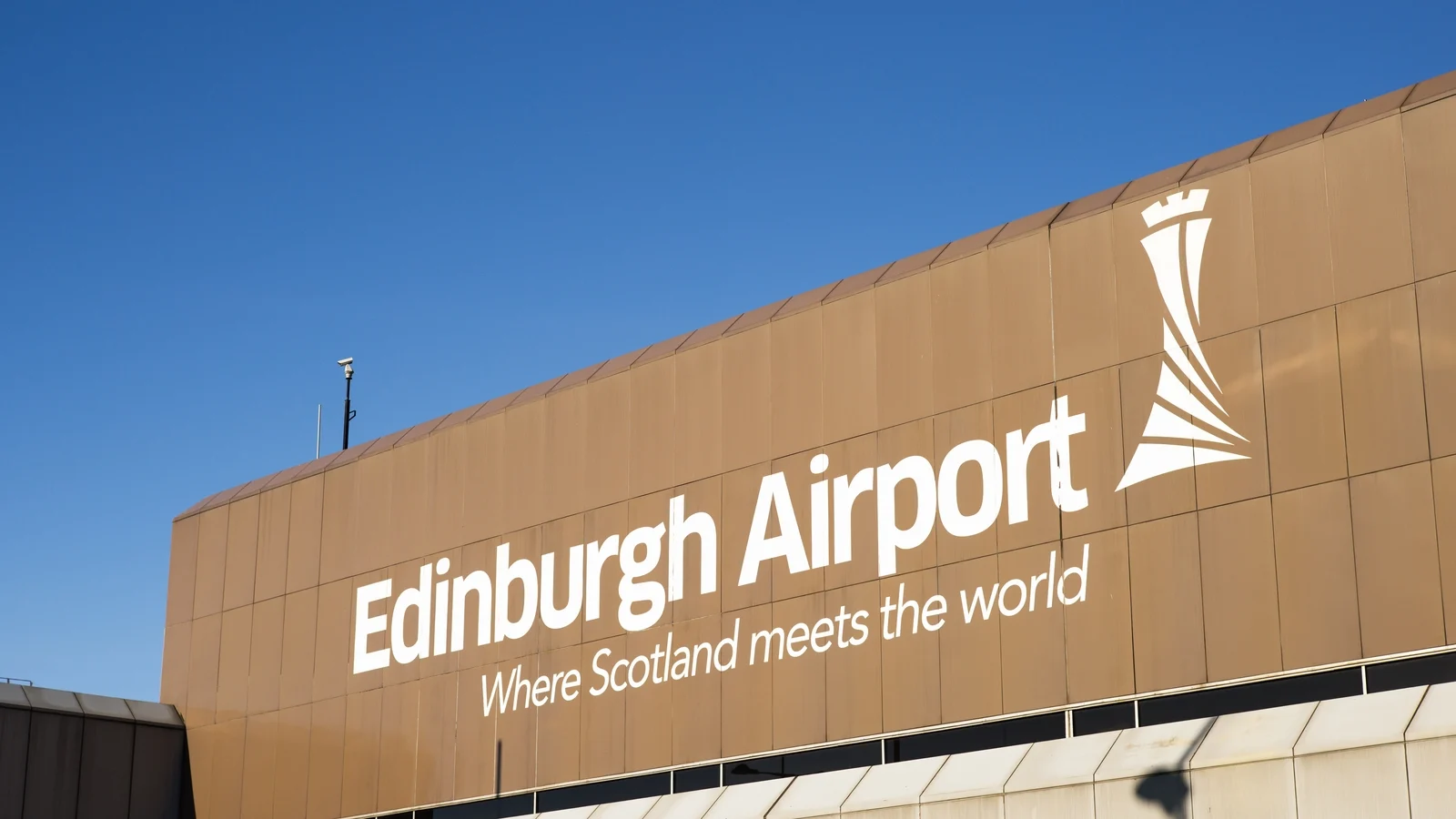
Dawn Disruption at Edinburgh: A Morning That Stopped and Then Sighed
There was a strange hush over Edinburgh Airport this morning — a momentary pause in the hum of suitcases, the clatter of trolleys, the rattle of boarding calls. For a few tense hours, flights were grounded after an issue with the airport’s contracted air traffic control provider. By mid-morning, operations had resumed, but not before the pause left its mark on travellers and staff who live daily with the fragile choreography of modern flight.
I arrived as the airport was just waking up: coffee cups in hands, weary families and business travellers hunched over phones, and staff quietly moving through concourses trying to translate technical uncertainty into human reassurance. “We were told to stay put,” a mother of two from Aberdeen told me, cradling a toddler who had already decided that the airport carpet made a fine playground. “You don’t expect to be stranded before you’ve even left the gate.”
What Happened — and What Didn’t
Edinburgh Airport confirmed that the stoppage was caused by a problem with its air traffic control provider. Flights were temporarily suspended as teams worked to diagnose and correct the issue. Crucially, airport officials said the interruption was not connected to a separate, widely reported Cloudflare outage that has affected other web services in recent days.
“We want to be clear — this was an operational matter linked to our contracted ATC provider,” said an airport spokesperson. “Safety is always our priority; the pause was precautionary and flights were resumed once controllers were satisfied that normal operations could continue.”
By the numbers
Edinburgh is no small regional strip. It is the sixth-busiest airport in the United Kingdom, serving some 15.8 million passengers last year, a figure that speaks to its role as Scotland’s major air gateway. That traffic supports hotels, tours, festivals and local jobs — the airport is a lifeline for tourism-heavy Edinburgh, which hosts world-renowned events like the Edinburgh International Festival and the Fringe.
Faces of Delay: Personal Stories from the Terminal
Numbers matter, but so do people. Near gate B12, a young couple from Spain were counting missed connections on a napkin. “We came to see the Fringe — we booked months ago,” said Marta, 28, with a wry half-smile. “Now we have to rebook trains, hotels — and hope we don’t miss the shows.”
On the tarmac, a line pilot I spoke to — who asked not to be named — explained the nervous calculus behind every pause. “When ATC says stop, you stop. It’s not dramatic for us — it’s procedure. But it trickles down; it changes crew hours, fuel calculations, passenger plans. Airports are big, interconnected machines, and one cog can put the whole thing into slow motion.”
Behind the Scenes: Why a Pause Matters
The modern airport relies on an intricate web of systems: radar, communications, clearance procedures and human controllers who orchestrate the sky like a conductor with a thousand instruments. When a provider experiences a glitch — whether technical or procedural — the default response is caution. It is better to delay than to risk lives.
That said, these interruptions reveal vulnerabilities. In an era where travel demand has bounced back strongly from the pandemic slump, airports are carrying heavier loads. Systems stretched by volume and complexity need redundancy. “Resilience is the watchword,” said Dr. Leila Hassan, an aviation systems analyst. “Airports and ATC providers must invest in both technology and human capacity — training, backups, and robust communication channels — to avoid cascade failures.”
Local Color: Edinburgh’s Long Shadow
It is easy to forget, in the panic of the moment, what Edinburgh Airport means to the city. Beneath the Gothic skyline of the Old Town, the airport is a conduit for millions of visitors who come for history, art, and the particular theatricality of the city’s summer festivals. Local cafés rely on footfall from incoming tourists; tours, short-term rentals and the hospitality sector all feel the rhythms of arrivals and departures.
“When flights stop, the ripple is immediate,” said Fiona MacGregor, owner of a small Fringe-era B&B near the Royal Mile. “You lose bookings overnight, staff shifts get awkward. It’s not just about the planes; it’s about income, livelihoods.”
Wider Themes: Infrastructure, Trust, and the Human Cost
Today’s pause in Edinburgh is a vignette of bigger debates: how resilient are our transport networks? How do we balance efficiency with safety? And who pays the hidden cost of delays — the exhausted families, the small business that loses a night’s custom, the crew that must rearrange schedules?
Worldwide, aviation is rebounding. Passenger numbers have mostly recovered to pre-pandemic volumes in many markets, but resilience planning has not always kept pace. Airports, airlines and governments must contend not only with aging infrastructure but also with emerging threats — cyber incidents, weather volatility driven by climate change, and workforce shortages that strain operations during surges.
Questions for readers
- Have you ever been stranded by an airport pause? How did it affect your plans?
- What trade-offs between efficiency and safety feel acceptable to you when travelling?
- Should public authorities require greater transparency from ATC providers about their contingency plans?
Aftermath and Looking Ahead
By late morning the airport was back to business. Announcements resumed, more flights took to the skies, and the lull softened into the familiar bustle. But the episode left a residue of unease — a reminder that even in well-oiled systems, surprise is possible.
“We appreciate passengers’ patience,” the airport spokesperson said, “and we are reviewing the incident with our provider to reduce the likelihood of recurrence.”
On the concourse, people resumed their journeys: some hurried off to catch trains, others to taxis, a few lingering in cafes to reassess itineraries. A teenager with a guitar, headed for a summer open mic, shrugged and smiled. “Travel always has its hiccups,” he mused. “But then, so does life. You learn to roll with it.”
Parting Thought
We build systems to carry us further — to connect cities, families and stories. When they falter, the responses we design tell us about our priorities. Are we satisfied with stops and starts, or will we demand stronger, smarter infrastructure that keeps the world moving even when a single node stumbles? As we step into airports and onto planes, perhaps the larger question we must keep asking is this: how will we safeguard the delicate choreography of travel for the next generation?