Wind, Willow and a World Watching: Greenland’s Moment
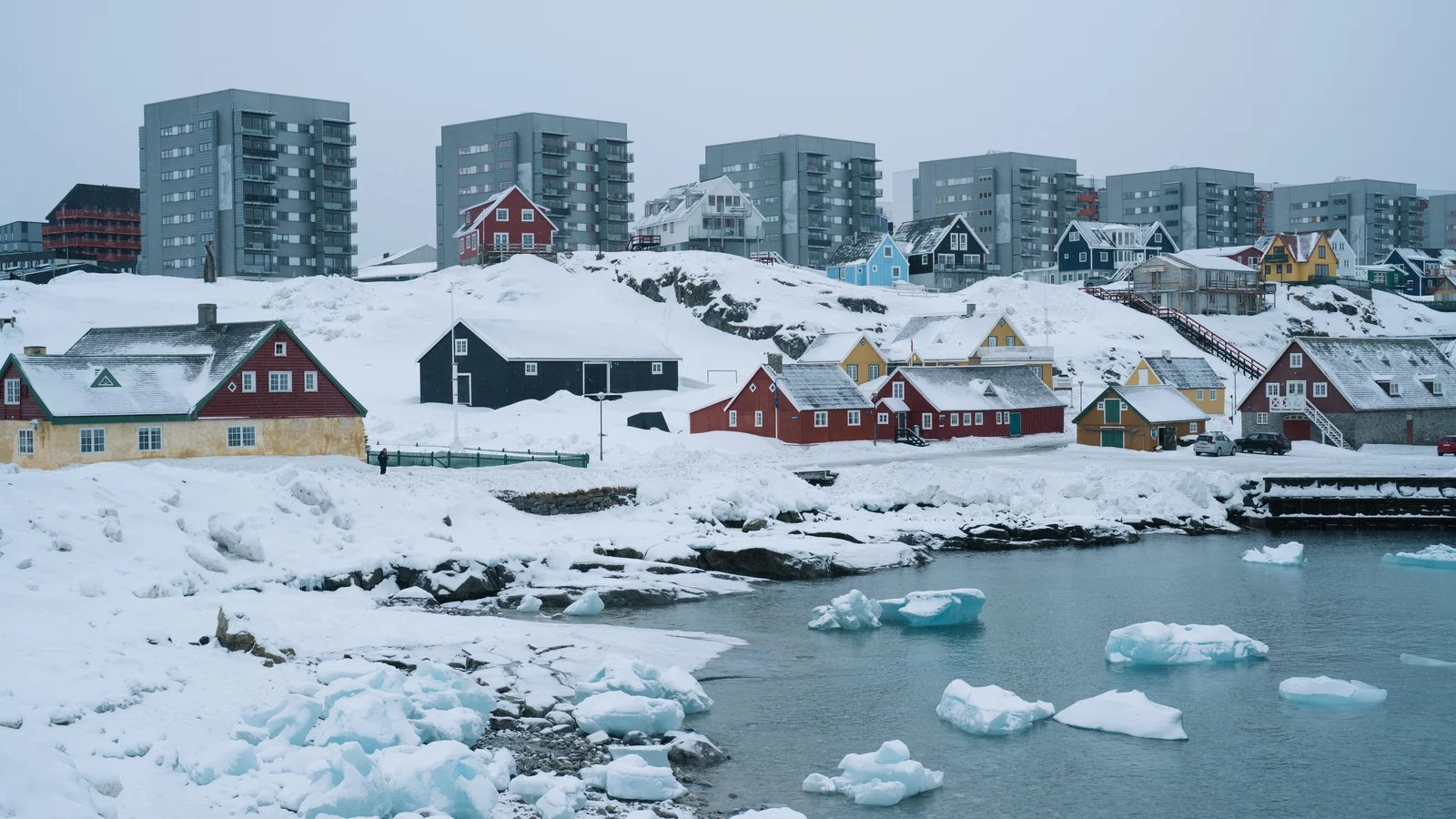
On a gray morning in Nuuk, the capital’s narrow streets smelled of diesel and hot coffee, and the flag of Kalaallit Nunaat snapped stubbornly in the wind. An elderly woman selling smoked trout shrugged when asked about the headlines from Washington: “We’ve been talked about before,” she said, tapping ash into the gutter. “Now they speak louder. Our life does not change because others shout.”
That quiet defiance — part weary, part proud — has become the refrain across Greenland since a renewed U.S. push to stake a claim, rhetorically if not physically, over the vast island. At the center of the storm is a simple idea and a complicated history: who decides the future of Greenland? The island’s leaders insist that answer is obvious to them. “Our choices are made here, in Kalaallit Nunaat,” wrote Greenland’s prime minister in a message to citizens, a short, firm reminder that sovereignty, for many Greenlanders, is more than a line on a map.
Why the Fuss? Geography, Minerals and Strategic Lines
Greenland is not just a wind-swept expanse of ice and fjords. It is a geological treasure chest and a strategic crossroads. The island stretches over 2 million square kilometers, yet its population hovers around 57,000 — a small, resilient community spread across an enormous Arctic stage. On one hand, fishing remains the backbone of the local economy; on the other, the promise of minerals beneath melting ice has global capitals circling hungrily.
Analysts point to deposits of rare earth elements, uranium, iron, zinc and other resources that could become vital in a world racing to electrify and rearm. The thawing Arctic also opens shorter shipping lanes between Atlantic and Pacific markets. For the United States, Greenland’s location has long been militarily useful — from early-warning radar at Thule Air Base to the broader calculus of missile defense and Arctic access.
“This is not hypothetical,” said Dr. Ingrid Mikkelsen, an Arctic geopolitics scholar. “Greenland sits where Atlantic meets Arctic. Whoever controls reliable access to these routes and resources can shape trade and security for decades.”
Numbers that Matter
Greenland’s economy remains heavily influenced by Denmark’s support. Annual grants from Copenhagen — a subsidy that helps run services in communities across the island — amount to several hundred million dollars (around DKK 3.5–3.8 billion in recent budgets), a reality that colors conversations about independence and modernization. Meanwhile, polls show a complex mix of feelings: many Greenlanders see independence as a future goal, yet most do not want to become part of the United States, preferring a homegrown path forward.
Voices from Nuuk: Pride and Unease
Walking through the market near the harbor, you hear the different threads of this story. A young teacher named Anja Jensen told me she wants sovereignty on Greenland’s terms, not at the point of a foreign power’s pen. “We don’t want to be traded like a chess piece,” she said, eyes on the harbor where small trawlers rocked gently. “People want control of our schools, our language, our future. Not a headline that changes everything.”
An older fisherman, Peder Olsen, laughed and shook his head. “I’ve seen ships come and go, men in suits, men in uniforms. They promise things. We have friends in Denmark, and we speak Greenlandic — that keeps us rooted. If outsiders think they can just take us, they’re dreaming.”
“Calm but firm” is how Greenland’s prime minister described the islanders’ response. That tone has been echoed by international partners, too: Copenhagen summoned the U.S. envoy to state its displeasure, and leaders in Brussels and Paris expressed solidarity with Denmark’s position. “Greenland belongs to its people,” one European leader wrote succinctly on social media, underscoring what has become an unexpectedly broad diplomatic chorus.
Diplomatic Ripples and a Special Envoy
In Washington, the rhetoric hardened when a U.S. president publicly declared Greenland essential to national security and appointed a special envoy to oversee relations with the island. The envoy’s first public lines read like a pledge: to deepen ties, to “lead the charge” on American engagement. Within hours, capitals in Copenhagen and Nuuk went into diplomatic mode.
“Sovereignty is not a bargaining chip,” said Denmark’s foreign minister in a terse statement. “We expect our partners to respect that.” In Nuuk, the office of the prime minister released a message of sadness and resolve, thanking citizens for meeting the moment with “calm and dignity.”
Outside the formal briefings, the affair triggered vivid local commentary. “This is 21st-century colonial theater,” said Alfeq Sika, a historian at the University of Greenland. “We’ve been ruled from afar in different ways for centuries. What people want now is the right to choose — without outside pressure, without spectacle.”
Muscles and Missives: The Military Angle
As diplomats traded notes, another narrative unfolded: visions of naval power. High-profile talk in Washington about new classes of warships — larger, faster vessels billed as part of a broader navies buildup — fed the sense that military tools and political messaging were moving in lockstep. “We will ensure we can protect critical supply chains and strategic locations,” an official in the U.S. administration said, pointing to a desire to reduce dependence on foreign suppliers for minerals and technology.
Sea power and Arctic access are not academic topics in an era when climate change rewrites maritime possibilities. Yet many Greenlanders worry that militaristic postures will drown out their right to self-determination. “We don’t want our valleys or towns to be bargaining chips,” an elder in Ilulissat told me. “If the world needs something from us, they must ask — and listen.”
What This Moment Reveals
At its heart, the Greenland story is more than a geopolitical flashpoint. It is a meditation on agency in an unequal world. The islanders’ desire for independence is entwined with economic dependency, cultural revival, and the practicalities of running a modern state in a harsh environment. It is also a reminder that climate change can create new opportunities and new pressures in the same breath.
So what should the global public learn from this tussle? First, that sovereignty matters as much as security; people’s identity and rights cannot be abstracted into strategic convenience. Second, that Arctic policy demands nuance — investments in local infrastructure, education and sustainable development matter as much as military access. Finally, that transparency and respect are essential when the voices being discussed are from communities of only a few tens of thousands but whose land holds outsized value.
Ask yourself: if your town were suddenly in the headlines because the world wanted what lay beneath it, would you feel protected or exposed? Would you trust distant powers to respect your wishes?
Closing: A Place That Will Decide Its Own Future
Back in Nuuk, the wind had not changed its course, nor had the lamps along the waterfront. People continued to go about ordinary lives — children in bright parkas, fishermen mending nets, shopkeepers trading the day’s gossip. The island may be the subject of great-power calculation, but the final word, many Greenlanders insist, will come from here.
“We have the right to write our own story,” Prime Minister Jens-Frederik Nielsen told reporters in a voice that mixed caution and conviction. “That is our sovereign duty.”
For anyone watching from afar, the message is as clear as the Arctic light: the world may circle and covet, but Greenlanders intend to remain the authors of their destiny. The question for global actors, and for the rest of us, is whether we will listen — and how we will act when small communities hold answers to large, shared challenges.