On the Edge of an Olive Grove: How a Cabinet Decision Reopened a Wound
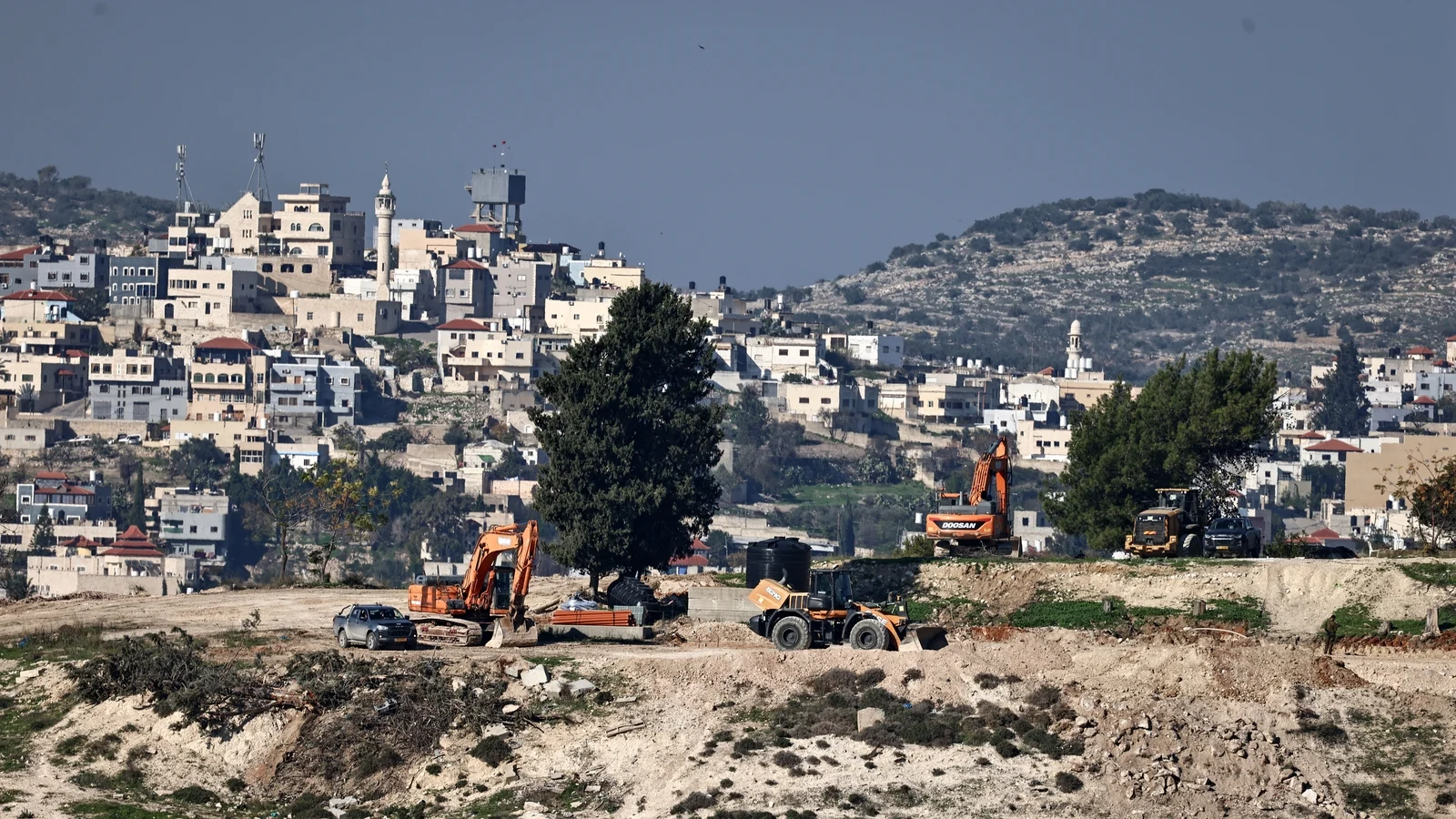
There is a kind of silence that arrives before the first birdsong in the villages of the West Bank—soft, expectant, threaded with the smell of damp earth and crushed olives. It is here, beneath terraces that have belonged to families for generations, that the abstract language of geopolitics suddenly finds a human voice: the farmer who cannot reach his grove because of a new road, the mother who counts the children at checkpoints, the neighbor who listens for the engines of bulldozers.
Recently, that silence was broken not by machinery but by ink: Israel’s cabinet approved the creation of 11 new settlements and formalized eight more in the occupied West Bank. The move—heralded by some Israeli officials as a matter of security and identity—was met by a sharp international rebuke. Fourteen Western countries, including Ireland, Britain, France, Germany, Spain and Canada, issued a joint statement condemning what they called a unilateral action that violates international law. Ireland’s foreign minister, Helen McEntee, was among those to sign the diplomatic protest.
“A moral line has been crossed,” said a diplomat
“These are not mere administrative adjustments,” one European diplomat told me on background. “They chip away at the possibility of a two-state solution in ways that are irreversible.”
From Jerusalem, the Israeli government pushed back. Foreign Minister Gideon Saar argued fiercely that external players had no right to dictate where Jews live. “Foreign governments will not restrict the right of Jews to live in the land of Israel, and any such call is morally wrong and discriminatory against Jews,” he said, placing the move in moral and historical terms. And in the corridors of power, the far-right finance minister framed the settlements as a bulwark against a future Palestinian state.
Two Realities, One Landscape
The numbers are stark. Since the 1967 war, Israel has maintained control over the West Bank. Excluding east Jerusalem, more than 500,000 Israelis now live in settlements there, while roughly three million Palestinians call the same territory home. These figures are more than statistics—they map onto olive groves, playgrounds, small factories, and the intertwined daily rhythms of two peoples whose lives are separated by walls, laws, and narratives.
International organisations have been watching this expansion for years. The United Nations reported that settlement expansion reached its highest level in recent years—higher than at any point since at least 2017. For many legal experts, the issue is clear-cut: under long-established international law, the transfer of an occupying power’s civilian population into occupied territory is prohibited. For many Israeli politicians, who draw on historical memory and security anxieties, the insistence that these areas are off-limits resonates as an existential threat.
On the ground: voices of worry and defiance
Walk the dusty lanes near a small Palestinian town and you will hear a range of reactions. “They put up a sign last week saying the road is ‘state land,’” says Ahmad, a man in his fifties who has tended his family’s plot since childhood. “How can a line on paper make my trees disappear from my hands? My grandchildren play under those trees.”
On the other side, an Israeli settler in a newly formalised community speaks through a different lens. “We don’t come here to take, we come to build,” she told me. “This land is part of our story. We are not the enemy.”
Between these two perspectives sits an uneasy truth: every new housing block, every zoning regulation, shifts the balance—practically and psychologically—away from a shared future and toward greater separation.
Why the World Reacted — and Why Israel Calls It Discriminatory
The joint statement from the 14 countries warned that such unilateral actions “violate international law” and risk destabilising a fragile ceasefire that has been in place since 10 October. For many in Europe and North America, the settlements are a tangible obstacle to the vision of two democratic states living side-by-side in peace and security. Governments reiterated their “unwavering commitment to a comprehensive, just and lasting peace” rooted in that two-state idea.
Inside Israel, however, the language of international law is often countered by memory and security. “When we talk to communities that have endured violence,” a senior Israeli official said, “there is a legitimate demand for secure, defensible borders and for areas that preserve Jewish life.” To opponents of the international rebuke, the criticism smacks of double standards and — in the words of some Israeli leaders — discrimination against Jews when they seek to live in what they regard as historic lands.
Experts weigh in
“This is a classic case of policy producing hard facts on the ground,” says Dr. Sara Mendel, an international law scholar I spoke with. “Over time, households built, roads paved, and institutions established become entrenched. That makes reversing course less likely and the diplomatic options narrower.”
Another analyst offered a warning with a historian’s cadence: “Settlements have always been more than architecture. They’re political statements. Each new neighborhood changes expectations and, in turn, policy.”
Bigger Questions: Security, Identity, and the Shape of a Future Peace
This decision is not a single event; it is a symptom. It raises urgent questions about what security means in contested landscapes—whether security is best achieved through separation or through political compromise. It raises questions about identity, too: who has the right to live where, and on what historical or legal grounds are those rights defended?
And it points to a broader global pattern: when entrenched disputes meet assertive populist politics, small policy choices can become tectonic. How do external actors respond? Should diplomatic pressure, economic incentives, and legal argument be enough? Or does the reality on the ground simply outpace the best-laid plans?
What might come next?
- More diplomatic friction between Israel and Western allies.
- Increased legal challenges and UN scrutiny of settlement activity.
- Local tensions that could inflame security incidents, undermining any fragile ceasefires.
None of these outcomes are inevitable. But they are real possibilities—unless political leaders choose, with courage and imagination, a different path.
Leaving the Reader with a Question
As you read these words, imagine standing beneath that olive tree with Ahmad, feeling the rough bark in your palm. Whose claim looks more convincing then? Which future feels more humane? The answers will depend, in part, on how the international community, Israeli leaders, Palestinian voices, and ordinary people choose to act in the coming months.
For now, the groves keep their quiet. The world watches. And the debate over land, law and the right to belong continues, branch by branch, decision by decision, until a different kind of future is chosen.