Pristina at Dawn: What a Decisive Vote Means for Kosovo’s Future
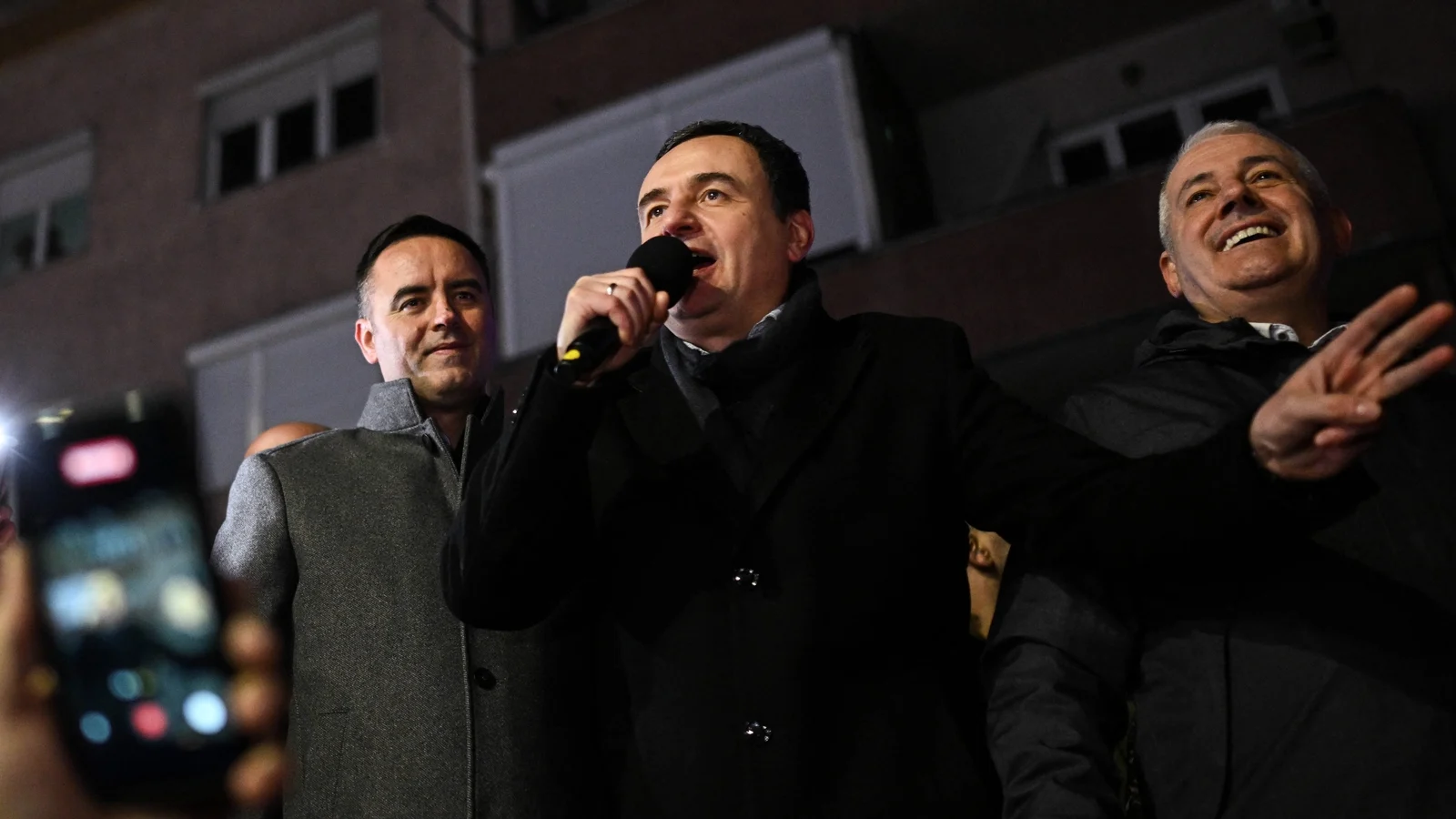
The city smelled like smoke and hot coffee the morning after the vote. Fireworks had stitched the night sky above Pristina, and in the cold—minus three Celsius—people still hung in the square, draped in red-and-black flags, faces flushed from celebration and fear, hope and exhaustion.
Albin Kurti’s Vetevendosje movement appears to have won a clear plurality in Sunday’s early election, taking roughly 49.3% of the vote with 99% of ballots tallied. It is the most unmistakable political moment Kosovo has seen in years: a party that began as a protest movement now sits within reach of a new mandate to govern, and the country stands at a crossroads of domestic reform and international scrutiny.
The numbers that matter
Kosovo’s parliament has 120 seats; a government requires 61 to command a majority, while major international loan packages need a two-thirds majority to pass. With turnout around 45%, the electorate has spoken—but not everyone’s voice is fully in the count yet. Conditional ballots and votes cast by the diaspora in Western Europe still loom, potentially nudging the final outcome.
- Vetevendosje (LVV): ~49.3% (99% counted)
- Democratic Party: about 21%
- Democratic League: about 13.6%
- Assembly seats needed for majority: 61 of 120
- Population (approximate): 1.6 million
- Turnout: ~45%
- Loans awaiting ratification: ~€1 billion from the EU and World Bank
“We have little time to lose,”
Kurti spoke to reporters at his party headquarters with the blunt cadence that has come to define him: “Once results are certified, we must quickly constitute the parliament and form a new government. We don’t have time to lose.” His plea reached beyond supporters in the square; it was aimed at rivals, at EU capitals, at lender institutions waiting for ratification of loan agreements that are set to expire in the coming months.
Onlookers in Pristina offered more human, quieter observations. “He speaks for us because he is not one of the old families,” said Mira Hoxha, a civil servant in her 40s who had wrapped a red scarf around her neck. “But we want bread on the table. Promises are one thing. Jobs are another.”
Coalition arithmetic and political friction
Here lies the rub. Kurti’s movement may have the largest share of votes, but in a fragmented parliamentary system, numbers on ballots don’t always translate into effortless governance. Analysts warn that the path to a stable cabinet could require a small coalition, or at the very least, ad-hoc support for critical votes—especially those that touch the country’s finances and its international commitments.
“The results are not final,” said Ismet Kryeziu, a researcher with the Kosovo Democratic Institute. “Even if LVV has almost half the vote, securing 61 seats outright is difficult. But forming government with a small coalition is quite feasible—Kurti needs only a handful of allied deputies from Albanian or minority parties.”
Whether opposition parties—the Democratic Party and the Democratic League—will join that arc is uncertain. Both have been fierce critics of Kurti: for his confrontational foreign policy stance, for his handling of relations with Western partners, and for tensions in the ethnically mixed north, where a Serbian minority has resisted Pristina’s authority.
On the clock: loans, a presidency, and European expectations
The stakes extend beyond domestic politicking. In April, Kosovo’s politicians must elect a new president. In the months to come, lawmakers must also decide on roughly €1 billion in loan agreements from the European Union and the World Bank—money earmarked for development, infrastructure, and fiscal stability.
These measures are urgently needed in a country still grappling with poverty, high youth unemployment, and organized crime. The EU’s foreign policy chief urged a swift government formation, noting that the new administration should “redouble its efforts on much needed EU-related reforms.”
“We are in a race against the clock,” said Elena Markovic, an economist who studies Western Balkan development. “If parliament is not reopened and these loans are not ratified, projects stop. That’s not abstract—it’s school renovations, road improvements, salaries paid on time.”
At the edges: Serbia, sanctions, and the northern municipalities
Kosovo’s international story remains tangled with Belgrade’s refusal to recognize its independence, declared in 2008. The region’s politics turned tense in 2023, and the EU briefly imposed sanctions on Pristina—measures it has signaled willingness to lift after local votes in Serbian-majority northern municipalities. The sanctions’ economic cost was significant; officials estimate they shaved hundreds of millions of euros off potential investment flows.
Ethnic Serb leaders in the north, and citizens who live daily with cross-border loyalties, are watching this election closely. “We need practical solutions: roads, clinics, respect for our language,” said Dragan, a shop owner in Mitrovica’s northern quarter. “Politics from Pristina and Belgrade often forgets the small things that make life livable.”
What this vote tells us about a broader trend
Across Europe, voters have moved unpredictably: impatient with old elites, wary of globalization’s winners and losers, and hungry for leaders who promise both dignity and delivery. Kosovo’s vote fits into that larger narrative: a movement born from protest now must prove it can translate passion into institutions and craft into policy.
So, what will success look like for Kurti and for Kosovo? Is it a stable cabinet that passes loan legislation and begins EU-aligned reforms? Or is it something more granular—schools rebuilt, a reduction in youth unemployment, fewer families feeling forced to pack and leave? The answers will be measured in budgets and in human stories.
Looking ahead
In the coming days, the final vote tallies and overseas ballots will be counted. If Kurti forms a government quickly, he will be tasked with an urgent menu: unblocking funds, appointing ministers who can weather political storms, and reopening a dialogue with skeptical opposition and international partners. If not, the country risks another stretch of paralysis at a time when action is most needed.
Back in the square, as the morning light made the fireworks embers pale, a university student named Arber shrugged and smiled: “We celebrated because it is a victory. But tomorrow we will wake up and still need to go to class, find work, plan our lives. That is the real test.”
Will Kosovo’s new or renewed leadership pass that test? The next weeks will tell, and the world—neighbors near and institutions afar—will be watching.