When a Beach Became a Battlefield: Courage, Loss and a Country Asking Why
There are mornings at Bondi Beach that belong to light—the kind of light that catches the foam on the waves and seems to make everything more forgiving. On 14 December, as the sun cut a silver path across the Pacific and families gathered to mark Hanukkah, that light was shattered by gunfire. Fifteen people were killed. Dozens more were wounded. A seaside celebration turned, in an instant, into a scene that will linger in Australia’s memory for years to come.
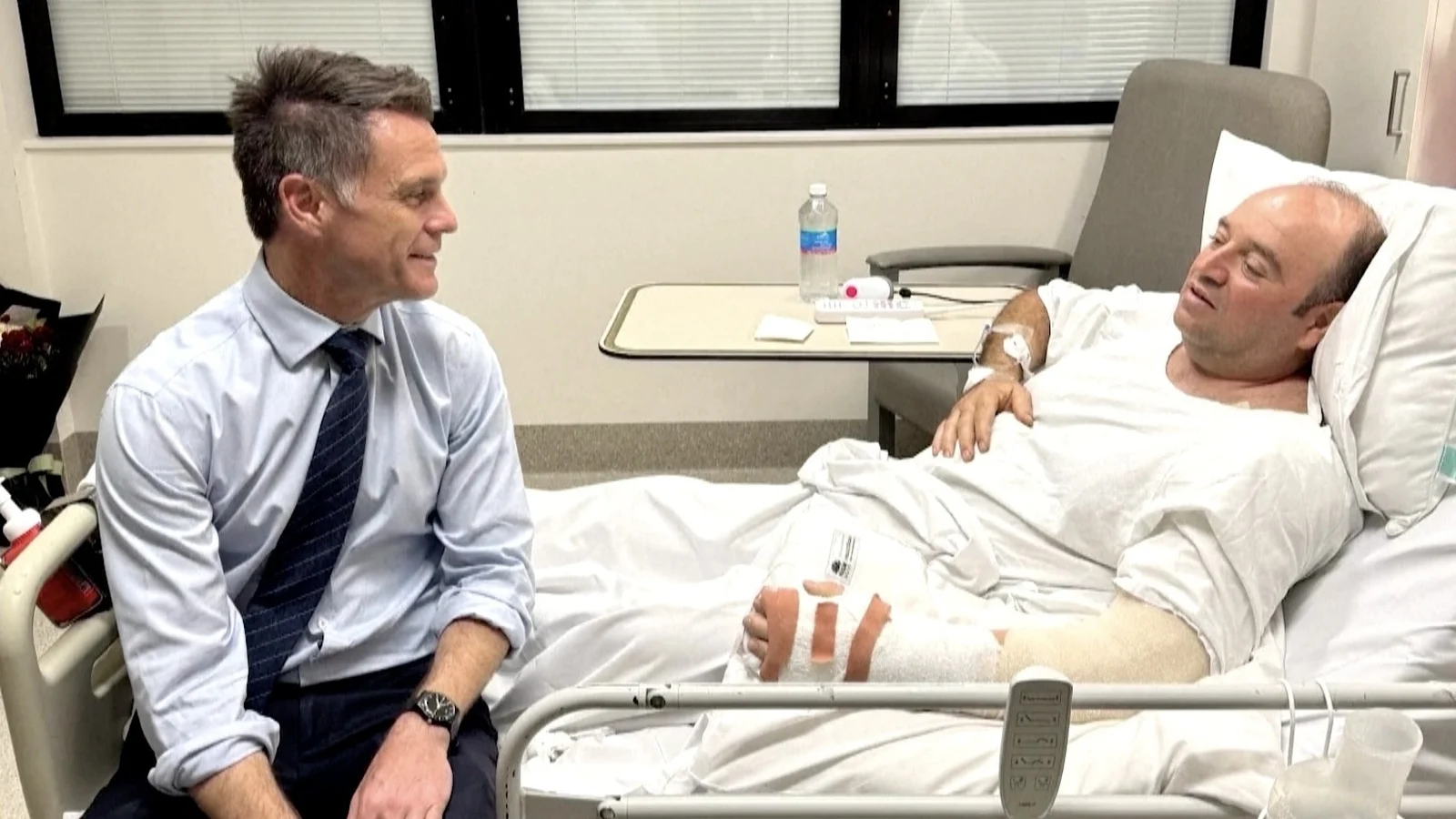
Amid the chaos came an act so raw and human it has been replayed across the globe: a fruit seller—a man who had emigrated from Syria nearly two decades ago—hurried from a coffee run into the firing line and wrestled a gun from one of the attackers. By the time he was dragged away, he had been shot several times and would need multiple surgeries. By the time he recovered enough to speak, he had become an emblem of quiet, stubborn bravery.
The Moment
Imagine the small comforts before the unimaginable: the bicycle bell of a coffee cart, the tang of citrus in a fruit stall, a child’s laugh. Then the crack of gunfire, the human panic, the tide of bodies trying to peel away from the sound. “I could hear people screaming,” the man told reporters later; he said his aim was simple—take the gun and stop the killing. He dove toward one of the gunmen, grabbed him, and demanded he drop the weapon. The scuffle ended with the attacker shot and, for a time, the gun no longer a tool of harm.
He is known locally as Ahmed, a father who left Syria for Australia in 2007. His relatives in Al‑Nayrab, the town where his family still farms, told visitors that their pride was mingled with grief. “We have watched him grow into a man who would put himself between danger and others,” a cousin said, eyes wet. “He did what any of us would hope a neighbour would do.”
Who the Attackers Were
Authorities say the attackers were a father and son: Sajid Akram, 50, and his 24‑year‑old son, Naveed. Sajid, an Indian national who entered Australia in 1998, was shot dead by police during the incident. Naveed, an Australian‑born citizen, remains in custody, charged with 15 counts of murder and terrorism‑related offences. He has not yet entered a plea.
For families of the dead, for friends who ran into the water or flattened themselves under parked cars, answers are still porous. Why did a celebration in a popular, public space become the target for such targeted hatred? How did the alleged perpetrators slip through whatever safety nets should have caught them?
From Grief to Demand: Families Call for a Royal Commission
Seventeen bereaved families have written an open letter to Prime Minister Anthony Albanese demanding a Commonwealth Royal Commission into what they describe as “the rapid rise of anti‑Semitism in Australia” and the failures of policing and intelligence that allowed the attack to happen.
“We have lost parents, spouses, children and grandparents,” the letter reads in part. “We were celebrating a festival of light in an iconic public place that should have been safe. You owe us answers.”
The prime minister, while offering sympathy and pledging action, has resisted calls for an immediate federal inquiry. He argues that urgent reforms must not be delayed by a commission that could take years. Instead, he has pointed to a state‑led royal commission in New South Wales and a raft of proposed reforms to weapons laws, hate‑speech regulations and security services.
Families and some community leaders are unconvinced. “Only a federal commission has the scope and the coercive powers to get to the truth,” a spokesperson for a Jewish community group told me. “We need a full accounting—where warnings were missed, why warning signs went unheeded, how extremist ideology was allowed to fester.”
Voices from Bondi
At the small cafes that dot the road above the sand, conversations turned from coffee to anger and fear. “Bondi’s always been a place for everyone—surfers, picnickers, tourists,” said Maria, who runs a takeaway counter near the pavilion. “Now people look at their kids differently. It’s heartbreaking.”
A lifeguard who had assisted in the chaos described the scene with haunting understatement. “We’re trained for rip currents and heads stuck between rocks,” he said. “This was something else—too much noise, too much terror.”
A tourist from New Zealand, who had been staying in a rental two streets back, said the attack made her reassess the notion of public safety. “You come to Australia for the beaches, the friendliness. You don’t expect to have to duck for cover at sunrise,” she said.
Policy, Prevention and a Wider Conversation
Beyond the local sorrow, the Bondi shooting raises broader questions that many countries are still grappling with: how to confront anti‑Semitism and other forms of targeted hate; how to balance civil liberties with robust policing and intelligence gathering; and how immigration, integration and identity politics interplay with radicalisation.
Experts warn that mass incidents like Bondi do not arise from a vacuum. “These attacks are often preceded by a pattern of hateful rhetoric, community isolation and online radicalisation,” explained a security analyst. “You need early intervention programs, better monitoring of extremist networks, and community outreach so grievances don’t calcify into violence.”
The federal government has signalled it will propose changes: tighter firearms regulation, strengthened hate‑speech laws, and reviews of police and intelligence processes. But the timing and reach of those reforms is still up in the air. Meanwhile, for the families who have cried at funerals, policy debates feel painfully abstract.
- Immediate demands from families include a Commonwealth Royal Commission and accountability for intelligence lapses.
- Government offerings currently include a NSW royal commission, legal reforms, and promises of support for victim families.
- Community leaders call for long‑term investments in education, counter‑radicalisation programs, and mental‑health support.
What Comes Next?
After the funerals and the initial outpouring of support, Australia must answer some uncomfortable questions. How do societies prevent hatred from escalating into violence? How do we protect open, public spaces while preserving the freedoms that make them vibrant? And how do we treat heroes like Ahmed—whose quick action saved lives—without turning trauma into celebrity?
On the pavement above Bondi, someone painted a mural. A crowd gathered, laid flowers, and then dispersed into their lives—people who commute, who tend shopfronts, who take their children to surf lessons. They will carry the memory of that morning in a way statistics cannot fully capture.
What do you think should be the priority for a nation in the aftermath of such an attack: swift reform, a painstaking inquiry, or both? As Australia wrestles with both grief and the need for answers, the world watches and asks itself the same question.