A Deadline at Dawn: When Aid Workers Become the Story
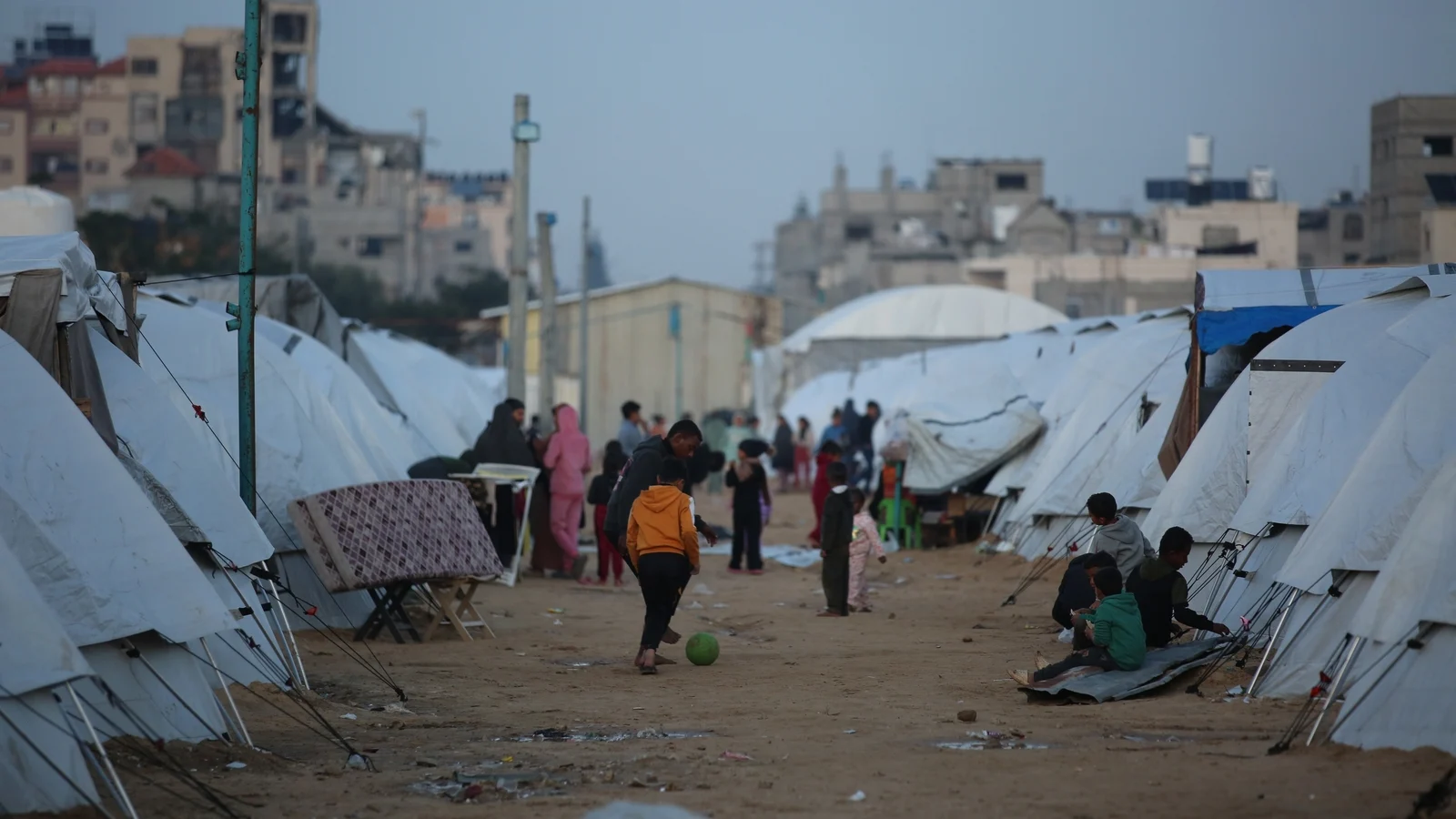
The sun rises hard and merciless over Gaza, bleaching the tarpaulins that pass for roofs, the patchwork of tents that keep families out of the rubble. At dawn, a convoy of ambulances—if there are any left with fuel—winds past a playground that no longer sees children at play. In a small, crowded clinic, a nurse pins her hair back and whispers to a colleague, “If they shut MSF out, we will be patching wounds with hope.”
Tomorrow, Israeli authorities have warned, could be the day dozens of international aid groups are told their work is no longer permitted in Gaza and parts of the occupied West Bank. The deadline is framed as a security measure: provide full staff lists or lose registration. For people already counting on every syringe, every convoy, every doctor who still shows up, the stakes feel existential.
What’s at Risk
Among the organisations facing expulsion is Médecins Sans Frontières (MSF), the aid group that — according to its own figures — treated nearly half a million people over the two-year span of conflict. “If we are prevented from operating, hundreds of thousands will be deprived of essential medical care,” MSF warned publicly this week. That is not abstraction; it is a ledger of life and death: maternity wards where Caesarean sections are scarce, insulin-dependent patients running low, trauma units barely holding.
It is not just MSF. Israeli military coordination body COGAT has said up to 37 aid organisations could be stripped of registration unless they hand over personnel details to the Diaspora Affairs Ministry. Those ministries say the information is needed to prevent the infiltration of militants into humanitarian organisations. The Diaspora Affairs Ministry has said some individuals affiliated with NGOs have alleged ties to militant groups — claims the NGOs dispute and describe as unproven.
On the Ground: Voices and Fears
“We’ve been living in tents for months. The clinic is our lifeline,” says Mariam, a 34-year-old mother of three, waiting outside a makeshift health post in southern Gaza. “They (the aid groups) are the ones who bring the medicines my children need. I don’t understand why lists should matter to us.”
Shaina Low, a spokesperson for the Norwegian Refugee Council (NRC), said bluntly: “At a time when needs in Gaza far exceed available services, forcing NGOs out or preventing them from importing supplies is tantamount to rolling back the humanitarian response.” The NRC warned that it could be forced to close its East Jerusalem office and lose the ability to bring in foreign staff — a blow to coordination and to any relief beyond what local procurement can supply. The NRC currently employs roughly 200 local staff and 35 international personnel across Gaza and the occupied West Bank.
In Gaza’s narrow streets, people talk in small, urgent knots. “We depend on international aid because local shops are empty or overpriced,” a pharmacist in Gaza City told me. “If only local procurement is allowed, we will see shortages and price hikes. That harms ordinary people.”
Security, Sovereignty, or Something Else?
From Jerusalem’s perspective, the demand for names is about control and prevention. “We have an obligation to safeguard our citizens,” an Israeli official said in a statement last week, calling for transparency from organisations working in areas that have been active theaters of conflict. COGAT has also emphasized that some 4,200 aid trucks continue to enter Gaza every week through the UN, donor nations, private sector partners, and more than 20 NGOs that have been re-registered.
But for humanitarians, privacy is protection. “Sharing employee names with authorities who may be party to the conflict creates real risks for staff and their families,” Bushra Khalidi, Oxfam’s policy lead in the Occupied Palestinian Territory, said. “It undermines confidentiality and could expose people to reprisals.” Oxfam and others also warn that being forced to rely only on local procurement — no imports, no international staff — effectively dismantles the international humanitarian system that stepped in when local markets and health systems failed.
What the Numbers Tell Us
Consider the arithmetic of emergency medicine. MSF says it cared for nearly 500,000 people across Gaza during two years of hostilities. The NRC has around 235 staff on the ground between Gaza and the West Bank. COGAT’s figure of 4,200 aid trucks weekly is not trivial — it represents hundreds of thousands of kilograms of food, medical supplies, fuel, and construction materials. Strip away some of the organisations that coordinate and deliver those supplies, and the entire chain frays.
International responses are trickling in. The British Foreign Office, joined by France, Canada, and other partners, urged Israel to allow NGOs to operate consistently and predictably, citing concerns about the humanitarian situation in Gaza. Humanitarian law and principles — neutrality, impartiality, and independence — are being invoked in corridors far from Gaza’s battered hospitals.
Beyond the Headlines: Cultural Threads and Human Detail
Walk a few blocks from the clinics and you will hear, as you always do in any Palestinian neighborhood, the familiar cadence of life: the call to prayer from a nearby mosque, the hiss of tea being poured into tiny glasses, the elderly man who insists on sharing a piece of flatbread with a stranger. Hospitality persists even here, even when the shelves are empty.
Local aid workers bring a different kind of intimacy to relief. A community organizer named Ahmed described to me the logistics of maintaining trust: “We know every family on our street. They know us. If a foreign NGO leaves, that human bridge will be gone.” He paused and added, “People don’t just need food. They need someone who listens.”
Questions We Should Be Asking
How do you balance legitimate national security concerns with the absolute urgency of saving lives? Can a state ask for information that could, if mishandled, put people at risk? And where does the responsibility lie when international humanitarian systems — built to be impartial — are asked to accommodate political and security priorities?
These are not theoretical queries. They are questions that decide whether a child with a fever will be seen before it becomes meningitis, whether a pregnant woman will get the surgery she needs, whether a small, dedicated clinic will have the oxygen canisters that keep patients alive.
Looking Forward: Fragile Hope
For now, some NGOs have been re-registered and continue their work; some supplies keep coming. COGAT’s 4,200 trucks weekly is a lifeline. But a 60-day window has been mentioned for those who do not comply, and in emergency response, 60 days is an eternity and a death sentence.
There are no easy answers. Security and humanitarian imperatives clash in an environment where mistrust is abundant and options are scarce. But perhaps the smallest gestures matter most: a nurse who keeps her clinic open until midnight, a driver who delivers a crate of antibiotics through checkpoints, an aid coordinator who negotiates a corridor of safe passage.
As you read this from wherever you are, ask yourself: what does accountability look like when lives hang in the balance? And what would you do if your nearest hospital was reliant on a list of names to stay open? The answers will help shape not just policy papers in faraway capitals, but whether a family in Gaza wakes up to another day.