As world leaders gather in Turkey for COP31 this week, the question of how to support nations bearing the brunt of climate change will dominate discussions — and Honduras is among those demanding urgent attention.
In this Central American country, stronger storms, eroding coastlines and creeping sea levels are increasingly reshaping daily life, forcing families to weigh survival against the place they call home.
Reporter Kate Varley and cameraman Bram Verbeke travelled to Honduras to speak with people living on the frontlines of the crisis.
Ask residents of Cedeño to describe the town where many have spent decades, and a single word keeps resurfacing: paradise.
From afar, it makes sense.
Set between wide sandy beaches and dense green forest, the settlement on Honduras’ Pacific coast has the calm beauty of a postcard.
Up close, though, the picture fractures.
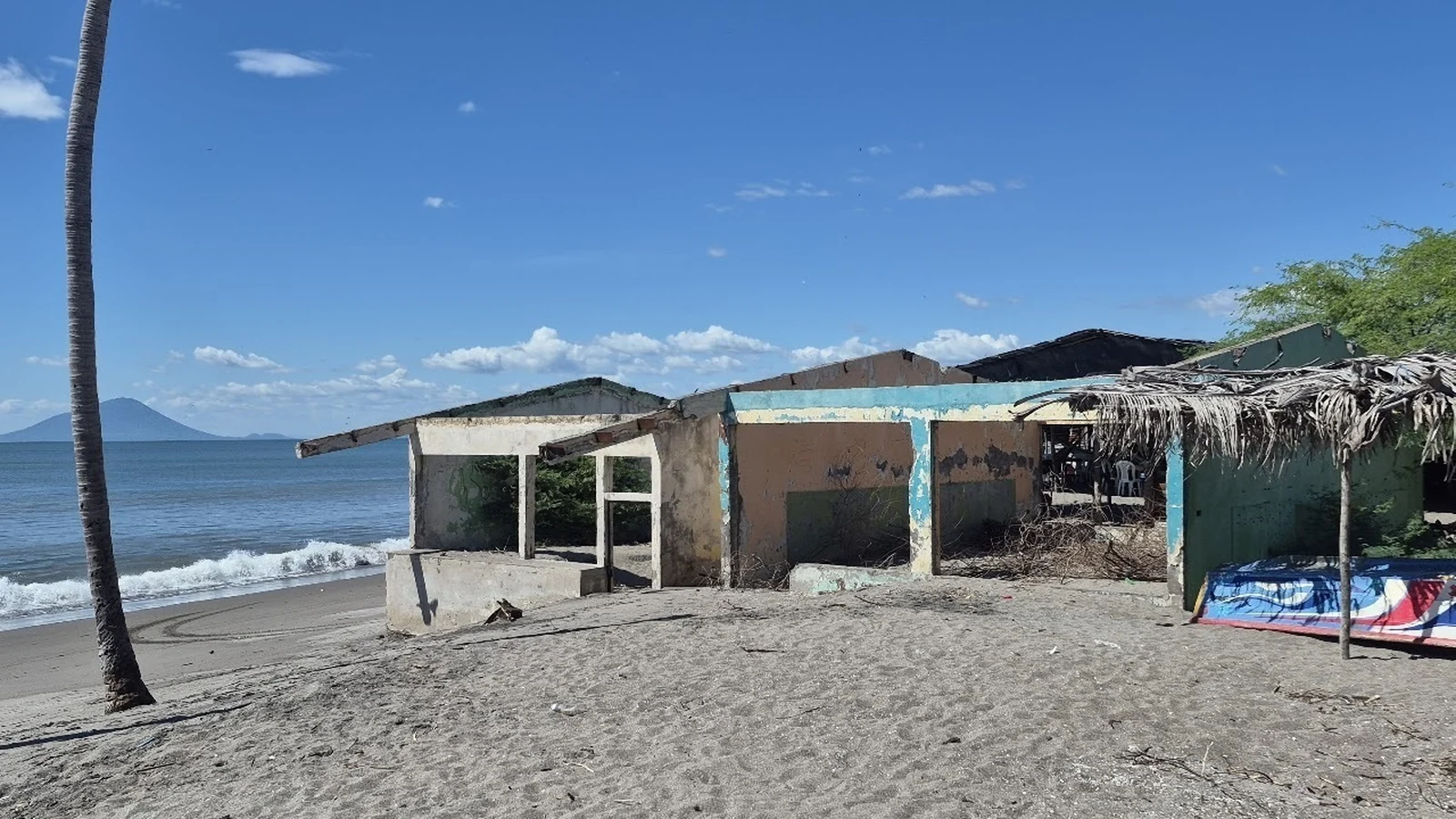
Buildings damaged by rising seas and extreme weather in Cedeño
Cedeño is now in a fight to stay above water. Month by month, locals say, the ocean pushes further inland — transforming what once felt idyllic into a source of anxiety and loss.
“My heart cries”, says 48-year-old Frances Azucena Cruz, gesturing towards what is left of her home. “The sea took everything.”
Storm surges in May made the property uninhabitable. Much of it is now swallowed by sand, with only the terracotta-tiled roof still visible.
“Still here but gone”, she says, in tears.
Frances Azucena Cruz
It is not the first time Frances has been forced to leave behind what she built. A chef and entrepreneur, she previously operated a 10-room seafront hotel. Before that, she lost another home, as well as a small beach shack where she sold snacks — each claimed by the advancing tide.
With her livelihood wiped out, she says desperation has set in.
“Starting from zero at my age, it’s so difficult. I’ve lost everything. Every day it gets worse and worse.”
She now shares a rented home farther from the beach with 11 relatives, uncertain how long she can keep paying rent — or what comes next.
“When I cry it’s because I feel overwhelmed that I can’t do much.
“I just want my grandchildren to be able to live and rest without the constant fear that the sea will continue to rise.”
Crumbling walls and roof fragments
In Cedeño, Frances’ story echoes across the community.
When the water pulls back, it reveals what has been left behind: broken roof tiles, collapsing walls and empty, hollowed-out homes — evidence of an ocean that residents say never stops moving forward.
Rubble built up on a beach in Cedeño
Amnesty International estimates the coastline in Cedeño retreats by about six metres each year.
People in the town say at least 200 structures — homes, cafes, restaurants and even a school — have been lost to the sea, and they report the erosion has sped up since 2015.
In a country already exposed to climate shocks, Cedeño has become a stark illustration of what coastal communities face as sea-level rise intensifies storm surges and weakens natural shoreline defences.
“We did not cause this harm – it was industries and climate change that led us to these effects,” says Dagoberto Majano, a community leader and member of the Local Emergency Climate Committee, as he unfurls an old map of the town.
He points to neighbourhoods that are now underwater, describing how the loss of homes, land and work has cut deep.
“It has had more than an emotional impact, so psychological. So many people had to migrate to the United States, to Spain or to other countries.”
Dagoberto Majano said industries and climate change led to the changes in Cedeño
Climate-driven migration has become a defining reality in towns like Cedeño, and for many the United States has been the main destination — a chance at work and a more stable future.
As in much of Honduras, those who stay often depend on money sent home. The World Bank says remittances now make up more than 30% of Honduras’ GDP, with roughly 98% of that funding coming from the United States
Now even that lifeline is under strain.
During the Trump administration’s immigration crackdown, thousands of Hondurans were deported from the United States.
Frances says one of her sons was among those sent back, and another has also recently decided to return.
“My children cannot support me anymore,” she says. “And when they came back there was nowhere for them to live.”
Drought, flooding, hurricanes: Honduras on the frontline
Honduras produces only 0.06% of global greenhouse gas emissions, yet experts regularly rank it among the countries most vulnerable to climate change.
The IMF estimates that extreme weather erased about 6.3% of the country’s GDP each year between 1960 and 2022 — a toll that is worsening.
Los Laureles reservoir with low water levels in Tegucigalpa, Honduras
Earlier this year, authorities issued a Red Alert for 75 municipalities as a prolonged drought damaged crops and intensified food insecurity. The unusually dry conditions have been linked to the super El Niño weather phenomena, which scientists say is being made more severe by global warming.
But the hazards swing both ways: Honduras also faces heavier rains and more destructive floods.
In the northern district of Cortés, Marta Maldonado says she has had to run from her home again and again as a nearby river overflowed after intense downpours.
“It used to be every 20 years… Now it’s much more often”, says the 77-year-old.
Marta Maldonado says it hard to rebuild from scratch multiple times
“It is so hard to lose everything and try to rebuild a home from scratch – to keep shovelling out mud and throwing away ruined clothes. You can’t live like that; instead, you just end up getting sick,” says Marta.
Another woman recalls being stranded for 15 days on her roof awaiting rescue when back-to-back Hurricanes Eta and Iota hit in 2020, with stagnant water surrounding her home.
Aftermath of a tropical storm in Honduras
Glenis Iriarte, who says she had already lived through severe trauma earlier in life, explains how the storms compounded it.
“I recall staying on top of that roof and telling my daughter, ‘you will hear me now cry, you will hear me scream’ because I had to release everything that I had.
“When I came down, I thought that I could save some of my things but no, everything was lost. Thirty years worth of assets.”
Glenis Iriarte spent 15 days on the roof of her house waiting to be rescued after a hurricane
Glenis says she is now receiving physiological assistance from an organisation supported by Irish NGO Trócaire. She says she is doing much better — but remains afraid of what the next major storm could bring for her family.
Early warning systems
Trócaire is also funding work across Honduras aimed at helping communities brace for floods before waters rise.
Upstream, a river monitoring network — including cameras and sensors — has been installed at several points along the River Ulúa, giving residents more time to act before floodwaters surge through.
An early warning system on the Ulua River
“In the past, we only had an eight-hour window to evacuate our people,” says José Délmiz Cardona, Head of Risk Management for La Lima municipality, widely considered Ground Zero for flooding in Honduras.
“But now, in the Ulúa River basin, we have more than 72 hours of lead time, and in the Limón area, we have nearly 30 hours.
“This enables the authorities to make sound decisions, manage the situation, and issue alerts so that our people can evacuate and ensure their own safety.”
Along the riverbed, levees and drainage channels have also been constructed.
For many Hondurans, such measures are among the most practical defences available right now against climate impacts already unfolding.
Yet, as in other vulnerable countries, leaders and aid groups argue adaptation can only go so far — and that cutting emissions is the central challenge.
“What everyone wants to hear (from COP) is action,” says George Redman, Trócaire’s country director in Honduras.
“There’s been enough prevarication. The impacts are real, people here are suffering.
“It’s time for the industrial north and the people who hold the solution to the problem in their hands, to act now.”