When the Sea and Sky Turn Hot: April 2026’s Unsettling Climate Scorecard
April arrived like a simmering pot left too long on the stove—anomalies building quietly below the surface until, by month’s end, the global climate readouts were impossible to ignore. Oceans outside the polar belts registered the second-highest sea surface temperatures on record for April, and a string of intense marine heatwaves rippled through the tropical Pacific. On land, the world recorded a global average surface air temperature of 14.89°C—fully 1.43°C above pre-industrial levels—making this April the joint third-warmest on record, according to the EU Copernicus Climate Change Service.
Numbers like that are abstract until you put a face on them—or a shoreline, a farm, a mountain village. Then they stop being mere data and become weather’s human consequence: scorched fields, roaring floods, brittle ice and anxious communities rearranging their lives around climate’s new grammar.
Heat in the oceans: a slow-moving emergency
The maps tell part of the story: record-high sea surface temperatures across vast stretches of the tropical Pacific, hotspots that are the breeding grounds for marine heatwaves. These are not brief blips. They persist, starving coral reefs of oxygen, shifting fish migrations and throwing traditional harvests into chaos.
“We’re seeing conditions that overwhelm ecosystems,” said Samantha Burgess, Strategic Lead for Climate at the European Centre for Medium-Range Weather Forecasts. “Sea surface temperatures were near record levels with widespread marine heatwaves, Arctic sea ice remained well below average, and Europe saw sharp contrasts in temperature and rainfall; all hallmarks of a climate increasingly shaped by extremes.”
That loss of equilibrium matters globally. Warmer seas fuel more intense storms, raise baseline humidity and influence atmospheric circulation patterns. For fishing communities from the Pacific islands to the western seaboard of the Americas, it is already changing the timetable of life—when and where fish appear, when reefs bleach, and how economies that depend on the sea survive.
Patchwork Europe: an April of extremes
Europe in April read like a continent split between two moods. The average temperature over land clocked in at 8.88°C, but that average masks striking regional contrasts. Southwestern Europe baked—Spain recorded its warmest April on record, with cities that usually enjoy cool spring evenings instead sweating through anomalously high daytime highs. Meanwhile, eastern Europe felt the cool hand of late-season chills, leaving the whole of Europe with its tenth warmest April overall.
“Our orange trees flowered earlier than usual this year,” said Ana Morales, a smallholder outside Seville. “We worry about blossoms getting hit by late cold snaps or the pollinators being out of sync. It feels like the clock has been changed on nature.”
April’s rainfall map was patchy but telling. Western and central Europe were predominantly drier than average, thanks to a stubborn high-pressure system that parked itself over the region. In contrast, Ireland, the UK, Iceland, parts of Spain and Italy, the Maghreb coast, and the Caucasus saw above-average precipitation and elevated soil moisture—an odd counterpoint to the dryness that settled elsewhere.
Floods, droughts and other weather notes from a warming world
April’s list of extremes reads like a global itinerary of disruption: tropical cyclones in the Pacific; flash flooding across the Arabian Peninsula; severe floods and deadly landslides in Iran, Afghanistan, Saudi Arabia and Syria; and drought conditions deepening in southern Africa.
“We woke up to streets turned into rivers,” recalled Mohammad al-Farsi, a shop owner in a coastal town on the Arabian Peninsula. “The wadi we used to cross on foot is now a flood that swept away cars. We keep asking, ‘Why is this happening more often?’”
Those questions are not rhetorical. Across southern Africa, farmers reported parched soils and delayed rains that threaten maize and sorghum harvests. In areas of Central Asia and Madagascar, conditions were drier than average. Conversely, large swaths of the northeastern and central United States, Canada, northern Mexico, southern China, Japan, parts of Brazil, southern Africa and New Zealand recorded wetter-than-average conditions.
- Many coastal waters: second-highest sea surface temps outside polar zones
- Global April average: 14.89°C (1.43°C above pre-industrial baseline)
- Europe land average: 8.88°C; Spain: warmest April on record
- Arctic sea ice extent: second lowest for April
Ice at the edge: an Arctic alarm
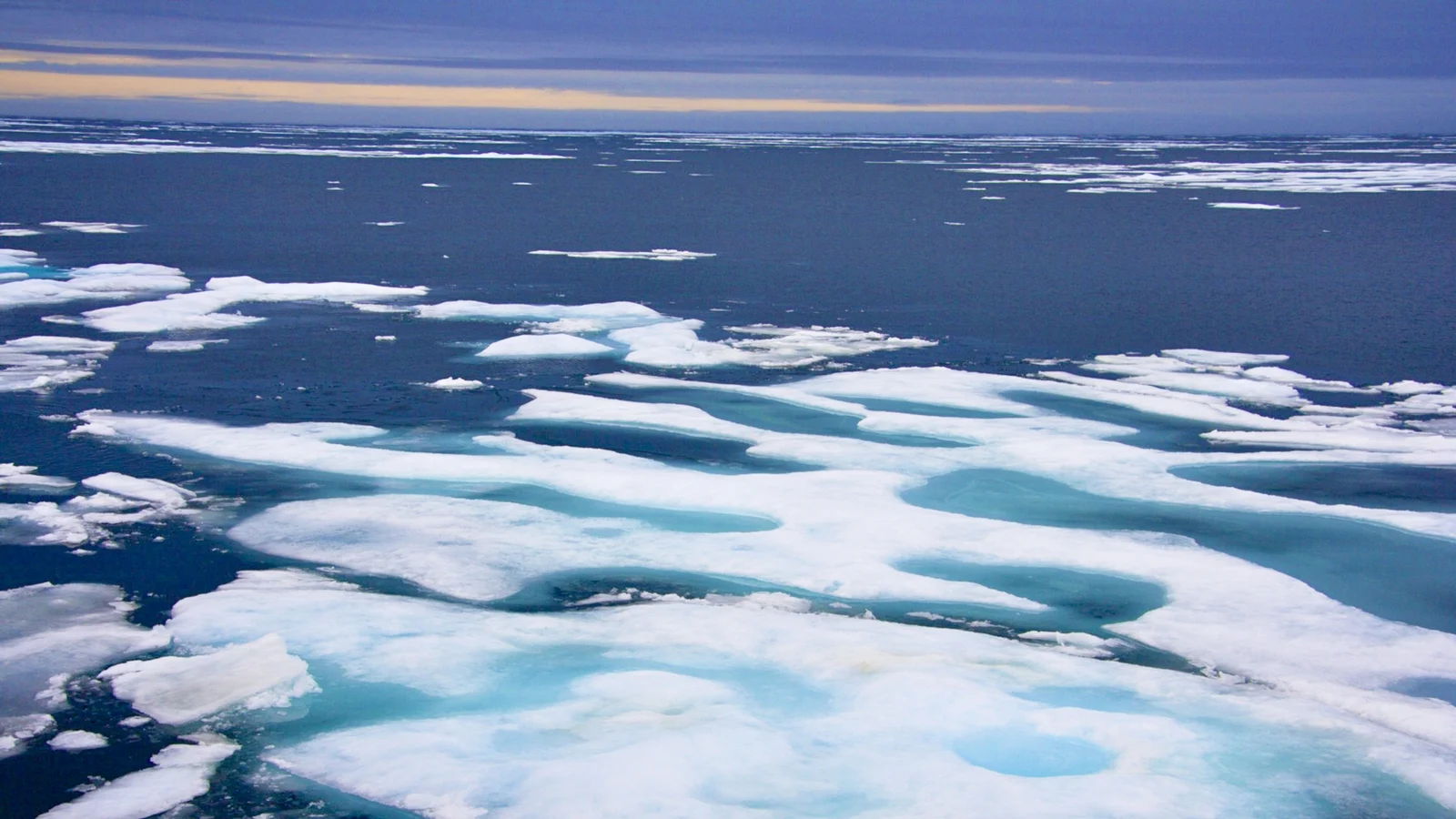
There was a stark, crystalline reminder of the broader climate trend: Arctic sea ice extent ended April at the second-lowest level on record for the month. Sea ice doesn’t just define a region’s beauty; it helps regulate global temperatures by reflecting sunlight away from the planet. Less ice means more absorption, more warming, and a cascade of effects that reach far beyond the polar circle.
“We’re not talking about a distant future,” said Dr. Laila Ahmed, a polar researcher. “Each year the window of uncertainty widens. April’s low ice extent underlines long-term trends that will determine sea level rise and weather patterns for decades.”
People on the front lines
Numbers matter, but so do lives. In flood-hit parts of the Middle East and south-central Asia, homes and mosques were swamped; families were displaced and, tragically, lives were lost to landslides and sudden inundations. In Spain, city sidewalks filled with early-season crowds seeking shade rather than spring coats. In southern Africa, a grandmother on a small plot of land counts seeds and measures rations now more carefully than she does the calendar.
“We feel the change when rains don’t come on time,” said Thabo Ndlovu, a farmer in KwaZulu-Natal. “You plant expecting a rhythm passed down from your parents. When the rhythm breaks, so does everything else.”
So what now? Reflections and responsibility
April 2026 is another notch on a growing beltway of alarming climate signals. The patterns—marine heatwaves, high land temperatures, record-low Arctic ice, and a mosaic of floods and droughts—converge on a single, sobering point: the climate is shifting in ways that amplify extremes. That’s not conjecture; it’s what multiple datasets and services like Copernicus are telling us.
What can you, the reader, take from this? First, climate change is not an abstract future; it’s unfolding in monthly bulletins and on front pages. Second, solutions are layered: early warning systems, resilient infrastructure, smarter water management, and policies that accelerate emissions reductions all matter. Third, local stories—farmers adjusting planting schedules, coastal communities planning relocations, cities updating stormwater systems—are where global policy meets everyday life.
“We need to listen to both the data and the people,” said a municipal planner in Valencia. “The science shows the direction. The communities tell us how to respond.”
As you click away into your day, consider this: what does a world look like that treats these months as signals rather than mere headlines? How do we redesign our cities, our food systems, our oceans policies to live within the new boundaries the planet is drawing? April’s climate report is urgent, but it’s also an invitation—to reckon, to adapt, and to act.