Dawn in the bush: how a seven‑month manhunt came to an end
When the morning mist lifts from the gum trees in Victoria’s north‑east, the landscape can feel timeless — a patchwork of creeks, granite outcrops and a kind of silence that both comforts and conceals. It was in that quiet, at a remote property, that a violent chapter that began last August finally closed. Police say they fatally shot Desmond “Dezi” Freeman this morning, bringing to an end a seven‑month search that has stretched resources, hearts and nerves across communities and agencies.
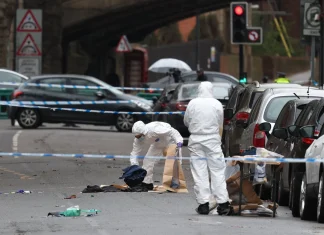
The basic facts are straightforward and stark: Freeman, 56, fled into dense bushland after he opened fire during a police raid in the small township of Porepunkah in August. Two officers were killed in that ambush — Detective Neal Thompson, 59, and Senior Constable Vadim De Waart, 35 — and a third officer was wounded. Hundreds of personnel have been involved in the hunt. Authorities say the operation culminated at a property where officers confronted and shot Freeman.
A community still learning to breathe
You can still sense the shock in Porepunkah and the nearby towns that hug the Great Dividing Range. At the bakery in Bright, baristas poured coffee for parishioners and hikers, and the conversation inevitably drifted to those officers whose faces are now in photographs taped to shop windows. “They weren’t just uniforms to us,” said Maria Kosta, who has lived in the area for 22 years. “They were the ones who came when your fence got knocked down, who helped when a neighbour’s house lost power in a storm. It’s personal.”
“We never thought the sort of thing you read about in other countries could happen here,” said Tom Lynch, a crayfish fisherman who pulled into the riverbank with his dog. “Now that it’s over, I suppose we’re relieved. But we’ve also lost two men. That’s hard to just file away.”
A grim tally and the logistics of a long hunt
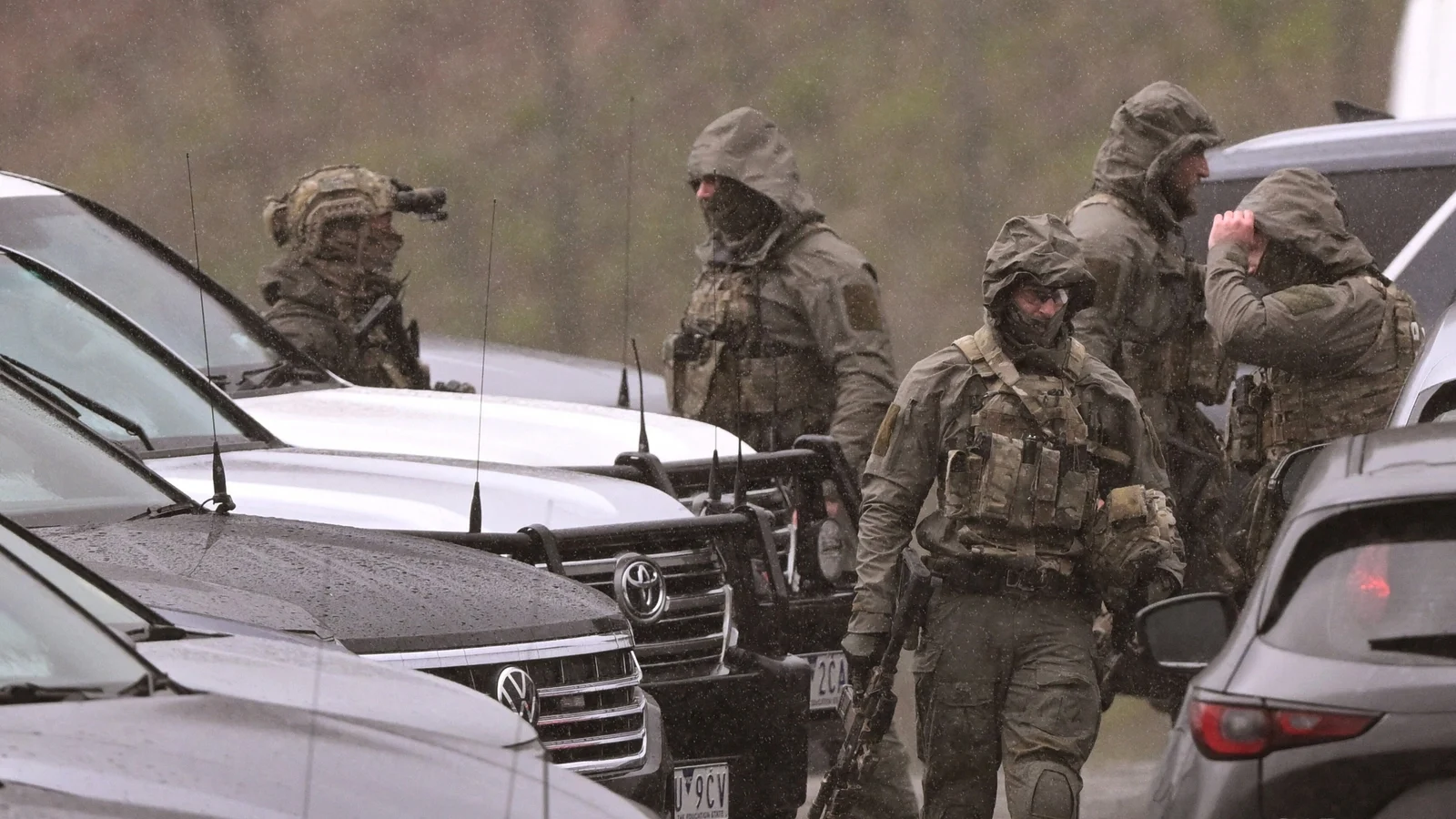
Authorities say more than 450 police officers were assigned to the search over the months, working cross‑jurisdictionally in rugged country where tracks vanish and radio signals stutter. The state placed a Aus$1 million reward — the maximum available — on information leading to his capture. At times, the operation read like something out of a survival manual: tracking teams, specialist trackers, aerial support, and community liaisons checking leads and listening for whispers.
“This has been one of the most sustained and intensive searches our state has mounted in recent memory,” a senior police official told local media. “Our priority has always been to bring this to a peaceful resolution, to recover our colleagues and to bring the community some closure.”
Who was Desmond Freeman?
Locals and media reports paint a complicated and troubling portrait. Freeman reportedly subscribed to sovereign‑citizen ideas — a worldview that rejects the legitimacy of many state institutions and laws — and had cultivated formidable bushcraft and bush survival skills. That combination, police believe, helped him evade capture for months in a landscape that could swallow a person whole.
“He knew the country,” said an experienced tracker who took part in the search. “He could move quietly, find water, shelter. That’s a frightening skillset when it’s married to a willingness to shoot at police.”
Observers of fringe movements say the sovereign‑citizen ideology is not just an abstract doctrine; it can act as a radicalising force when mixed with grievance, paranoia and firearms. “These belief systems provide a narrative that justifies violence for some adherents,” said Dr. Emily Carter, a researcher who studies radicalisation in rural settings. “They offer a pseudo‑legal vocabulary that makes people think they’re exempt from civic duties and the law. It’s a global phenomenon, but it’s adapted locally in every place it appears.”
Names that won’t be forgotten
Detective Neal Thompson and Senior Constable Vadim De Waart are the human cost at the center of this story. Thompson, 59, is remembered by colleagues as methodical and unflappable; De Waart, 35, as a bright officer with years of service ahead of him. The Police Association of Victoria put it plainly: “Today, we won’t reflect on the loss of a coward. We will remember the courage and bravery of our fallen members and every officer that has doggedly pursued this outcome for the community.”
At a memorial evening in a nearby town, locals shared stories at a community hall: Thompson received calls for advice from retired farmers; De Waart volunteered for youth outreach programs on weekends. “They were people who gave more than they took,” said Priya Singh, who runs a local drop‑in centre. “That’s what makes it so hard.”
Questions for a wider conversation
As the dust settles, there are broader debates simmering. Why did such extreme beliefs take root in pockets of the country? How prepared are rural policing units for encounters with heavily armed individuals who know the terrain intimately? And what does this say about the social fractures exposed by isolation and grievance?
Australia tightened its gun laws after the Port Arthur massacre in 1996 — when a lone gunman killed 35 people — banning automatic and semi‑automatic rifles and instituting a buyback program. The reforms dramatically reduced mass shootings, a milestone often cited in international discussions about gun policy. Yet incidents like this remind communities that firearms still pose a risk when they’re in the hands of determined individuals.
“Gun control reduces the scale of tragedy, but it doesn’t eliminate violence entirely,” said Dr. Carter. “You also need investment in mental health services, community engagement, and local policing capable of responding in the bush as well as the city.”
What comes next for the town, and for us?
For Porepunkah and the surrounding towns, healing will be a long, communal thing: fixing fences, repainting the police station, holding vigils, listening to each other. There will be inquiries into the raid, and there will be conversations about how the state and its communities can prevent similar tragedies.
And for readers far beyond Victoria’s gum trees: what lessons do we take home? Are we paying attention to the ways isolation, grievance and misinformation can combine? How do we balance the necessity of law enforcement with a community’s need for trust and transparency?
Perhaps the simplest measure of the storm’s passing is the silence of the bush itself. For now, it’s a silence that holds a heavy, complicated relief. For the families of Detective Thompson and Senior Constable De Waart, that silence is threaded with grief that will not be hurried. For the neighbours who shared milk and muffins with the officers, it is a reminder of the fragility of ordinary days. For the rest of us, it is an invitation to look harder at the undercurrents running through rural communities, and to ask what we can do — locally and collectively — to keep the next chapter from becoming this painful.