A small Swiss town wakes to smoke and sorrow
On an otherwise ordinary morning in Kerzers, a town of quiet streets and neat façades in the canton of Fribourg, the day began with an unsettling roar: sirens, the crackle of radio chatter and a column of black smoke rising against a pale alpine sky.
What followed was both stark and painful in its simplicity. A bus, once a vessel of routine journeys and commuter conversations, became a scene of tragedy. At least six people died when the vehicle was engulfed in flames on a road through the town, police say; three others were taken to hospital with injuries. Local authorities have opened a criminal investigation.
The scene: chaos, courage and questions
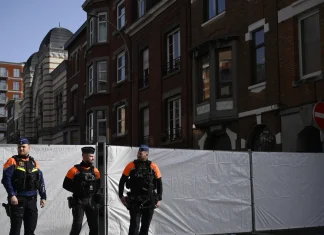
Emergency crews arrived to a tableau that could have been lifted from a disaster drill: charred metal, scorched seats, flattened glass and the hasty, brave work of first responders and bystanders. Footage recorded by onlookers—shaky, immediate—shows passengers escaping, some limping, some helping others, some in shock.
“People were running. There was smoke everywhere. I could hear people crying and trying to call family,” said Anaïs, who lives a few blocks from the scene and watched from across the street. “I tried to give a bottle of water to a woman. She kept repeating a name. It’s something you never expect to see here.”
Frederic Papaux, a spokesperson for the Fribourg city police, said the evidence gathered so far points to an intentional act by someone on board the bus. “At this stage, we have elements suggesting a deliberate act by a person who was inside the bus,” he said. Papaux also confirmed that no other vehicle was involved.
Authorities have been cautious in describing the exact mechanism of the blaze. Social media users were quick to post speculation—some claiming, unverified, that gasoline had been involved. Papaux declined to confirm that detail, saying investigators were still piecing together how the fire started.
First responders and solidarity
In the initial hour, firefighters worked to bring the flames under control while paramedics treated wounded passengers. Local residents gathered at a community centre that quickly became a hub for anxious relatives and volunteers offering blankets, coffee and phone chargers.
“We’re a small town and when something happens, everyone pitches in,” said Marcel, a volunteer who helped relay information to families. “There was a woman trembling with her child; she’d missed the bus. She kept thanking us even though she was in shock.”
Voices from Kerzers: grief and disbelief
Kerzers sits about 20 kilometres from Bern, a town where church towers mark the skyline and the rhythm of life is punctuated by market days and cycling commuters. In places like this, an event like a bus fire lands with special force—every loss feels intimate.
“You don’t imagine this here. You don’t think of flames, of panic on the morning route,” said Philippe, a shopkeeper whose bakery sits near the road where the bus burned. “We will remember who helped. We will remember those lost.”
Others reflected on how quickly a normal Tuesday can be rewritten. “I saw a grandmother hugging a photo of a child—just holding it like a talisman,” one resident told me. “That image will stay with me.”
What investigators are focusing on
The police have framed their work as a criminal investigation. That means tracking witness testimony, reviewing video evidence from dashcams and phones, and conducting forensic analysis of the vehicle and its contents. Forensic teams will be looking for accelerants, the point of ignition and whether mechanical failure played any role.
Experts caution that even with a wealth of footage, establishing motive and sequence can take time.
“When an incident is suspected to be deliberate, investigators have to move carefully to build a chain of evidence that will stand up in court,” said Dr. Simone Keller, a Swiss criminologist who has advised on high-profile cases. “And there’s also the human element—interviewing survivors, who are often dealing with trauma and shock.”
A country in mourning—again
Swiss President Guy Parmelin expressed sorrow, issuing condolences to those affected while noting that the incident was under investigation. “It shocks and saddens me that once again people have lost their lives in a serious fire in Switzerland,” he wrote on social media.
The comment echoed a national sense of vulnerability. Switzerland is not immune to public tragedies, and memories are still fresh of the January bar fire in Crans-Montana, which killed 41 people and injured 115. That catastrophe prompted painful questions about safety, regulation and emergency response across the country.
Switzerland’s population is roughly 8.7 million, and its public transport system—buses, trams and trains—remains a backbone of daily life. Incidents like this expose not only individual grief but broader anxieties about public safety in spaces we assume to be secure.
Wider themes: safety, mental health and community resilience
There are larger threads running through this tragedy. If investigators confirm a deliberate act, the question of motive will surface: Was it personal, political, ideological—or something else? And what does such a step say about the unseen stresses people face?
Experts increasingly point to the intersection between violent incidents and mental health, social isolation or ideological radicalization. “There’s no single narrative,” Dr. Keller said. “But there is a pattern in many societies where private despair, political signals or easy access to means can precipitate public acts of violence.”
At the same time, Kerzers’ response—neighbours offering shelter, strangers serving coffee, volunteer networks mobilizing—shows another side: community resilience. How communities recover, how they remember and how they press institutions for answers will shape the months ahead.
What comes next—and what you can do
Investigations will likely take weeks. For the families and friends of the victims, the timeline of grief has no calendar. For the rest of us, there are immediate, simple acts that matter: supporting local relief funds, listening to survivors’ accounts rather than amplifying speculation, and pressing for transparent, accountable inquiries.
If you live in Switzerland or travel its roads regularly, you may find yourself asking: how safe are our public spaces, really? What systems are in place to prevent, detect and respond to such acts? And, more personally, how do communities cushion trauma when the unthinkable happens?
Remembering the human names behind the headlines
News cycles move quickly, but the faces of those who died or were injured will remain in Kerzers’ memory. A candle at the church square, a bouquet left by the road, whispered names at the market—these are the ways towns stitch grief into their fabric.
“We will keep cooking for the families, we will open our doors,” Marcel said. “That’s what people do here. We don’t let them stand alone.”
As the investigation unfolds, as forensic teams comb through evidence and witnesses recount their versions of a terrible morning, one simple truth remains: a community is counting its losses and trying to make sense of a life interrupted. What else can we offer but attention, compassion and the resolve to learn why this happened—so it might never happen again?