When Ancient Athens Felt Modern: Beijing, Trump, and the Specter of the Thucydides Trap
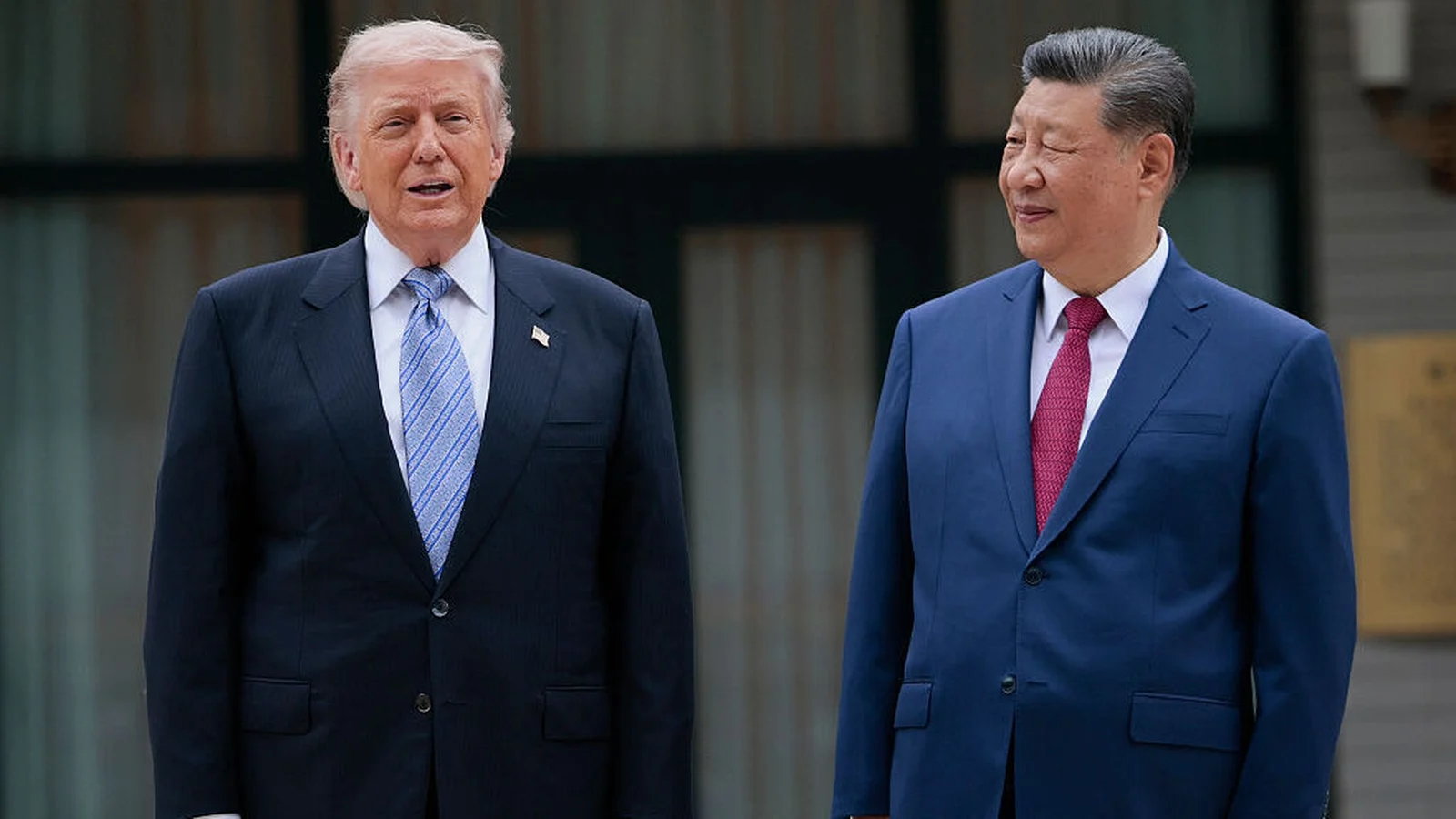
On a November morning in Beijing that smelled of chrysanthemums and diesel, a line of soldiers in immaculate formation marched past the Great Hall of the People. Brass instruments flashed in the weak sunlight. Children in matching uniforms waved small Chinese and US flags in practiced unison. It looked, in every choreographed detail, like a scene meant to be remembered.
Less visible — but no less dramatic — was a single phrase that ricocheted around the internet that day: “Thucydides Trap.” Searches for the term surged after President Xi Jinping invoked it in his conversation with President Donald Trump, and suddenly an ancient Greek historian’s grim observation about power politics felt startlingly relevant to Silicon Valley boardrooms and chip fabs.
What is the Thucydides Trap, and why are people suddenly Googling it?
The phrase stems from Graham Allison’s 2011 reframing of Thucydides’ account of the Peloponnesian War: Athens rose, Sparta panicked, and war followed. It’s shorthand now for the tension between an established hegemon and an ascendant challenger — and between two countries that possess nuclear weapons and global markets.
“When leaders talk about Thucydides, they aren’t indulging in metaphors,” said Lina Ortega, a political scientist based in Madrid. “They’re naming a problem: can two states rewire their rivalry so economies and citizens aren’t collateral?”
A Summit as Spectacle: Power, Pageantry, and a Subtle Message
From the moment President Trump stepped onto Chinese soil, the choreography was unambiguous. The parade, the red carpet, the rows of young faces holding bouquets — all of it was meant to convey one message: China is confident, capable, and no longer in the shadow of anybody.
Walking past Tiananmen Square, the two leaders paused. Xi gestured toward the vast plaza in a way that was equal parts historical invocation and private reminder. The sightline was loaded: a public stage for power, and a place where painful, censored memory sits beside ritualized pride.
“It felt like being shown around someone’s living room — but a living room where decisions are made that affect millions,” recalled a journalist traveling with the American delegation. “There was a kind of hospitable display, wrapped in muscle.”
On Taiwan, Trade, and the Tightrope of Conversation
Talk turned crisp and urgent when Xi warned that mishandling Taiwan could lead to a dangerous clash. Beijing considers the island its own, while Taipei’s 23 million people consistently show a desire to maintain the status quo and the right to decide their future.
“Taiwan is the reddest of red lines,” said a Taiwan-based analyst, echoing a sentiment that many diplomats believe defines Beijing’s posture.
For Washington, Taiwan has long been governed by “strategic ambiguity”: selling arms without promising explicitly to fight. Yet during the summit arms sales became an open item on the table. President Trump later said the two leaders had discussed U.S. arms packages “in great detail.”
That exchange matters. For decades, the subject of Taiwan was almost sacrosanct in bilateral talks. Now it was negotiable — or at least negotiable enough to be discussed in person. Political scientist Wen-Ti Sung put it plainly: “When a transactional administration begins to treat constants as negotiable, the balance of leverage shifts.”
Silicon Valley Meets Zhongnanhai: The Business of Getting In
Traveling with the American president were several of the world’s most recognizable tech executives: the CEOs of companies whose chips and software are the nervous system of modern economies. They came seeking access — market share, partnerships, customers. China, for its part, offered guarded openness.
“China’s door will open wider,” Xi told business leaders, according to state media. But there was a caveat in every smile: openness, yes — on Chinese terms. Foreign firms often must form joint ventures, surrender some proprietary technology, and navigate a legal environment where the state’s objectives are paramount.
Consider the fight over advanced chips for artificial intelligence. U.S. export controls have constrained some sales; Beijing’s own push for self-reliance has accelerated domestic investment in semiconductor design and fabrication. The result is a decoupling that looks partial, complicated, and likely to continue.
What Was Left Off the Table: Human Rights and the Retreat of Moral Language
There used to be a ritual — a gentle, carefully worded admonition about human rights placed somewhere between trade and joint communiqués. During this summit, that ritual was faint. Questions of Xinjiang, Tibet, and press freedom scarcely surfaced in public exchanges.
“The prioritization of economic interest over human rights is not new,” said Christine Ryan, a scholar at Columbia University’s Human Rights Institute. “What’s striking now is the depth and speed of the shift. When a major power deprioritizes these values, it reshapes how others engage.”
That absence is not merely symbolic. It signals to activists, to minorities, and to foreign governments that pragmatism — contracts, planes, and chips — can outweigh the language of accountability. For those who had hoped that engagement would bring change, it was a sobering moment.
Street-Level Reactions: Tea Vendors, Students, and the Quiet Majority
Not everyone was swept up in the summit’s symbolism. Outside a noodle shop near the pedestrian lanes, a tea vendor wiped his hands and smiled without revealing much.
“More tourists, maybe more business,” he said. “But politics is for them. I just want people to have money to spend.” His eyes flicked toward the televisions, then back to the kettle.
A university student in Shanghai, during a late-night conversation over dumplings, offered another tone. “I love that China gets respect, but I worry about what’s traded away,” she said. “Are we losing voices that need to be heard for deals that might not help everyone?”
Why This Moment Matters — and What It Might Mean for the World
We are witnessing a recalibration of norms. The language of equality that Xi used — asking whether China and the United States could avoid the Thucydides Trap — was an invitation and a warning. The summit itself was a demonstration: show strength, extract discussion on sensitive issues, and keep commercial lights green.
But avoiding conflict is not simply a matter of good optics and handshake agreements. It requires durable institutions, clear signaling, and domestic political coalitions willing to accept compromise. It requires managing rivalry without losing sight of universal standards.
So, what will the coming years bring? Will the world see an uneasy détente, engineered through trade-offs and silent bargains? Or will technological competition, contested narratives, and localized flashpoints like Taiwan create the conditions Thucydides once warned about?
We cannot answer that in a single dispatch. But we can ask: if history is a teacher, are we listening? Are we willing to trade immediate gains for longer-term stability? And perhaps most urgently — what does it say about our global priorities when economic incentives so often outweigh moral claims?
As the soldiers’ boots faded from the square and the world returned to its usual churn of markets and headlines, one thing felt clear: the questions raised in Beijing are not private to two leaders. They belong to all of us.