A Quiet Island and the Thunder of Giants
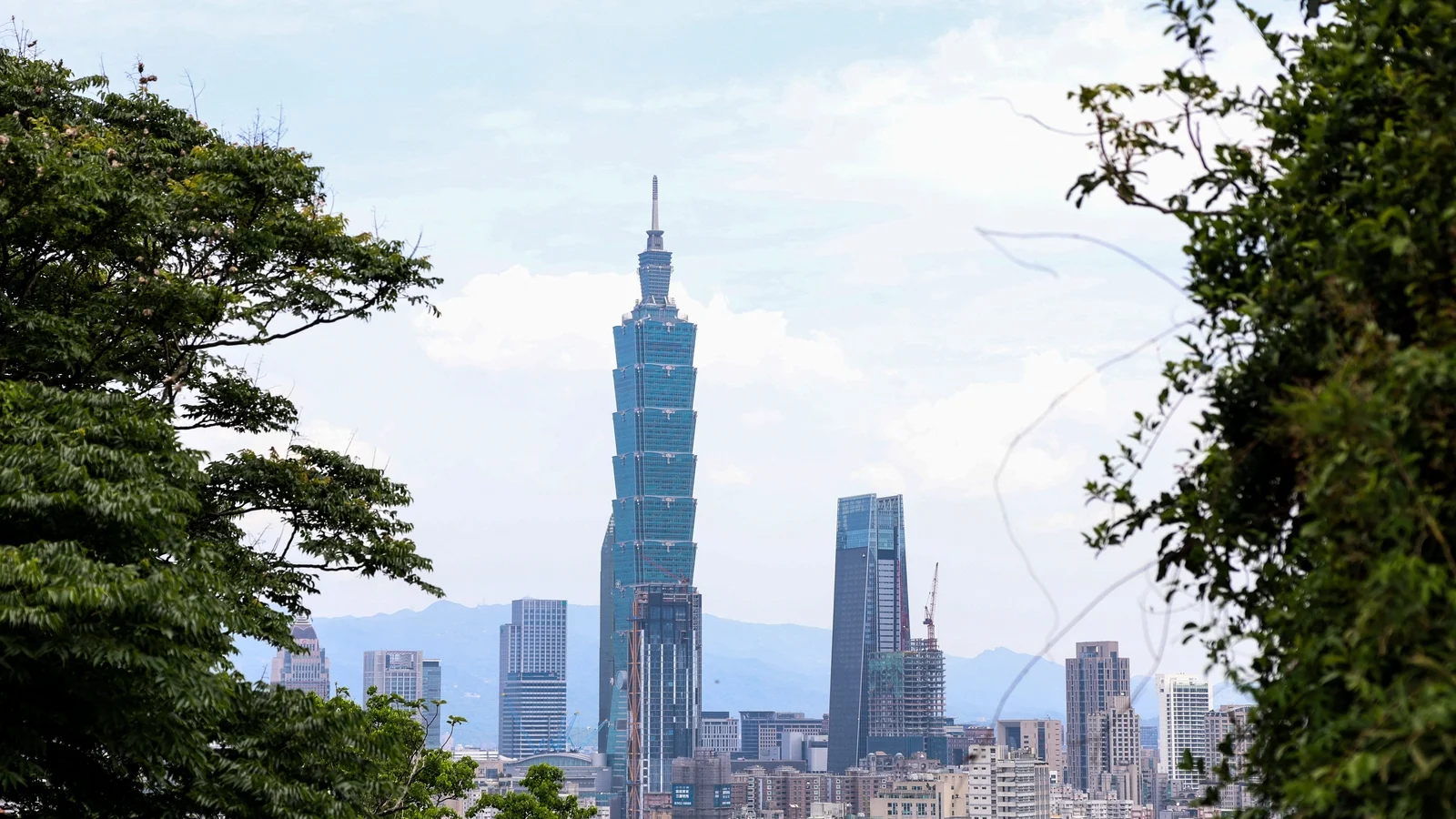
On a humid morning in Taipei, a vendor flips pieces of stinky tofu over a blistering wok and a grandmother sweeps fallen jacaranda petals from the stoop of a tea house. Life feels ordinary here—until you remember how fragile ordinariness can be when two global powers spar across the sea.
Last week’s diplomatic storm—President Donald Trump’s state visit to Beijing and his blunt warning to Taiwan—has left that fragility more visible. Mr. Trump told reporters he did not want a new war and urged Taiwan not to make a formal declaration of independence. He spoke of the long journey to defend the island—“we’re supposed to travel 9,500 miles to fight a war,” he told Fox News—and the weary preference for calm over confrontation.
For many in Taiwan, those words landed like a weather report: useful, but not definitive. The island answered in its own way, with an unmistakable sentence from its foreign ministry: “Taiwan is a sovereign and independent democratic nation, and is not subordinate to the People’s Republic of China.” It was a short, bright counterpoint to the grand chessboard diplomacy unfolding thousands of miles away.
The Language of Sovereignty
“We do not take these things lightly,” said Karen Kuo, a spokeswoman for Taiwan’s Ministry of Foreign Affairs, speaking over the phone from Taipei. “Our statements are meant to reflect the reality felt by the people who live here every day: robust elections, independent institutions, and a culture that has forged its own identity. Arms sales are not a favor; they are a legal and moral commitment under the Taiwan Relations Act.”
That act, enacted by the United States in 1979 after Washington shifted diplomatic recognition to Beijing, requires the US to provide Taiwan with the means to defend itself. Yet the broader question—that of whether American forces would intervene directly in the event of an attack—remains shrouded in the American doctrine of “strategic ambiguity.”
On the Ground in Taipei
Walk through the city’s bustling night markets and you’ll hear a chorus of concerns—and a refusal to be reduced to a geopolitical talking point. “We want peace,” said Mei-Ling, a 28-year-old barista who emigrated back from Melbourne three years ago. “But we don’t want to wake up one day without being asked if this land still belongs to us.”
On the docks of Keelung, an elderly fisherman named Hsu watches freighters glide by and talks about history the way older people do—slowly, with a shrug and a memory. “My father used to tell me about the war years. We are tired of war stories,” he said. “Give us trade, give us tea, let our grandchildren ride their scooters without fear.”
These voices are at once personal and political. They reflect a population of about 23.5 million people whose lives are stitched into the global economy through microchips, ambassadorships-by-commerce, and an outsized cultural influence that includes cuisine, cinema, and the soft power of a democratic way of life.
Arms, Ambiguity, and an Uncomfortable Law
Back in Washington and Beijing, the conversation is numerical and procedural. Taiwan’s parliament recently approved a $25 billion defense spending bill designed to modernize the island’s forces. According to Taipei legislators, that sum is intended to cover nearly $9 billion of an $11.1 billion arms package announced earlier by Washington, and to prepare for a second phase of acquisitions—figures Taipei hopes would top $15 billion, subject to US approval.
“This is not arms-for-arms bravado,” said Dr. Maya Everett, a defence analyst who studies East Asian security. “It’s deterrence. It’s insurance. Taiwan is trying to make any potential military adventurism costly and uncertain for Beijing.”
China, which regards Taiwan as a breakaway province to be reunited with the mainland—by force if necessary—has intensified military pressure in recent years. The 2005 Anti‑Secession Law gives Beijing the legal pretext to use “non‑peaceful means” should Taiwan formally declare independence. In turn, Taiwan has repeatedly emphasized its de facto independence through democratic practice and self-governance rather than through a one-line declaration.
Semiconductors and the Stakes of Supply Chains
There is another dimension to this standoff that reaches into every pocket and office around the globe: semiconductors. Taiwan’s foundries, led by companies like TSMC, manufacture a disproportionate share of the world’s most advanced chips—components that are vital to everything from smartphones and cars to advanced medical devices and military avionics.
“You can think of Taiwan as the lifeblood of modern electronics,” said Jin Park, a supply-chain consultant in Seoul. “Any disruption here would ripple through economies and industries worldwide. That’s why so many governments watch this situation with a mix of concern and calculation.”
A Regional Compass Point
This is not merely a bilateral tension between Washington and Beijing; it is a regional puzzle whose pieces include Japan, South Korea, the Philippines, ASEAN countries, and the broader Indo‑Pacific strategy pursued by Western democracies. The United States’ consistent—if sometimes ambiguous—commitment to Taiwan is a cornerstone of that architecture. But words spoken in stately rooms in Beijing or aboard Air Force One can change the psychological climate overnight.
“Public diplomacy matters, but actions are the true thermometer of commitment,” said Professor Li Wei, an international relations scholar in Hong Kong. “When leaders speak of ‘cooling down,’ they need to be paired with clear, verifiable measures that reduce the chance of miscalculation.”
- Population of Taiwan: ~23.5 million
- Taiwan Relations Act enacted: 1979
- China’s Anti‑Secession Law enacted: 2005
- Taiwan’s recent parliamentary defense bill: $25 billion
Questions We All Should Be Asking
What would a peaceful status quo look like for a people who live daily under the shadow of great-power competition? How do democracies balance moral commitments to self-determination with the hard arithmetic of military risk? And in a world where a single island produces chips that power the global economy, what responsibilities do distant capitals have to prevent a conflict that would harm millions?
These are not theoretical questions for the vendors, students, and taxi drivers of Taipei. They are urgent, practical, and deeply human. “We don’t want to be a headline,” Mei-Ling the barista said, half smiling. “We want to be a place where our parents can be buried and our kids can study without picking between wars and wallets.”
What Comes Next
President Trump said he would make a decision “in a fairly short period of time” about arms sales. For Taipei, that answer matters not only in terms of hardware but as a signal of political will. For Beijing, the reaction will be read as a test of resolve. For the rest of the world, Taiwan’s fate is a reminder of how local identities and global systems are now inextricably linked.
So when you sip your coffee tonight or scroll past the headlines, think about the human dimensions that map onto those lines on a world map. Imagine being asked to choose your flag or your future under the glare of foreign cameras. What would you do? And what would you expect the international community to do—for the people who simply want to live their lives in peace?