Midnight at the Met: When Fashion Became a Gallery and the Red Carpet Felt Like a Canvas
On a humid Manhattan night, the steps of the Metropolitan Museum of Art turned into a runway lit by camera flashes and a constellation of famous faces. The Met Gala—an annual collision of art, celebrity and philanthropy—arrived like a pageant and a pilgrimage all at once. This year the theme, succinct and seductive, was “Fashion is Art,” and for one electric evening in early May the city watched as couture and culture rubbed shoulders under the museum’s Beaux-Arts façade.
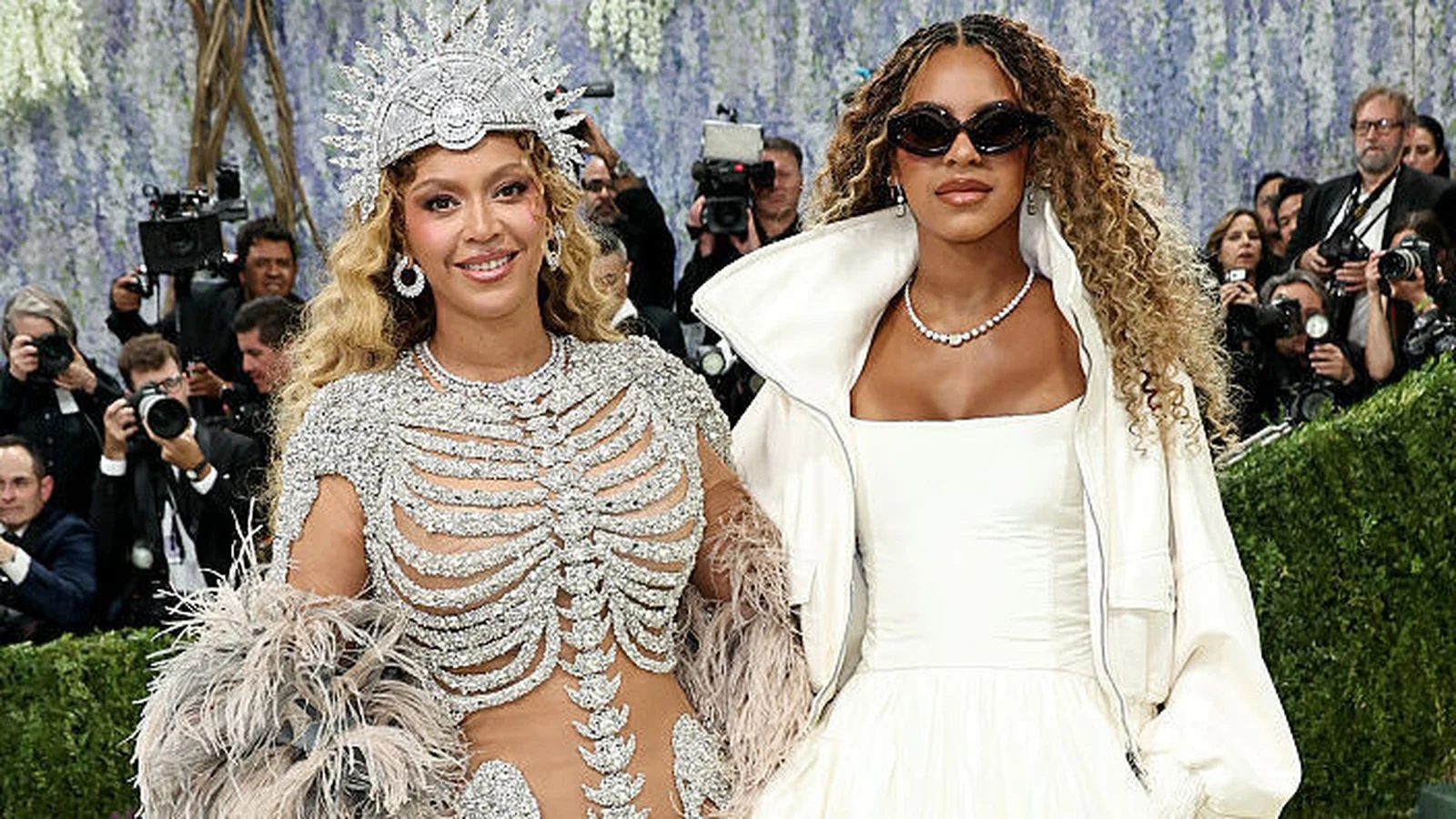
The palpable excitement wasn’t just about gowns; it was about the choreography of power and creativity. Beyoncé, arriving late and precisely theatrical, stepped out wearing what could only be described as wearable myth: a bejewelled skeletal gown, a dramatic feather coat and an ornate headpiece that sealed the moment. She moved like an empress who knew she was also everyone’s favorite work of art.
“When she walks in, you can hear even the cameras hold their breath,” a longtime stylist told me from the fringe of the crowd. “It’s not just a look—she brings context.”
Who Showed Up — and What They Wore
The guest list read like a who’s-who of our moment: Madonna and Cher—icons whose names trace decades of music history—stood beside the new lunar glow of Doja Cat and Sabrina Carpenter. Venus Williams, Nicole Kidman and Beyoncé co-chaired, bringing sport, cinema and music into a single orbit. Bad Bunny experimented with prosthetics and a white wig that imagined aging as performance; Rihanna and A$AP Rocky made a fashionably late entrance that nonetheless felt like a declaration.
- Beyoncé: bejewelled skeleton gown, feather coat, ornate headpiece.
- Nicole Kidman: shimmering red Chanel with feathered cuffs.
- Venus Williams: black Swarovski-crystal gown accented with an elaborate neck plate.
- Doja Cat: draped latex Saint Laurent with a daring thigh slit.
- Bad Bunny: transformative prosthetics and white wig exploring age.
Even surprise sightings—Blake Lively appearing just hours after a high-profile court settlement—added layers to the night’s drama. Olympic champions and athletes strode the carpet too; Eileen Gu arrived with a playful, literal flourish, a dress rigged to make bubbles, as if to remind everyone that spectacle can also be lighthearted.
The Money Behind the Magic
The Met Gala is a fundraiser as much as a fashion extravaganza. This year the Costume Institute announced record fundraising: $42 million raised for the gala, up from $31 million the prior year. It’s a staggering figure that explains the meticulous staging and the sense that, beneath the feathers and sequins, institutional ambitions are being underwritten.
“We are grateful,” Max Hollein, the museum’s CEO, told reporters, pointing to the unprecedented haul. “These funds support exhibitions, acquisitions and public programs the museum could not otherwise sustain.”
And yet, when money takes center stage it’s never simple applause. The gala’s principal honorary co-chairs this year were Jeff Bezos and Lauren Sanchez—an announcement that ignited a visible backlash across New York. Posters and subway ads appeared calling for a boycott; activists picketed and some commuters angrily questioned the museum’s ethics.
“Museums need funds, sure,” one protestor told me beneath the R train’s fluorescent lights. “But are we comfortable with billionaires buying their way into cultural legitimacy? There has to be a better balance.”
Fashion Curated Like Paint
Inside the Met the Costume Institute’s new show—opening to the public on May 10—set out to blur categories. The exhibit placed haute couture beside canonical paintings and ancient sculpture: a Saint Laurent next to Van Gogh’s “Irises,” a John Galliano design adjacent to an antique statue. The effect was disorienting—in the best possible way.
“Our goal was equivalency,” one curator explained, tracing the margins between textile and canvas. “There is no hierarchy. A stitched garment can hold as much cultural weight as an oil painting.”
The idea of the “dressed body” runs through the exhibition—how garments shape identity, status and the politics of visibility. The show also ventures to disrupt classical ideas of beauty, asking viewers to consider different bodies, different abilities and different histories as central to fashion’s narrative.
Designers, Defiance and Dialogue
Donatella Versace, Tom Ford, Stella McCartney and a parade of designers stood in the crowd like masters examining their own museum. Off the carpet, conversation veered quickly from needlework to responsibility. How does fashion reckon with waste? How do museums, reliant on major donors, remain accountable?
“There is a tension that won’t go away,” said a fashion critic over the din. “We celebrate these gorgeous artifacts, but we also need to interrogate the systems that produce them.”
Moments That Mattered
Beyond the haute drama, there were small human flashes: a father lifting his child to see a celebrity, an elderly couple smiling at the parade of gowns as if catching up with a parade of old friends, a security officer offering directions with practiced calm. Even the absurd—a would-be intruder briefly detained near the secured perimeter—reminded us of the collision between public spectacle and private security that defines these evenings.
And then there was Blue Ivy, Beyoncé’s daughter, gliding in a white strapless gown—part family tableau, part signifier of a new generation inheriting a world where image, influence and identity are inextricably bound.
Why It Matters — and Why You Should Care
What is the Met Gala if not a mirror? It reflects our hunger for beauty, our fascination with celebrity, and the messy way art and capital intertwine. It asks: who gets to decide what is “art”? Who gets visibility on a global stage? And at what price?
For all its glamour, the gala also offers an opportunity: museums reaching new audiences, fashion taking its place within art history, and conversations about equity entering mainstream discourse. If a Saint Laurent jacket sits beside a Van Gogh, perhaps visitors who came for stars will leave thinking more deeply about cultural hierarchies.
So I’ll ask you, reader: when you see a couture gown in a museum, do you see invention or indulgence? A celebration or a commodification? The answer may be all of the above—and that complexity is exactly why these nights continue to fascinate.
As the lights at the Met dimmed and the last cars slipped away into Midtown, the city seemed to exhale. The outfits would be dissected online, the headlines would spin, and the exhibition would open its doors to the public. For one night the world watched closely, dazzled and divided, as fashion took its place under the museum’s grand dome and declared itself, once again, undeniably art.