Anchored Between Seas and Fear: Life Aboard the MV Hondius During a Hantavirus Scare
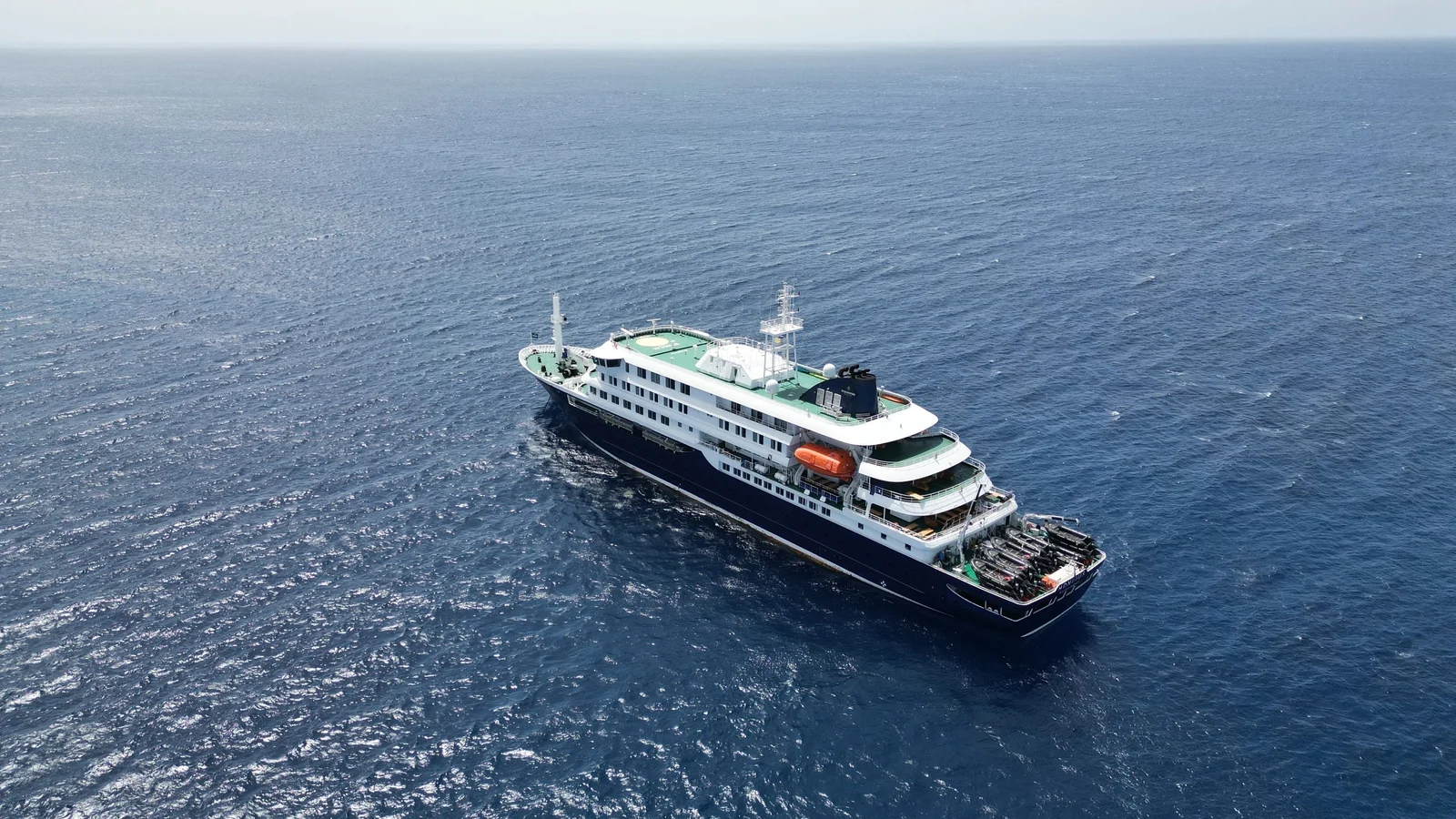
Picture a ship the size of a small village, its hulking silhouette sitting quiet against a glassy Atlantic. Outside, the sun slips toward the horizon, gilding the deck railings and throwing long, soft shadows across life rafts and stacked kayaks. Inside, the hum of HVAC systems and the shuffle of slippers against carpet are punctuated now by the murmur of worry—text messages pinging, family group chats filling, a steward’s soft knock on a cabin door.
That is the uneasy world where roughly 150 passengers and crew found themselves this week aboard the Dutch-flagged MV Hondius, an expedition ship marketed as an Antarctic odyssey that began its voyage from Ushuaia, Argentina, in March. What had been billed as a trip for wildlife lovers and glacier-chasers instead stalled into an impromptu quarantine off the waters of Cape Verde, as health officials raced to understand a cluster of hantavirus cases on board.
What we know so far
As of 4 May, the World Health Organization reported seven cases tied to the ship: two laboratory-confirmed cases of hantavirus infection and five suspected cases. Among those seven, three people have died, one is critically ill, and three are reporting mild symptoms, according to WHO briefings.
The nationalities aboard read like a small United Nations: British, American, Spanish, Irish, Dutch, German and others. Two Irish citizens have been identified by Dublin’s Department of Foreign Affairs, which confirmed it is providing consular assistance.
Authorities say the Hondius traced a dramatic arc across the South Atlantic—past the Falklands, South Georgia, Nightingale, Tristan da Cunha, St Helena and Ascension—before edging into Cape Verdean waters on 3 May. Ports that should have been postcard-perfect pauses in a voyage became checkpoints and questions: Did exposure happen on board, or during an earlier stop in Argentina or elsewhere in South America?
On the ground — and at sea
“We’re not just headlines,” said Jake Rosmarin, a US travel blogger onboard, in a video shared with followers. “We’re people with families, with lives, with people waiting for us at home. There is a lot of uncertainty, and that is the hardest part.” His voice wavered; the camera caught the ocean beyond him, a smear of cold blue.
Ship operator Oceanwide Expeditions told passengers to remain in their cabins as a precaution. “Our first priority is the health and safety of our guests and crew,” a company spokesperson said. “We are working closely with national and international health authorities to ensure appropriate medical care and to arrange repatriation where possible.”
But not every port will open its arms. Cape Verdean authorities declined to permit the Hondius to dock, citing caution. Spanish authorities, meanwhile, said they had not yet received an official request for the ship to disembark passengers in the Canary Islands—possible alternatives being Las Palmas or Tenerife. Inside the ship, medics worked to evacuate two people showing symptoms; outside, contact tracers began the painstaking work of piecing together flights, ferry rides and island transfers.
Deaths, timelines and the hunt for the source
The human toll has been sobering. South Africa’s health department confirmed two of the deceased were Dutch nationals: a 70-year-old man who died on St Helena on 11 April, and his wife, 69, who collapsed after disembarking and died in Johannesburg. A Dutch woman who had disembarked in St Helena on 24 April with gastrointestinal symptoms deteriorated and died during a flight to Johannesburg on 26 April. A German national died on 2 May, Oceanwide said. A British passenger who fell ill was receiving treatment in a private clinic in Johannesburg.
“We are following multiple leads,” said Maria Lopes, Cape Verde’s maritime health coordinator. “The ship has called at very remote islands; a full timeline is being reconstructed so we can trace possible exposures.”
Hantavirus — what it is, how it spreads
Hantaviruses are a family of viruses found worldwide. Most human infections occur after inhalation of particles contaminated with the urine, droppings or saliva of infected rodents. The time between infection and symptoms can range from about one to eight weeks. Initial symptoms are often flu-like—fever, fatigue, muscle aches—before potentially progressing to hantavirus pulmonary syndrome (HPS), a severe respiratory illness that can require mechanical ventilation.
There is no specific antiviral treatment for most hantaviruses; care is supportive. The Centers for Disease Control and Prevention (CDC) estimates the case fatality rate for HPS to be around 36% historically in the United States, though that number varies by strain and access to intensive care.
Human-to-human transmission is rare but not unheard of. “The Andes virus, which circulates in parts of Argentina and Chile, has evidence of limited person-to-person spread,” said Dr. Leila Moreno, an infectious-disease physician and visiting lecturer in public health. “Given that the Hondius began its journey in Argentina, that possibility cannot be ignored while we investigate. But the broader risk to the public remains low.”
Questions that linger
How did rodents, if they were the cause, board an expedition vessel specially equipped for polar forays? Could a stop in a South American port have exposed one or more passengers to an Andes-like hantavirus? Or was there a single source case who later transmitted to others? The answers are not yet complete.
“You could imagine rats on board, or mice at a stop,” said Dr. Ahmed Rafi, an epidemiologist who has worked on shipborne infectious disease responses. “Ships are tricky environments: close quarters, shared air systems in parts of the vessel, and a highly mobile population once disembarked.”
Human stories and broader lessons
On the ship, small rituals hold: a morning coffee left outside a cabin door, a quietly traded novel between neighbors, the sound of a cello in a common room before the pandemic shuttered such gatherings. A local cook on St Helena who remembered the couple who died described them as “quiet tourists who loved our island’s jagged cliffs and the bakery down by the wharf.”
This incident also raises larger questions for modern travel. What responsibilities do expedition operators have to screen for rodent infestations before a voyage? How can small island nations balance public health protection with humanitarian needs? How should information be communicated to avoid panic while preserving transparency?
“We must resist both complacency and alarmism,” Dr. Moreno said. “Preparedness, clear communication, and compassion for those affected are what will carry us through.”
What to watch for next
Investigations are continuing: contact tracing for a flight from St Helena to Johannesburg has been initiated after a passenger who disembarked there later died; samples are being tested; health authorities across several countries are coordinating repatriation efforts. WHO has emphasized that the risk to the wider public is low and that travel restrictions are not currently necessary.
But on a ship waiting for answers, the waiting itself is an experience of its own. It forces a brittle kind of intimacy among strangers and a raw confrontation with vulnerability. It asks travelers—and the rest of us—to consider the predictably unpredictable nature of life on the move in a globalized world.
So I’ll ask you: when the next medical mystery headlines the news, who do you want looking after those on the margins—the remote islands, the slow boats, the passengers who cannot simply drive home? How do we take lessons from this episode and make travel safer, not just for the few on that ship but for everyone who sets off into the world seeking connection?
The MV Hondius story is still unfolding. For the families, the crewmembers, and the medics tending the ill, it is already a deeply personal chapter. For the rest of us, it is a reminder—sharp and maritime—that the rhythms of travel can carry not only wonder, but risk, and that our global systems must be ready to respond with speed, empathy, and science.