Havana in the Dark: A Secret Visit, A Nation Running on Empty
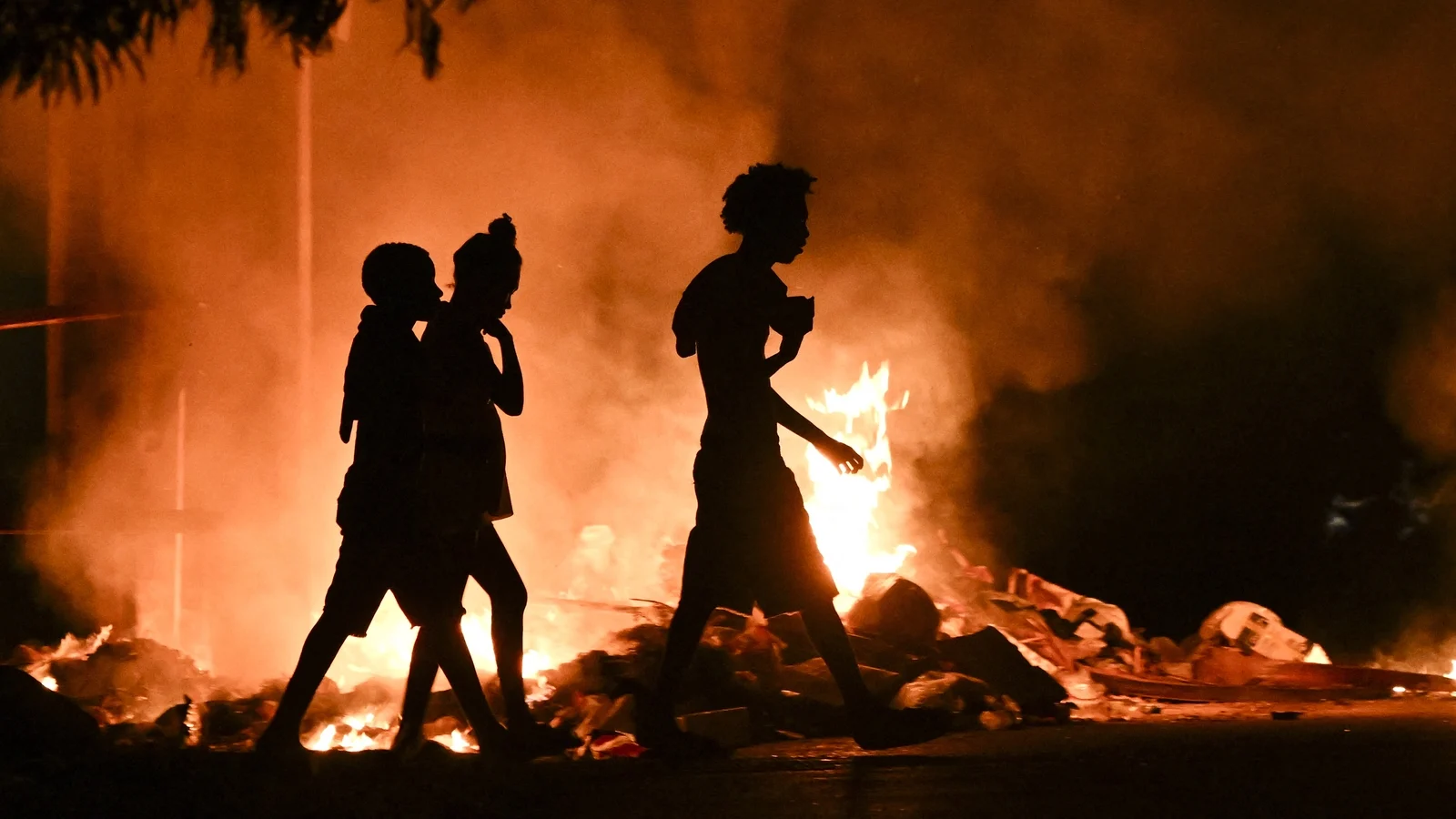
The city felt like a slow exhale. Streetlights winked out block by block, and the air—thick with the salt of the nearby sea and the hum of a million small grievances—grew colder where power once warmed it.
On a night when much of Cuba was plunged into darkness, a flash of light appeared not on the Malecón but online: a handful of photos posted by the Central Intelligence Agency on X showing its director, John Ratcliffe, sitting across a table from Cuban officials. Faces in the pictures were deliberately blurred; one face was not. That belonged to Ramón Romero Curbelo, the head of intelligence at the Cuban Interior Ministry.
The images were compact, almost clinical. They read like evidence in a case: a photographic acknowledgment that a long, fraught history of espionage and embargoes had a new, clandestine stanza.
A Visit Against a Backdrop of Shortages
To most Cubans outside the filtered glow of social media, the most immediate reality was the generator’s roar and the rattle of pots and pans. Power outages have become more than an inconvenience here; they are a daily arithmetic—food that spoils, clinics that ration oxygen, students who study by the uncertain light of a phone.
“We knocked for an hour in the evening,” said Mariela, a mother of two in San Miguel del Padrón, describing the nightly ritual of protest that has become common in Havana neighborhoods. “What else can we do? Cry? Pray? We bang the pots and that says it all.”
State television quoted Energy Minister Vicente de la O Levy as saying the country had effectively run out of imported oil. “The impact of the blockade is indeed causing us significant harm… because we are still not receiving fuel,” he told reporters, painting a stark picture of a nation running on dwindling reserves.
Only one tanker from Russia—historically one of Cuba’s most reliable patrons—has made it through recent restrictions, and according to the island’s energy officials, that cargo has largely been expended. The blackouts that followed were not an abstract policy discussion; they were physical, audible, and communal.
Spycraft in an Age of Sanctions
The CIA confirmed the encounter, issuing the photos and a terse acknowledgment that a meeting had taken place. Cuba’s government framed the visit differently—a chance, it said, to “contribute to the political dialogue between both nations” and to calm tensions.
“These talks demonstrated categorically that Cuba does not constitute a threat to US national security,” read a Cuban statement, which also rejected claims of Havana being a staging ground for hostile activity against the United States. “We have never supported any hostile activity against the United States,” it added, addressing persistent allegations about foreign—particularly Chinese—presence on the island.
There is theater in secrecy, and the theater here is layered: a former intelligence boss in a room with the man who once ran one of America’s own clandestine services; a country that for decades has been the target of US embargoes trying to insist it harbors no threat; an opposition in Washington intent on reshaping how aid is delivered.
Aid, Politics, and the $100 Million Question
On the other side of the debate stands Senator Marco Rubio, who has renewed an offer of $100 million in food and medical assistance for the Cuban people—with a significant proviso: the aid should bypass Cuban government channels and be distributed through the Catholic Church.
“The Cuban people should know there’s $100 million of food and medicine available for them right now,” Rubio told NBC News, arguing the assistance would help prevent the emergence of a failed state just 90 miles from U.S. shores. “It’s in our national interest to have a prosperous Cuba.”
President Miguel Díaz-Canel, in turn, called publicly for an end to what he described as a coldly calculated blockade. “The damage could be eased in a much simpler and faster way by lifting or relaxing the blockade,” he said, framing the shortage as a political choice with human consequences.
What the Numbers Tell Us
- Cuba’s population is roughly 11.1 million people—millions for whom electricity, medicines, and fuel are not abstract policy points but daily necessities.
- AFP data compiled amid the outages showed that about 65% of Cuban territory experienced simultaneous blackouts on a recent Tuesday, a figure that captures the scale of the disruptions.
- April 10 marked a symbolic moment: a U.S. government plane landed in Havana for the first time since 2016, a small diplomatic crack in what has otherwise been a wall of distance.
Voices from the Streets and the Corridors of Power
“My mother is diabetic,” said José, who works nights in a bakery in the Cerro district. “When the lights go, the insulin needs to be kept cool. We can’t live like this.”
An economics professor at the University of Havana, who asked to remain unnamed for professional reasons, told me: “Sanctions are a blunt instrument. They hurt the economy, and they hit the most vulnerable first. But there are also systemic failures here—inefficient grids, ageing infrastructure—that predate the latest diplomatic flare-ups.”
From Washington, analysts framed the face-to-face as a pragmatic, if secretive, attempt to manage risk. “When two intelligence services meet, it’s rarely about friendship,” said Marta Ellis, an expert on Latin American security. “It’s about stabilizing a situation. If you can prevent escalation by keeping channels open, that is often deemed worthwhile even by rivals.”
Protests, Pots, and the Pulse of Resilience
Protests in Cuba in recent weeks have been modest in size but resonant. People bang pots and pans; they take to small roads and plazas. It is not a mass insurrection, but a mosaic of discontent—neighborhood by neighborhood, kitchen by kitchen.
“This is not about politics anymore,” said Lázaro, an older man who sells fruit near the Parque Central. “We want light. We want food. We want our children to not be scared of losing their medicines. Politics can wait for us to be alive.”
Questions for the Reader—and for the Future
What does it mean when aid becomes conditional, when fuel becomes leverage, when diplomacy is done in shadows? Are there lines we refuse to cross for strategic gain, lines that may cost ordinary lives?
These are not rhetorical luxuries. They are the contours of real decisions: how to balance pressure against an authoritarian regime with humanitarian concerns; how to engage a government accused of repression without abandoning the people who live under it.
Back in Havana, as a new day pushed the darkness aside, people repaired to the markets, the clinics, the front stoops. They swapped stories about the night’s outage and the unseen visitors who might—or might not—have brought a solution. They moved forward in the only way they could: practically, ruefully, determinedly.
“We have survived worse,” said Mariela, wiping her hands on her dress. “But survival is not the same as living. We deserve both.”
As the world watches this small island of 11 million navigate the tense choreography of high-stakes diplomacy and daily survival, one thing is clear: the intersection of intelligence, energy, and human need will continue to define Cuba’s story—and the global responsibility to engage it—long after the photos on X fade from view.