A Football Match That Feels Bigger Than Sport: When Two Koreas Meet in Suwon
There is a particular hush that takes hold of a city the morning after tickets vanish. In Suwon — a city of red-tiled roofs, steaming street-food stalls and the slow silhouette of Hwaseong Fortress — that hush was punctured by messaging app pings, coffee shop banter and the hum of people making plans for a night they hope will be remembered.
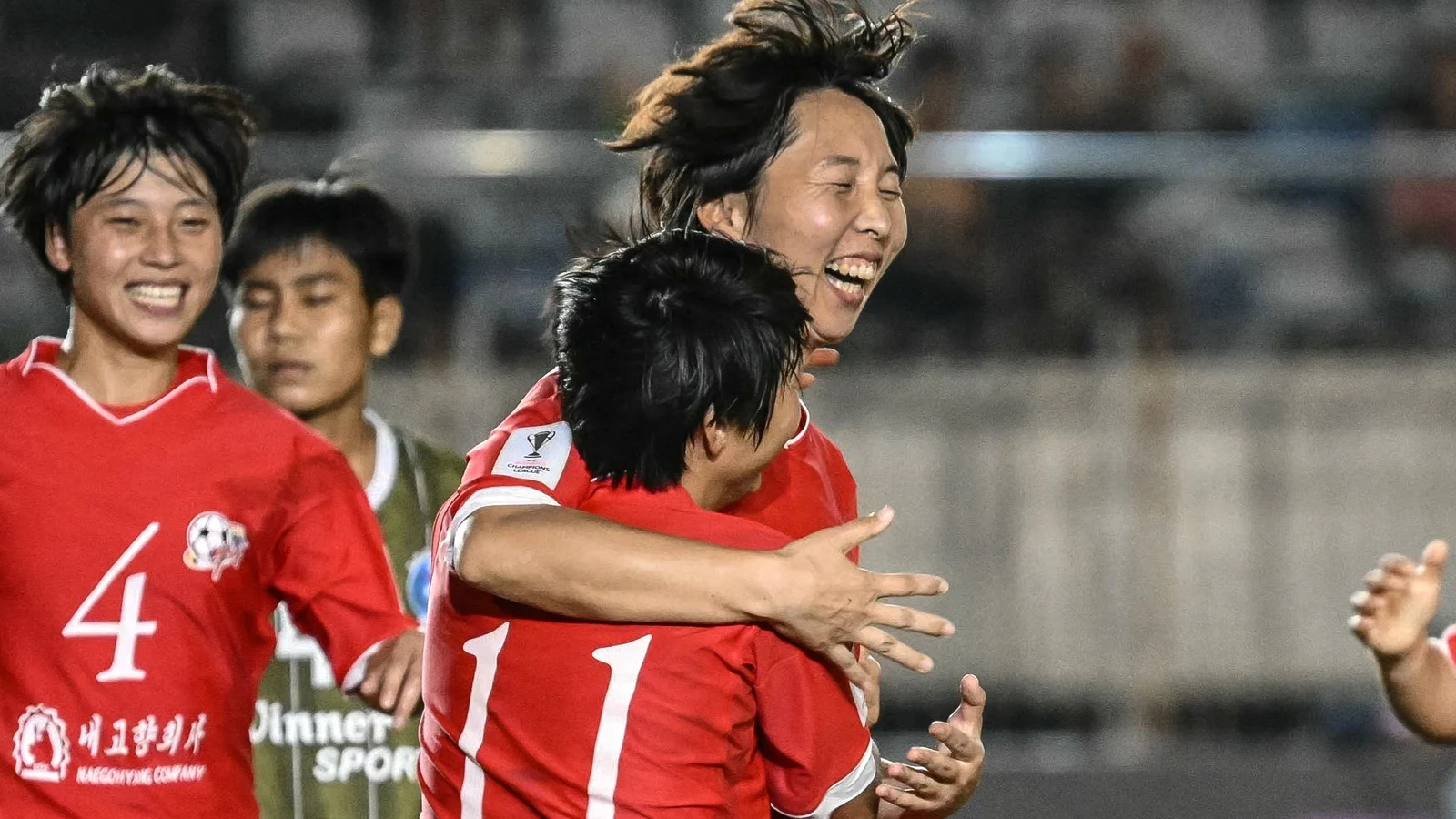
All 7,087 general-admission tickets for the Women’s Asian Champions League semi-final between Suwon FC Women and North Korea’s Naegohyang Women’s FC were snapped up in roughly 12 hours. The Korea Football Association confirmed the sell-out on the day tickets went on sale, and the velocity of sales says as much about the appetite for sport as it does about curiosity — perhaps yearning — for connection across a heavily militarized border.
Why a club match feels like history
This fixture, set for 20 May in Suwon — about 35 kilometres south of Seoul — is not just another semi-final. It marks the first time a North Korean sports team has come to the South since 2018. That gap is more than calendar pages; it’s a reminder that the peninsula remains technically at war. The 1950-53 Korean War ended with an armistice, not a peace treaty — a fact that infuses almost every inter-Korean encounter with geopolitical overtones.
And yet, because this is a club competition rather than a national team match, the rules strip away some of the usual ceremony. No national anthems. No flags flown in official capacities. What remains is the raw, human theater of competition: twelve players on each side, the smell of grass, the shouts and whistles, the drama of a single ball.
What the crowd might look like
There will be no official “away supporters” from the North — North Korean citizens are, in almost all cases, barred from travelling freely to the South. But the match will still carry the color of civil society. Seoul’s unification ministry has allocated 300 million won — roughly $200,000 — to support South Korean civic groups planning to cheer for both teams, an unusual and deliberate gesture intended to shape the atmosphere inside the stadium.
“We want to create a space where cheering is about the players and the game, not flags or politics,” said a Unification Ministry official. “This is about people-to-people contact in the simplest form.”
On the ground in Suwon, people are imagining the scene in everyday terms. “I came to cheer for Suwon, of course,” said Lee Jun-ho, a university student who queued overnight for a ticket. “But I’m also curious to see how the North Korean players play. They’ve produced great young talent before.”
Around a corner near the stadium, Ms. Kim, a 58-year-old noodle vendor, laughed and said: “If they play well, I’ll clap for them. If they come to buy dinner after the match, I’ll give them extra kimchi.” Her tone was mischief wrapped in pragmatism — a small human counterpoint to big politics.
Football as a mirror and a bridge
Sport has long been an ambivalent medium for diplomacy — part mirror, reflecting historical tensions and national pride; part bridge, offering a rare, neutral ground for contact. In this case, the competition’s club status and the absence of national insignia deliberately lower the volume of state symbolism, while choreography in the stands — civic groups cheered on by government funds — adds a new, awkwardly hopeful layer.
Dr. Hana Cho, who studies inter-Korean cultural exchanges at Yonsei University, said: “These moments are less about immediate political breakthroughs and more about changing the texture of everyday interaction. A football match can’t solve high-level nuclear standoffs, but it can humanize the other, which matters.”
Her view is echoed by sports historians who have tracked how athletic encounters can create narratives that outlast a single match. “Look at the way the 1995 baseball game between American and Cuban players still resonates,” one historian told me. “Sport accumulates meaning over time.”
On the pitch: stakes and style
North Korean women’s teams have a reputation in Asia for fierce competitiveness, especially at youth levels. They’ve produced standout performances in various regional tournaments and are known for disciplined, intense play. For Suwon, the match is a chance to secure a place in the final on 23 May at home territory — and to test themselves against an unfamiliar opponent.
“We prepare for every opponent with respect,” said Suwon head coach Park Min-seok. “North Korean teams are well-drilled. But home crowd energy is a real thing. We’ll use the support wisely.”
Naegohyang will fly in from Beijing on Sunday, a short journey that belies the heavier logistics of cross-border sporting travel. Regardless of the result, the semi-final will determine who meets either Melbourne City of Australia or Japan’s Tokyo Verdy Beleza in the final, a matchup that would crown Asia’s top women’s club team.
Numbers that matter
- Tickets: 7,087 general-admission seats sold out in ~12 hours
- Government support: 300 million won (≈ $200,000) to civic groups
- Distance: Suwon ≈ 35 km south of Seoul
- Final date (if victorious): 23 May
What this moment asks of us
When a match is stripped of flags and anthems, what remains are faces — of players, coaches, vendors, fans. You see someone who looks exhausted after a long travel day. You see a young fan squeezing a foam finger. You see a woman offering extra kimchi to strangers. These are small acts, but in aggregate they start to nudge a narrative in a different direction.
So here’s a question to carry with you into the stadium or onto your screen: if two groups separated by politics can find common language through sport, what can we do to foster more of those common languages in other parts of our lives?
Critics will rightfully caution against over-romanticizing a single match. Geopolitics don’t dissolve because a ball crosses a line. Yet for a few hours in Suwon, the focus will shift from cold policy to warm feet, from headlines to the grassroots rhythm of a beautiful game. For fans and players alike, that will be enough to make history feel less like a threat and more like a shared story waiting to be told.
After the final whistle
Win or lose, the image of North Korean players walking off the pitch in a South Korean city and slipping quietly into the back of a bus will be photographed, captioned and debated. But among vendors and volunteers, there will be quieter recollections: who smiled first, who struggled to speak a common phrase, who exchanged jerseys. Those are the small inventory items of human contact — easily overlooked by headline writers, endlessly significant for those who collect them.
On 20 May, the lights at Suwon’s stadium will be brighter than usual. Whether they illuminate a pathway to closer ties or simply offer a memorable night of football, they will shine on players and spectators who, for a few hours, will share the same pulse: the rising and falling tide of a match — and the fragile, hopeful possibility that sport can, sometimes, teach us how to see one another.