When a Map Becomes a Flashpoint: Greenland, Power, and the Price of Bold Talk
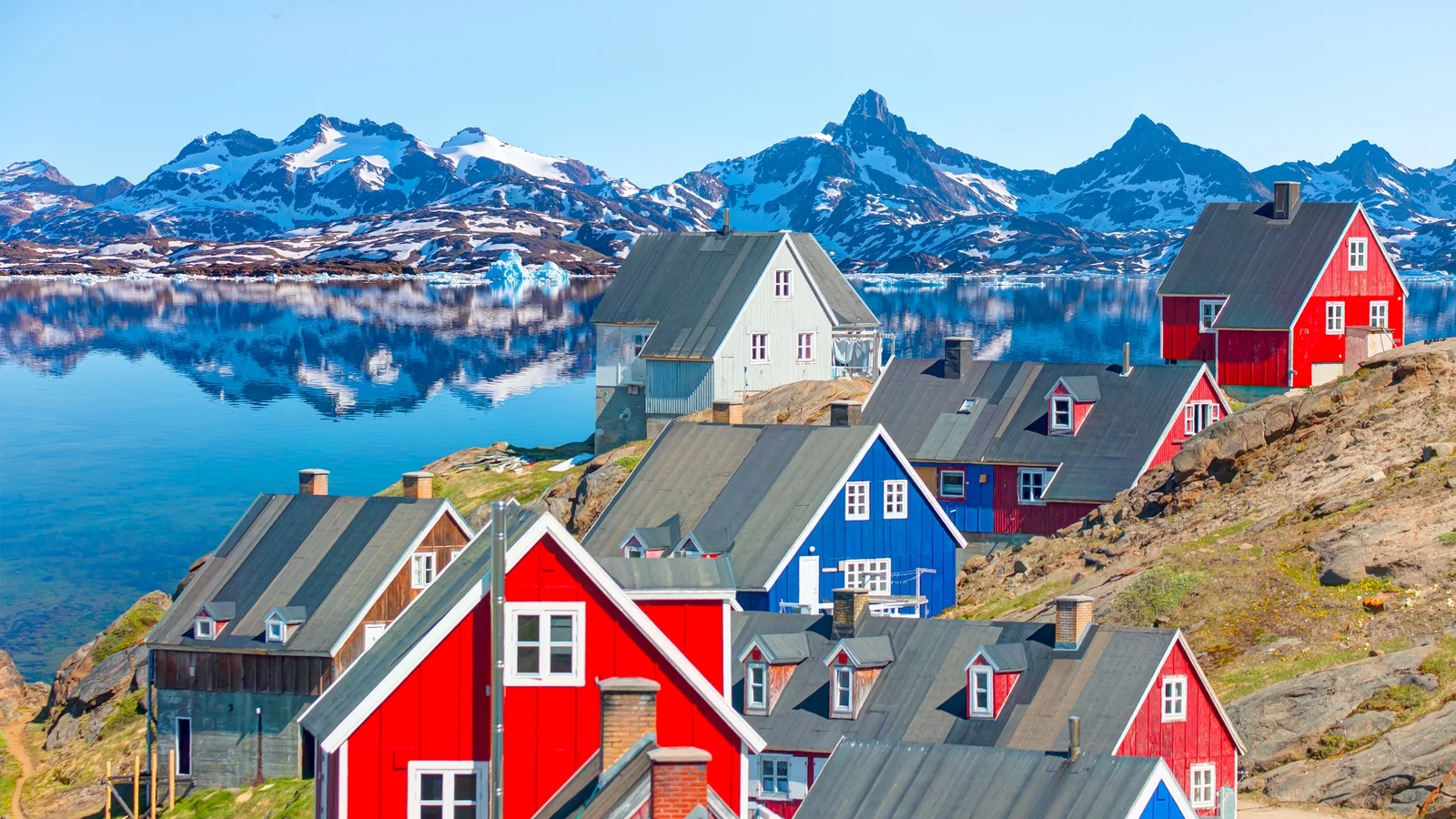
There are moments when a place on a map stops being an abstract shape and becomes a test of trust. Greenland — a sheet of white that covers more than 2.16 million square kilometres and houses roughly 56,000 people — has suddenly become one of those moments.
The headlines may read like a Cold War thriller: talk of “acquiring” the island, references to military options, alarm bells in capitals across Europe. But beyond the blare lies a quieter, more human story: of Inuit communities in Nuuk and Qaanaaq, of Danish diplomats pacing offices, of NATO bureaucrats whispering behind closed doors, and of a world watching what happens when great-power interest collides with the principle of sovereignty.
Why Greenland Matters — Geopolitics and Geology
Look at any strategic map and Greenland leaps out. It sits like a sentinel between North America and Europe, a vantage point over the North Atlantic and a forward post for the Arctic. The United States has long understood that. Thule Air Base, in the island’s far northwest, has been a linchpin of early-warning systems since the Cold War era and remains a critical node for missile detection and satellite tracking.
But Greenland is no mere military chesspiece. Beneath the ice and tundra lie minerals — rare earths, uranium, zinc and iron among them — that the U.S., China, and others covet as the world scrambles for the raw materials of the clean-energy transition and high-tech manufacturing.
“This is where geography and geology meet politics,” says Dr. Elena Korsakov, a specialist in Arctic security at a European think tank. “As Arctic ice recedes and shipping lanes open, Greenland’s strategic value is compounding. It’s not just territory anymore; it’s access, resources, and influence.”
The Conversation Turned Loud
Global viewers heard it as blunt theater: a head of state publicly mulling a purchase or even mentioning the military among options if diplomacy falters. The reaction in allied capitals was swift and severe. “An assault on a NATO ally would spell the end of the Alliance,” a senior Copenhagen official was reported to have warned in private meetings — a sentiment repeated in different words across Europe.
Why such heat? Because Greenland is part of the Kingdom of Denmark and Denmark is a NATO member. NATO’s founding bargain — written in 1949 and anchored by Article 5’s collective defense promise — is designed to keep external threats at bay. The idea that an alliance partner might turn its muscle on another member strains that pact to the breaking point.
Is Military Action Realistic?
From a strictly military point of view, invading or forcibly seizing Greenland would be a strategic and political fiasco. The U.S. already has deep access. Under existing defence arrangements, Washington could expand its presence through agreement with Copenhagen. In other words: boots on the ground are possible without breaking anything — if diplomacy holds.
“There’s no need to cut the gordian knot when the rope is already untied by treaty,” one senior NATO diplomat told me over the phone. “But rhetoric travels faster than treaties.”
Voices from the Ice: Greenlanders Weigh In
Speak to residents and you hear a different register: practical, wary, slightly weary of being discussed more than consulted.
“We are not a postcard to be rearranged,” says Aviaja, a fish-processing worker from Sisimiut, wrapped in the kind of humour that has weathered colonial history and long Norwegian-Danish summers. “Fishing feeds our towns. Our language, our festivals — you don’t buy that in a contract.”
A local leader in Nuuk, who asked not to be named, described meetings where officials and foreign delegations politely circled the same issues: autonomy, exploitation of resources, and the right of Greenlanders to chart their own development. “People here want jobs and investment,” she said, “but not at the expense of our land and our voices.”
NATO’s Tightrope
For the Alliance — 31 members as of 2023 after Finland’s accession — the episode is a diplomatic minefield. On one side: the realpolitik desire to keep the U.S. engaged in Europe’s security architecture. On the other: the need to uphold mutual trust between allies.
“You can’t have a system of collective defense if partners suspect each other,” a veteran NATO analyst remarked. “If one member hints that territory on the map is negotiable by force, then the whole deterrent logic frays.”
Even governments that caucus closely with Washington have felt obliged to push back. In informal corridors, European ministers have been explicit: there are alternatives to coercion. Buyouts, lease agreements, co-investment in infrastructure — diplomacy still works when it is used.
What Could Happen Next?
The future isn’t scripted. But there are a few plausible paths.
- Diplomacy and deal-making: The U.S. could secure expanded basing and resource access through negotiated agreements with Denmark and Greenland’s government, avoiding a blow-up.
- Domestic pushback in Greenland: If residents feel sidelined, political and civil society movements can harden, complicating any external deals and forcing local referenda or legal challenges.
- NATO strain: Even talk of military options can erode trust. The Alliance could respond with quiet diplomacy or public rebukes, but fracture remains a risk.
- Global ripple: China and Russia will watch closely and may use the episode to question Western unity or to pursue their own Arctic partnerships.
Questions to Sit With
How do we balance legitimate strategic concerns with the rights of small peoples to shape their destinies? Can alliances survive when one partner’s rhetoric undermines the principle of mutual respect? And most practically: who gets to decide the future of lands that are as culturally alive as they are geopolitically useful?
These are not abstract inquiries. They matter to the woman in Nuuk selling smoked halibut, to the air-traffic controller at Thule, to the Danish diplomat working late in Copenhagen. They also matter to every capital that relies on NATO’s promises.
Final Frame: A Test of Maturity
We live in an age when words can be as consequential as missiles. The Greenland moment is a test: of whether great powers can manage ambition with restraint, of whether alliances can absorb heated debate without breaking, and of whether the voices of the people who live on the front lines will be respected.
If history is any teacher, the loudest move should be the quietest: honest negotiation, respect for sovereignty, and an eye toward long-term stability rather than short-term spectacle. The map can wait while the work of diplomacy does its slow, steady work. But will it? That’s the question the world is now watching Greenland to answer.