When a Steer Walked Into the Living Room: A Darwin Tale That’s Equal Parts Domestic Comedy and Cultural Snapshot
Imagine coming home to find a bull having a leisurely sniff around your sofa. Not in a field. Not at a rodeo. In your living room, under your family photos. That’s what greeted Andrew Mackay—a Member of the Northern Territory Legislative Assembly—one ordinary night in Darwin, and the moment was caught, with baffling calm, on a pet camera.
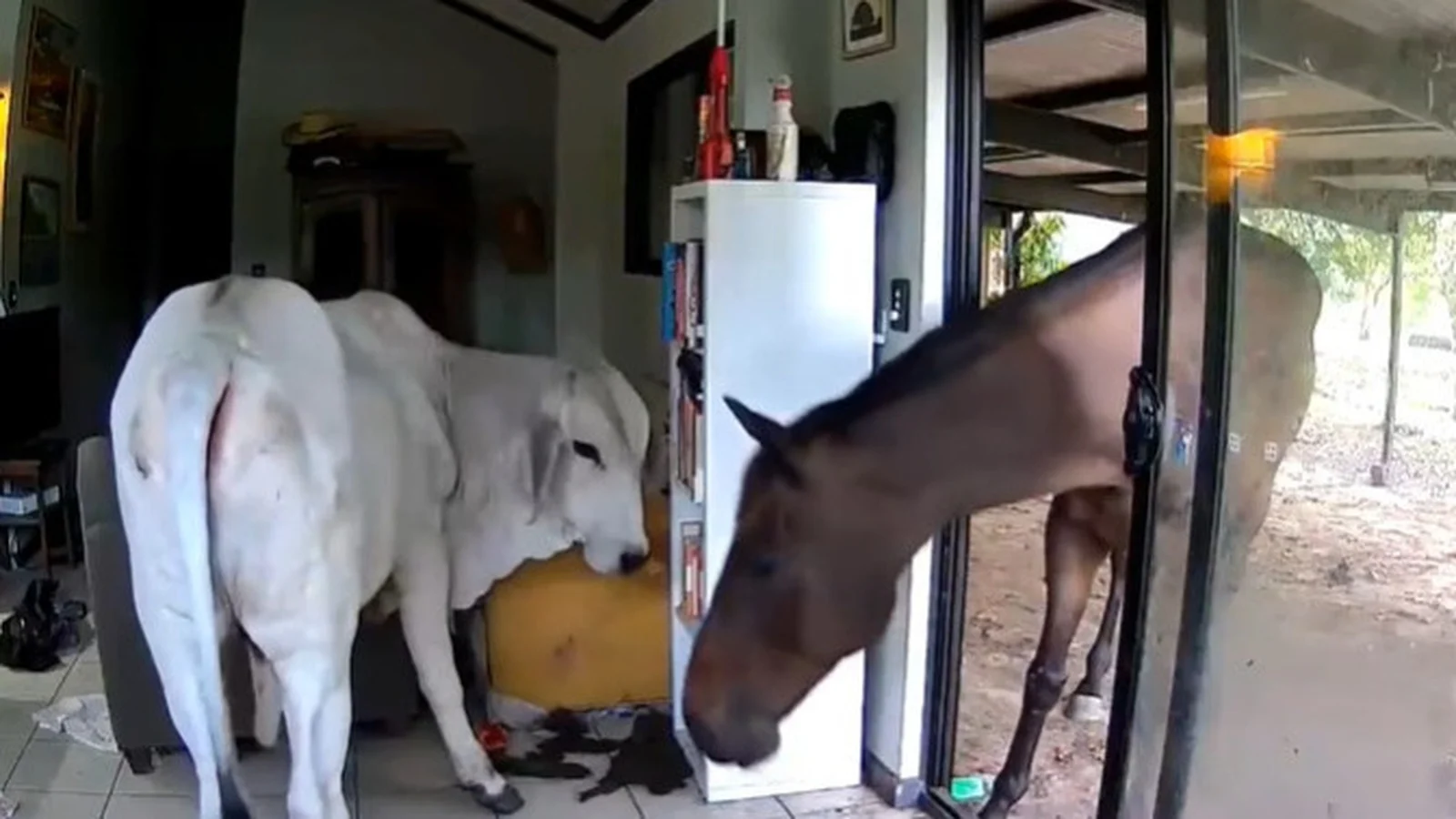
The footage is the kind of thing the internet was made for: one second you’re scrolling through dinner photos, the next you’re watching a steer named Sue saunter in like she owns the place, followed by a horse named Cricket who takes a long, investigative sniff of the couch cushions.
A Quiet Dinner, Then Domestic Mayhem
Mackay and his fiancée were out for dinner when a notification flicked onto the politician’s phone. “I checked the pet cam to see Thunder—our dog—looking bored, and instead I saw a cow’s head moving into the frame,” he told me in a message that still seemed half-amused, half-mortified. “We dropped dessert and raced home.”
What the clip shows is almost implausibly gentle. Their dogs, including a boisterous retriever called Thunder, nuzzle at a sliding glass door; it unlatches a tiny fraction, then opens wider when the steer, in a moment of impatience, scratches his neck and pushes. The house becomes an animal-friendly bistro: the horse samples a bowl of vegetable peelings destined for hens, pieces of scraps land across carpet and coffee table like confetti, and the fish tank—an aquarium that had seen more tranquil evenings—loses a good slug of water to curious noses.
“They were taking turns exploring,” Mackay laughs. “Knocking things off cabinets, chewing a cushion here and there. It was about an hour and a half of carnage and comedy.”
Neighbors, Officials and a Vet Walk Into the Story
In suburban Darwin, such a scene is weird, yes — but far from malicious. “Out here, property lines are more like suggestions,” says local neighbor and smallholder Maya Ng, who keeps chooks and a tractor she calls “Fenway.” “Animals get curious. Horses are nosy by nature. If there’s an open door, they’ll see what the fuss is about.”
Dr. Samuel Reid, a mixed-animal veterinarian based in Palmerston, offered a practical read: “Horses and cattle are social and inquisitive. They investigate with their mouths and noses, so anything that smells like food or is unusual in a room will be interesting. Most livestock won’t cause structural damage in short bursts, but there’s always a risk—broken glass, swallowed foreign material, or stressed animals.”
Statistics help frame why this story tickles so many. Australia is a nation that loves animals: roughly two-thirds of households own a pet in some form, according to surveys by Animal Medicines Australia and other animal welfare groups over recent years. Dogs remain the most popular companion animal; in regional and rural areas, horses and cattle are also part of everyday life. When politicians post candid home videos, audiences are reminded not only of our shared fondness for animals, but of how public figures are, at times, very human.
“It Humanizes Us”
“People love to see their leaders in ordinary, unguarded moments,” says political analyst Priya Menon. “A clip like this does something politicians struggle with in staged settings: it humanizes them. For constituents who wrestle goats or open gates every day, it’s almost a shared joke.”
Mackay’s feed exploded—likes, heart emojis, a sprinkling of gentle mockery. “We had people saying, ‘Where’s Sue’s broom?’” he told me, grinning. “And others offering to replace cushions.”
The Broader Picture: Animal Behavior, Home Safety and Social Media
Beyond the giggles, the episode nudges larger questions about how humans and animals share spaces—both literal and digital. Urban expansion and hobby farming have blurred boundaries. In Australia’s tropical Top End—where Darwin’s climate leans hot, humid and open-armed to the outdoors—it’s common to live with a yard that invites wildlife in: wallabies, birds, and sometimes a neighbor’s livestock on a curious walkabout.
Social media amplifies these encounters. A small household incident becomes a global clip within hours; strangers weigh in with advice, jokes, and cautionary tales. It’s a reminder that in a connected world, local eccentricities become international narratives about community, responsibility, and the little chaos that makes life worth noticing.
What We Can Learn
- Secure boundaries matter: even the friendliest animals can cause harm if they find themselves indoors and confused.
- Pet cameras and home-monitoring tech are double-edged swords—great for security, irresistible for viral clips.
- Public figures who share everyday mishaps often gain goodwill; it’s a small bridge to voters and neighbors alike.
Local Color: Darwin’s Backyard Culture
To picture this scene, think verandahs that run the length of a house, mango trees heavy with fruit in season, and a neighborhood where people still borrow ladders and sugar freely. Darwin’s social rhythms—where afternoon storms, backyard barbies and spontaneous visits are common—shape the way residents live with animals. “We always say: leave a feed bowl out, and there’ll be friends,” Maya told me, smiling. “Sometimes the friends have hooves.”
There’s an ease here that’s both enviable and precarious. It’s a reminder that community is a living thing—sometimes literal, and sometimes prone to coming inside unannounced.
So, What Would You Do?
Think about your own home. How do you secure it—not just against burglars, but curious animals, nosy neighbors, and the unpredictable? Would a pet cam make you laugh, or make you nervous?
For Mackay, the cleanup included mopping up and a quick check of his fish—“I don’t know how many I had before, but I assume they’re still alive,” he said—and a story that will likely travel further than any policy speech. “It’s one of those nights,” he shrugged. “You drive home, and instead of your family greeting you, you find a bull looking comfortable on your couch. You learn to lock the door. And you laugh.”
Which, at the end of a long day, might be the most human reaction of all.