When Celebration Became a Collision: A Liverpool Night That Changed Lives
There is a particular hum to Liverpool after a victory — the city vibrates, not just with noise but with relief and joy. Red scarves flutter like flags. Pints are raised in chorus. The anthem “You’ll Never Walk Alone” threads through the streets, a hymn and a promise rolled into one.
On the evening of 26 May, that hum swelled into a river of supporters pouring out of the city centre following Liverpool FC’s title celebrations. Families, teenagers, grandparents and toddlers drifted through Dale Street and Water Street, many still buzzing, many exhausted, all moving slowly toward trains, buses, taxis and the safety of home.
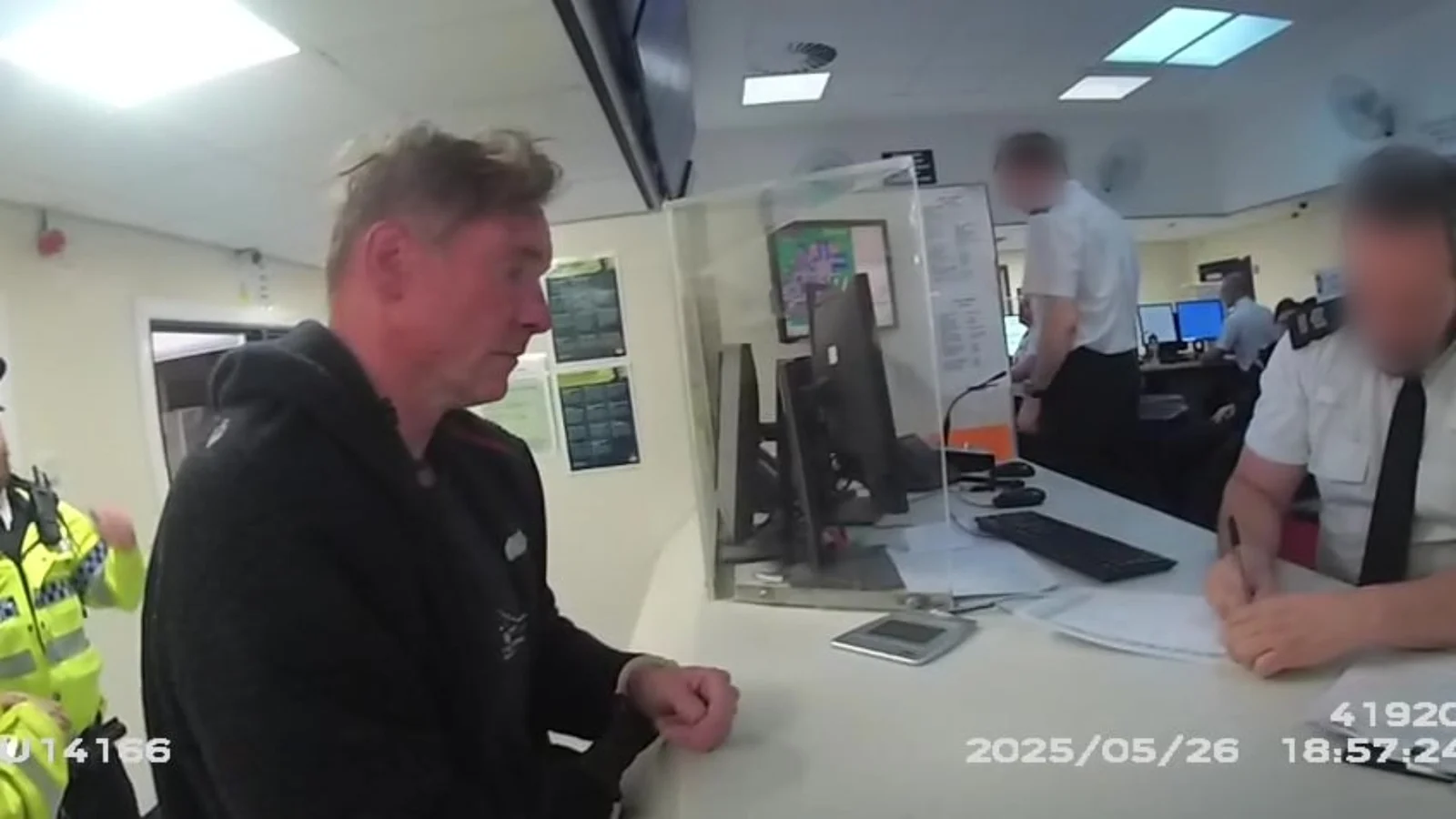
At roughly 6pm, the flow of people met a different kind of force: a silver Ford Galaxy driven by 54-year-old Paul Doyle. What followed — captured on the car’s own dashcam and later replayed in court — read like a nightmare stitched into minutes. The vehicle mounted a street closed to traffic and accelerated into crowds. People flew onto the bonnet; others tumbled under rubber and steel. A pram carrying six-month-old Teddy Eveson was thrown; 77-year-old Susan Passey was among the wounded. In total, 134 fans were injured that day, some with life-changing damage, and 29 victims were named in the indictment.
A dashcam, a decision, and a desperate scramble
The footage is ordinary in form but extraordinary in consequence: a steering wheel, a dashboard, a man’s voice, anger and obscenities. “Move,” the driver can be heard shouting. At one point the camera records him swearing, reacting not to a threat but to the human tide around him. When a line of cars turned away from the cordoned street, Doyle paused, then steered into the left lane where people had gathered.
“It was like watching someone choose violence in slow motion,” said a local paramedic who treated victims that night, speaking on condition of anonymity. “There was no frantic, panicked swerving to avoid people — it was deliberate, and that’s the worst of it.”
The car finally stopped only because Dan Barr, a fan who had been in the crowd, climbed into the back seat and pushed the gear selector into park. “I just saw kids underneath and knew I had to do something,” Barr later said in a statement read in court. His quick action prevented further movement but could not reverse the damage already done.
Courts, sentences and words that landed like thunder
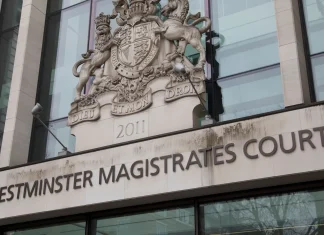
Last week, Mr Justice Andrew Menary KC sentenced Doyle to 21 years and six months in prison after the former Royal Marine admitted a litany of offences, including dangerous driving, multiple counts of causing grievous bodily harm with intent, and affray. Doyle initially denied 31 charges but changed his plea moments before the prosecution opened its case, acknowledging his actions in full.
At sentencing the judge did not mince words. “It is almost impossible to comprehend how any right-thinking person could act as you did,” he told Doyle. “To drive a vehicle into crowds of pedestrians with such persistence and disregard for human life defies ordinary understanding.” He added: “Your actions caused horror and devastation on a scale not previously encountered by this court.”
For many of the injured, the sentence will be a legal milestone but not an end to daily struggles. Recovery — physical, emotional, financial — stretches long after the gavel falls.
Questions left in the wake
Why did he do it? The prosecutor’s reply was stark in its simplicity. James Allison of the Crown Prosecution Service (Mersey–Cheshire) told the court, “He lost his temper. He went into a rage.” Detectives found no evidence that Doyle had been threatened with a knife or faced an immediate attack; CCTV and witness accounts did not corroborate his later claim that panic drove him.
Detective Chief Inspector John Fitzgerald put it bluntly: “Doyle’s total disregard for the safety of others — particularly the many young children present on Dale Street and Water Street that day — is beyond comprehension. It is sheer luck that no lives were lost.”
Lives interrupted — from a six‑month‑old to the elderly
The list of victims reads like a cross-section of a city: infants in prams, teenagers with scarves and painted faces, parents, commuters, pensioners. One six-month-old baby, Teddy Eveson, was hurled from his pram; another victim, aged 77, was among the oldest named. Some suffered broken bones and deep lacerations; others are rebuilding mobility, sleep and trust.
“He was supposed to be cheering with us,” said a mother who was at the parade and whose toddler had been knocked over. “Instead, we spent the night in A&E. A celebration turned into a memory I can’t shake.”
The human stories have continued to ripple outward: nights of insomnia for witnesses, children afraid of crowds, people unable to return to certain streets without a sense of unease. These are the quieter, cumulative costs that statistics cannot fully capture.
What this means for public safety and city life
Large public gatherings are a British ritual — from carnivals to jubilant football parades. The question is not whether they should happen, but how cities ensure they can happen safely.
- Physical measures: More temporary bollards, reinforced closures and better signage can make an immediate difference.
- Event design: Rerouting traffic, extending pedestrian-only hours and clearer stewarding create protective buffers.
- Community training: Encouraging bystander first response and situational awareness can save lives — as Dan Barr’s actions showed.
Across Europe and beyond, urban planners and security professionals have increasingly wrestled with vehicle-into-crowd incidents since the early 2010s. While most celebratory events pass without incident, the potential for tragedy has reshaped how civic mums and dads, councils and police think about open streets.
Not just a Liverpool problem
What happened on Dale Street is a local calamity with global echoes. Cities worldwide are reconsidering the balance between openness and protection. How do we preserve the unscripted joys of mass celebration — the spontaneous singing, the shared beers, the skin-to-skin camaraderie — while reducing the risk of someone, for reasons we may never fully understand, turning a car into a weapon?
It is a policy question, yes, but also a moral one. When a person’s rage can reverberate through a crowd, what does that tell us about the health of civic life? About the supports we offer people whose tempers escalate into violence? About the training we give drivers, the stressors that lead to road rage, and the latent fractures in communities?
After the parade: grief, gratitude and hard conversations
There has been gratitude — for the paramedics, the hospital staff, the strangers who reached in to drag people from beneath wheels. There has been grief and anger, and a fierce determination from many in Liverpool that the city will not be defined by a single car and a single moment of fury.
“We’re still the city that sings,” said one lifelong Liverpool resident as she lit a candle for the injured. “But we must do better. Not just in punishment, but in prevention.”
So I’ll ask you, the reader: when you next see a crowd, what do you see? Joy? Risk? A place to stand together? A single thoughtless act can turn communal joy into trauma. The challenge ahead is collective: to protect the spontaneous and to heal the harmed, to study what went wrong and to act so it never happens again.
For the families tending bruises and stitches, for Dan Barr and other quiet heroes, for the baby thrown from his pram and the pensioner with a broken arm, the sentence may mark one chapter’s close. But the long work of rebuilding trust — in streets, in safety, in each other — stretches on.