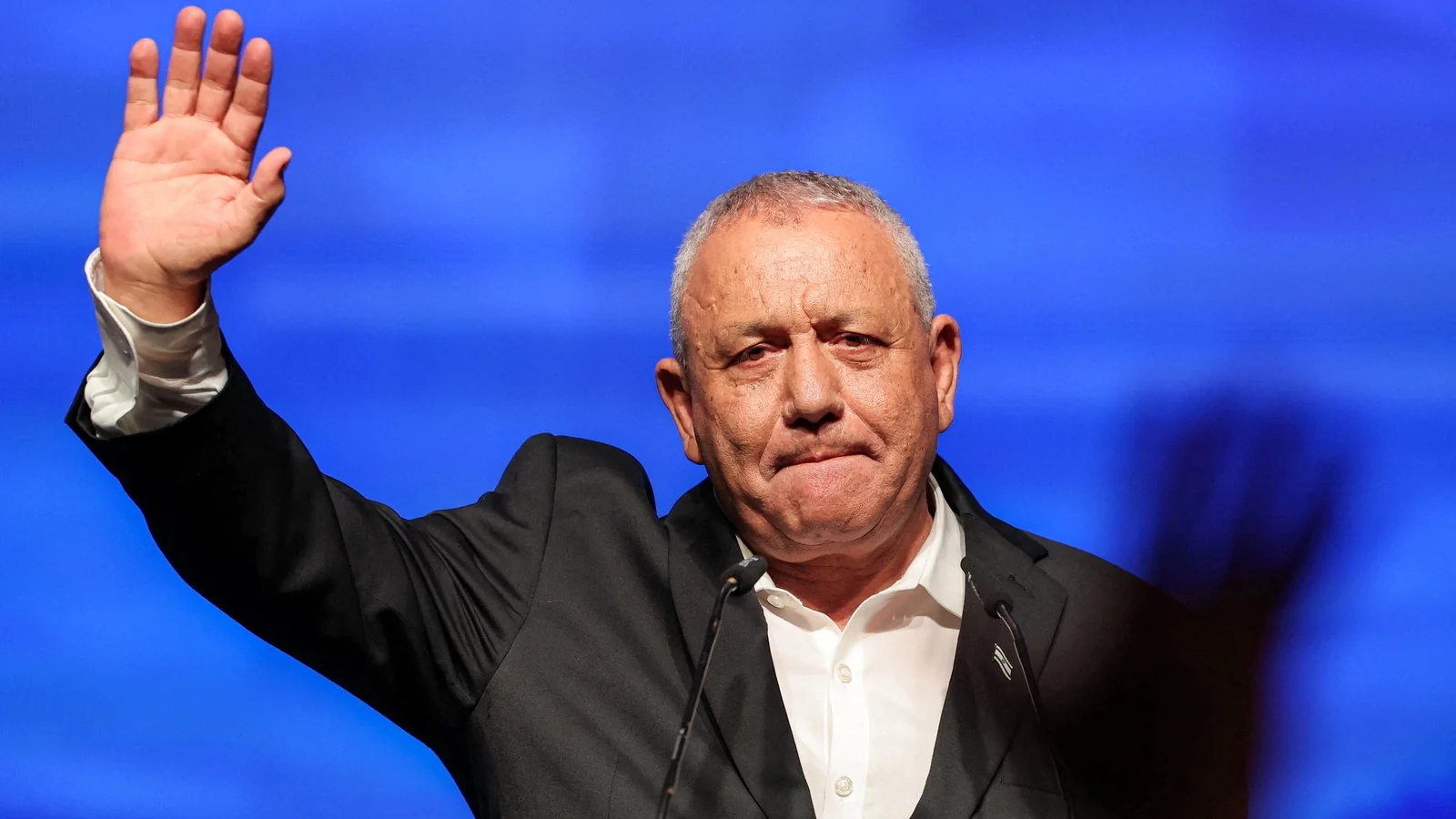
Israel’s fractured election result has left President Isaac Herzog with a high-stakes decision — and it is former military chief Gadi Eisenkot who now appears best positioned to receive the first chance at building a governing coalition, after a religious party long tied to Prime Minister Benjamin Netanyahu refused to back him.
Mr Herzog was holding a second day of consultations with political parties following the 27 October election, an outcome that denied a clear parliamentary majority to both Mr Netanyahu — a polarising right-winger who has led Israel through three years of war — and Mr Eisenkot, who is campaigning on a promise to restore national unity.
Although Mr Herzog has the authority to decide whom to ask to form a new government, the mandate has traditionally gone to the lawmaker endorsed by the most parties — a standard that, at this stage, points toward Mr Eisenkot.
The opposition leader also secured backing from a prominent MP from Israel’s Arab minority, whose parliamentary representation surged amid anger at Mr Netanyahu’s policies. Even so, Mr Eisenkot has not made clear whether he would accept Arab support in order to assemble a coalition.
United Torah Judaism, which stood with Mr Netanyahu through the previous five elections, used its meeting with Mr Herzog to signal a break from that automatic support: it declined to recommend Mr Netanyahu again as prime minister, while also withholding an endorsement from Mr Eisenkot.
Israel’s President Isaac Herzog pictured as he received the general election results in Jerusalem
The party told Mr Herzog “that it has decided not to recommend any member of Knesset to form a government,” the president’s office said in a statement, referring to the 120-member parliament in which United Torah Judaism has won seven seats.
United Torah Judaism — representing ultra-Orthodox Jews of Ashkenazi origin, many of whom hail from or trace roots to Europe — and Shas, which represents the same community but of Sephardic, or mostly Middle Eastern and North African descent, have both relied on Mr Netanyahu as they press to preserve the long-standing exemption from military service for religious students.
Mr Netanyahu has kept the exemption in place, but has not gone as far as anchoring it in law — a stance that has fuelled resentment among many Israelis as reservists are called up repeatedly because of the wars in Gaza, Lebanon and Iran.
“In whatever government is next formed, our immediate item is sorting out the status of Torah students,” United Torah Judaism MP Isaac Pindrus said.
Mr Eisenkot, seeking to draw support from secular Israelis across the political spectrum, has taken a firm line in favour of shutting down military-service exemptions.
Several of his opposition partners have gone further, arguing that the ultra-Orthodox — about 14% of the population and growing faster than the secular public due to higher birthrates — place an outsized burden on the state.
Political observers say United Torah Judaism’s move is widely viewed as a warning shot aimed chiefly at Mr Netanyahu, underscoring that its backing is not guaranteed — even as it could still ultimately join a government he manages to form.
Arab-Israelis play key role
After Mr Herzog grants a mandate to a member of parliament — expected to be either Mr Eisenkot or Mr Netanyahu — that lawmaker will have 28 days to form a government, with the option of a 14-day extension. If the attempt fails, Mr Herzog would then hand the task to another candidate.
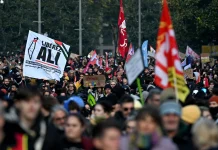
A protest organised by Partnership for Peace called on Gadi Eisenkot to form an alliance with Israel’s Arab parties
Mr Netanyahu’s bloc, which includes United Torah Judaism, controls 53 seats in the new parliament, compared with 48 for Mr Eisenkot’s bloc.
The Raam list led by Mansour Abbas — a key Arab-Israeli MP who, in the latest election, for the first time also included a Jewish candidate — also informed Mr Herzog that it was recommending Mr Eisenkot.
Arab-majority lists climbed to 19 seats, propelled by backlash against Mr Netanyahu’s hard-right government. Ministers in that coalition have vowed to treat Israel’s Arab citizens much like Palestinians in war-ravaged Gaza and the occupied West Bank.
With those numbers, Mr Eisenkot could potentially put together a government with Arab-party support, but doing so could cost him backing elsewhere in the opposition — particularly from Avigdor Liberman, a former Netanyahu aide turned vocal critic who nevertheless shares the outgoing government’s hawkish approach toward Palestinians.
Mr Netanyahu has repeatedly targeted the opposition over even the possibility of working with Arab lawmakers.
In a video filmed yesterday in the prime minister’s office, Mr Netanyahu said there were “serious suspicions” that foreign powers funnelled money into the election and raised questions about the loyalty of Arab citizens.