Tehran at a Crossroads: Streets of Sorrow, Screens of Silence
Night fell over Tehran and the city seemed to hold its breath. Where laughter would normally spill from teahouses and taxis honk in familiar impatience, there was the muted crushing sound of boots on asphalt, the distant clatter of funerals, and an internet that had gone almost entirely dark.
On the surface, it looks like another episode in Iran’s long, fraught history of unrest. But beneath the headlines—beneath the images that slip through the blackout—are human stories that crack the official narratives: mothers clutching the coats of sons taken during midnight raids; a shopkeeper in downtown Tehran refusing to close because “if I hide, what do I live for?”; and funeral processions so vast state television felt compelled to cut in and broadcast them as demonstrations “in condemnation of terrorist acts.”
What Happened? The Spark and the Surge
The latest wave of protests began on 28 December, ignited by soaring prices and widespread economic pain. But it didn’t stay there. Within days, crowds who once shouted about bread began shouting at the very pillars of the post-revolutionary order.
“It felt like a pressure cooker had burst,” said Fatemeh, a schoolteacher in Karaj who asked that her family name not be used. “You could see it in people’s eyes—there was fury at how lives are lived on the margins while others profit. When the streets filled, it became about dignity as much as prices.”
Rights monitors in the United States say the consequences have been deadly. The US-based group HRANA said it had verified the deaths of 490 protesters and 48 security personnel, and reported more than 10,600 arrests. Tehran has not released official tallies, and independent verification is hampered by the communications blackout that began on Thursday.
Silencing the Story: The Internet Blackout
For many inside Iran, the blackout changed the shape of the uprising. Clips that once traveled across platforms and borders were suddenly trapped on phones. Newsrooms outside Iran scrambled to corroborate snippets; families inside were left unable to tell relatives abroad whether their streets were calm or ablaze.
“When the net goes, so do the witnesses,” said Roya H., a digital rights activist based in Tehran. “It’s not just about messaging—without it, the truth vanishes in real time.”
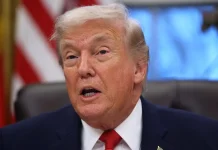
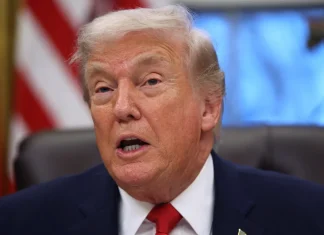
President Donald Trump said he would speak to Elon Musk to explore whether Starlink satellite internet service could restore connectivity. Whether such technical fixes could penetrate a deliberate national shutdown—and what political consequences that would bring—remains unclear.
The Global Responses: Threats, Sanctions, and Diplomatic Tightrope
International reaction has been swift and tense. The European Union said it was “looking into” fresh sanctions over what it called a violent crackdown. “We stand ready to propose new, more severe sanctions following the violent crackdown on protesters,” EU spokesman Anouar El Anouni told reporters.
Across the Atlantic, rhetoric escalated into the kinds of threats that make diplomats measure breaths and militaries raise alert levels. President Trump publicly said the US was in contact with opposition figures and that a meeting with Iranian officials might be arranged—but he also warned of “very strong options,” ranging from expanded sanctions to military strikes and cyber operations.
“We are ready for war but also for dialogue,” Iran’s Foreign Minister Abbas Araqchi told foreign ambassadors in Tehran, according to a briefing translated into English. The choice between confrontation and conversation is a razor’s edge; one misstep could light the regional tinderbox.
Inside Iran’s parliament, Speaker Mohammad Baqer Qalibaf offered a blunt deterrent: any attack on Iran, he warned, would make the “occupied territories” (a reference to Israel) and US bases legitimate targets. Those words were relayed in a tone that signaled preparedness not only to retaliate militarily but to broaden the conflict, raising alarm bells across capitals in the Middle East.
What Washington Is Weighing
- Expanded economic sanctions
- Cyber operations aimed at intelligence or communications infrastructure
- Direct military strikes on selected targets
- Covert or overt support to opposition groups
U.S. officials, according to press reports, are studying those options. Analysts warn that options that look surgical on a map are rarely surgical in reality.
On the Ground: Grief, Defiance, and the Long Tail of Economic Malaise
Walk a bazaar in Shiraz and you can still smell saffron and frying onions, but the rhythms have shifted. Customers haggle, yes, but many simply can’t afford to haggle; purchases are smaller, savings evaporated by inflation and sanctions. It’s easy, in that cramped context, to see why the protests spread so quickly.
“We have made every sacrifice,” said Hassan, who runs a small construction firm. “We are not asking for revolution—just fairness. When people ask why they should bear the weight of others’ wealth, anger spills out.”
Political anger is compounded by resentment towards the Islamic Revolutionary Guard Corps (IRGC), whose sprawling economic interests—from oil and gas to telecommunications and construction—leave many Iranians convinced that elites profit while ordinary citizens suffer. State media framed the unrest as foreign-backed “terrorism”; opponents see that as an attempt to delegitimize domestic grievances.
State television broadcast live footage of large state-organized rallies and mourning ceremonies for security personnel killed in some cities, while also urging people to take to the streets in “condemnation” of what authorities called terrorist acts. The competing images—of funerals and protests, of grief and condemnation—created a visual cacophony that few outside Iran could credibly parse.
Why This Matters to the World
Beyond the human toll and internal politics, Iran’s unrest matters for three major reasons.
- Regional stability: Iran is a pivotal actor across the Middle East. Escalation could redraw alliances and trigger military responses from neighboring states and allies.
- Global markets: Iran sits astride key energy routes and its instability tends to ripple into oil prices and market confidence.
- Information sovereignty: The blackout is a stark example of how modern states can throttle the internet to control narratives and stall solidarity movements—something governments from Beijing to Cairo watch closely.
“This is not just an Iranian story,” said Alan Eyre, a former U.S. diplomat and Iran specialist. “It’s a test of resilience for a society, and a test of restraint for outside powers. Even if the establishment survives this unrest, it likely emerges weaker and more brittle.”
Questions That Linger
Will sanctions pressure, or harden the state’s resolve? Can dialogue be credible when threats of force hang like a guillotine? And for ordinary Iranians—who just want to keep food on the table and their loved ones safe—what does freedom mean when the lights go out and the streets are filled with troops?
Perhaps the most human question is simplest: when the world watches through the small, grainy frames that make it out from under the blackout, do we see the stories behind the statistics—grief, anger, hunger, and hope? Or do we let them become yet another chapter in a geopolitical ledger where people are footnotes?
There are no tidy endings on the streets of Tehran tonight. But the images that escape—of mourning crowds, of hands raised in defiance, of neighborhoods taking stock—are a reminder that history is not only the work of capitals and commands. It is also the work of ordinary lives stretched to a breaking point.
As this story unfolds, what are we willing to do as global citizens? Watch? Protest? Lobby our governments? Send aid? Or will we, yet again, learn the cost of silence?