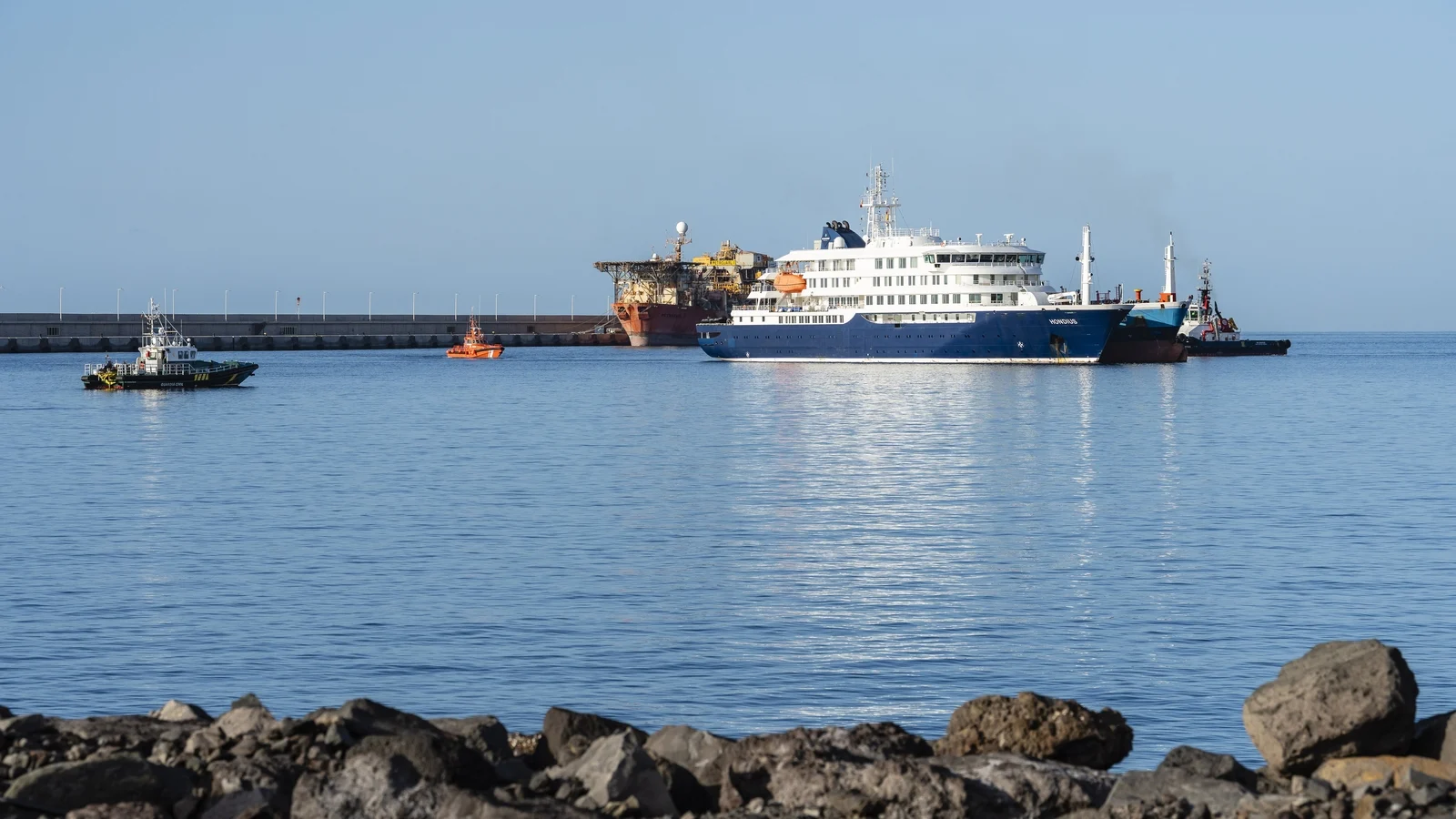
People in White Suits, a Drifting Ship, and a Quiet Question: What Happens When a Rare Virus Collides with Modern Travel?
They stepped down from the air ambulance like characters in a surreal tableau: white medical overalls, masks pulled tight, each clutching a plain white sack of belongings. For a few seconds the airport terminal felt less like a travel hub and more like the stage of an improvised drama—one that had begun thousands of kilometers away on a small expedition ship cutting through Atlantic swells.
By evening, two planes carrying 28 evacuees from the MV Hondius had landed in the Netherlands. The Dutch foreign ministry confirmed the numbers: passengers, crew, medical staff, and the specialized epidemiologists who have become fixtures in outbreaks the last decade—one from the World Health Organization, another from the European Centre for Disease Prevention and Control.
Who came down from the sky
The first aircraft delivered six former guests from the vessel: four Australians, one New Zealander, and a British citizen who lives in Australia. Expecting to rejoin their families across an ocean, they were instead routed to a quarantine facility near the airport. “We thought we’d be back home in weeks,” said “Emma,” an Australian passenger who asked that her surname not be printed. “Instead we were told to get into covers and masks. It felt like being inside a picture with no caption.”
The second flight disembarked 19 crew members, alongside a British doctor who had been on board and the two epidemiologists. Unlike the quarantined group, the crew stepped off without full protective gear—masks only—carrying sizeable white sacks as if their lives had been reduced to the contents of a single duffel. “We’re trained for a lot of things at sea,” one young crew member said, “but this is not the sea I signed up for.”
The Hondius continues on, but not as usual
Oceanwide Expeditions, the ship’s operator, says the Hondius is now steaming from Tenerife toward Rotterdam for extensive disinfection. Starboard lights burn as the vessel threads northward, the volcanic silhouette of Tenerife receding in its wake. Onboard, the numbers have dwindled but not disappeared: 25 crew members and two medical staff remain, along with the somber knowledge that a German passenger died during the voyage. His death—a reminder that outbreaks are not only statistical nuisances but human tragedies—has left a shadow that no disinfectant can fully erase.
“We’re arranging for professional decontamination at a northern European port,” an Oceanwide spokesperson told reporters. “At the same time, our priority is the wellbeing of our crew and passengers.”
A quick primer: what is hantavirus?
Hantaviruses are a family of viruses primarily carried by rodents. Depending on the strain, infection can cause two major syndromes: hantavirus pulmonary syndrome (HPS), more common in the Americas, and hemorrhagic fever with renal syndrome (HFRS), more seen in Europe and Asia. HPS can be severe—mortality rates for some strains have approached 30–40%—and symptoms often begin with fever, muscle aches, and fatigue before progressing to breathing difficulties. Incubation can range from one to five weeks, which complicates tracing and response efforts.
“On ships, the issue is always about vectors and enclosed spaces,” said Dr. Leila Moreno, an infectious disease specialist who has worked with maritime outbreaks. “Rodents on board or rodent-contaminated supplies could introduce hantaviruses. Person-to-person transmission is rare for most strains, but when you’re in close quarters the fear—and therefore the response—intensifies.”
Quarantine, logistics, and the human ripple effect
Quarantine is not just a medical protocol; it is a social punctuation. Those six passengers destined for Australia will stay near the airport until vetted and cleared for repatriation. For them, and for the crew who stepped off breathing into masks, the process will include medical observation, testing, and the slow calculus of whether to return to home ports or new isolation hotels.
For families waiting at the other end of this journey, the hours are long and filled with uncertainty. “My sister called me in tears,” said Marcus, whose partner was a crew member on the Hondius. “You hear ‘quarantine’ and you picture hospitals and sirens. But she’s on a ship, in the middle of nowhere—it’s this thin line between being safe and being isolated.”
Beyond individual anxieties, the episode underscores something larger: modern travel remains alarmingly vulnerable to the old laws of biology. After the pandemic, cruise operators revamped protocols, invested in testing, and staged elaborate infection-control plans. Yet new or re-emerging pathogens—whether rodent-borne viruses or other agents—test those safeguards in unanticipated ways.
What officials are saying
Officials from health agencies are cautiously optimistic but pragmatic. “We have teams working to identify the source and to ensure that contacts are traced and monitored,” said a spokesperson from the Dutch health authority. “We also have protocols for port disinfection and crew welfare that will be activated upon arrival.”
The presence of WHO and ECDC epidemiologists aboard the flight signals international coordination—an acknowledgment that in our connected world, a viral scare in the Atlantic can ripple across continents within 48 hours.
Why this matters to us all
Think for a moment about the commodities and comforts of global travel: fresh fruit from elsewhere, crew rotations halfway around the globe, food supply chains that stretch across continents. Ships are microcosms of globalization—efficient, cramped, and dependent on continuous human and material exchange. When something like hantavirus appears on board, it becomes a test case for how those systems hold up.
We might ask: are our screening systems focused enough on non-respiratory, rodent-borne threats? Have maritime inspections intensified in the post-COVID era to account for vermin and cargo contamination? And perhaps most humanly, how do we care for the mental and physical health of sailors and expedition passengers who willingly put themselves in remote environments for the sake of exploration?
Small details that matter
At a small café near the airport, a barista named Anne—a native of Rotterdam—watched the arrivals on the news and shook her head. “They looked so tired,” she said. “You could tell by how they held their bags. Travellers in my city are used to seeing ships come and go. But this—this looked like a story from another time.”
In Tenerife, local guides who had waved to the Hondius days earlier recalled the bright chatter of passengers on deck, binoculars trained on migrating cetaceans and cliffs. “We made jokes about the weather and the dolphins,” one guide said. “None of us expected that the trip would end with masks and flights home.”
Final thoughts: learning while we move
Outbreaks on ships are not inevitable, but they are predictable—if one reads the conditions. Close quarters, aging infrastructure, complex supply chains, and the ever-present possibility of rodents or contaminated provisions make maritime travel a unique public-health puzzle.
As the Hondius nears Rotterdam and the world watches, we would do well to remember that every evacuee who steps off a plane is a person with a life, a family, and a story. The broader lesson is less about fear and more about humility: that in a globalized age, local biological realities can ripple outward quickly, and our responses must be equal parts science, logistics, and compassion.
So here is a question for readers: as travel resumes and expands in the years ahead, what trade-offs are we willing to accept between the thrill of exploration and the fragility of shared biology? How do we design systems that keep curiosity alive without sacrificing safety? The answers will shape not merely policy, but the texture of our shared voyages.