A shock in a time of war: power, suspicion and a country watching
The morning the news broke, Kyiv felt smaller. Not physically — the city is the same clustered maze of Soviet façades and glass towers — but the conversation that day shrank toward one uncomfortable subject: trust. Headlines announced that a name once synonymous with influence in the president’s circle had been flagged by anti-corruption investigators. In parlors and cafes, on tram rides and in government corridors, people asked the same quietly furious question: can you fight for your country abroad if you’re fighting corruption at home?
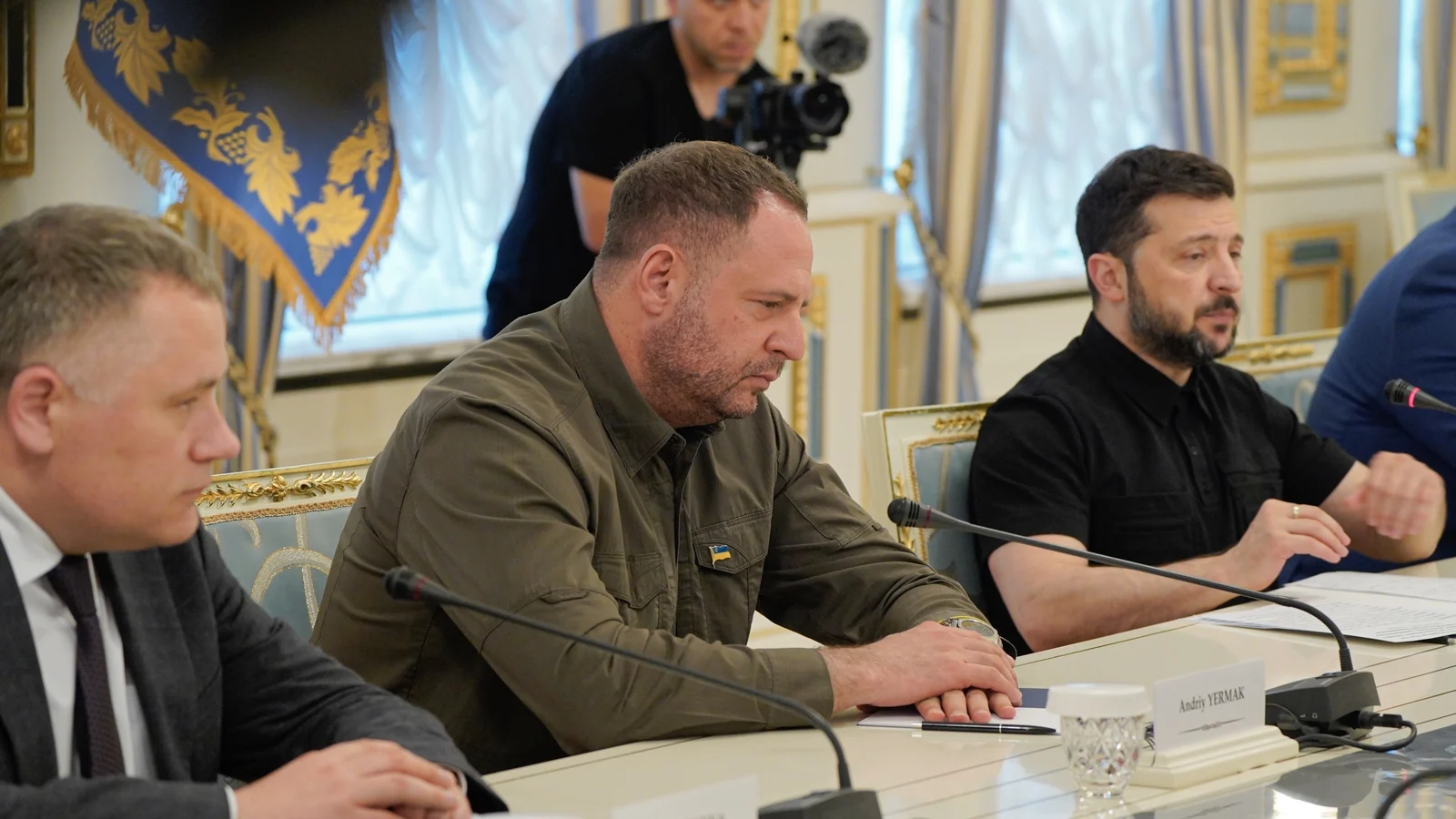
Ukrainian authorities say an investigation has identified a senior former presidential aide as a suspect in a scheme that allegedly laundered roughly $10.5 million through an upscale housing project outside Kyiv. The agencies have held to procedural practice and not published the person’s name; local outlets and social feeds, however, linked the inquiry to Andriy Yermak, President Volodymyr Zelensky’s one-time chief of staff. Yermak, who resigned amid a wider scandal last year, denies owning property at the development and has said little else publically.
The allegations, in plain terms
What the authorities have described so far is a familiar pattern to anyone who studies corruption: shell companies, layered transfers and real estate as a destination for suspicious funds. Officials say roughly $10.5 million was funneled into an elite housing development — a kind of modern gated enclave where Kyiv’s wealthier residents shelter from the city’s dust and air raids.
Those sums sit within a broader probe that exploded into public view last November when investigators alleged a separate scheme involving kickbacks valued at about $100 million tied to the state atomic agency. That earlier revelation prompted resignations, new charges against several high-level figures and a fraying of public patience that had been building for years.
- Amount under this investigation: approximately $10.5 million
- Related probe revealed last November: alleged $100 million kickback scheme
- Context: these revelations emerged while Ukraine continues to fight a full-scale invasion that began in 2022
“Procedures must be respected”
At a short briefing, Dmytro Lytvyn, the president’s communications adviser, struck a cautious tone. “We are at the stage of procedural actions,” he told reporters. “Speculation does not help the state or the investigation.”
That insistence on due process is one of the few things that unites officials and opposition figures alike. Under Ukrainian law, suspects are not to be named publicly before formal charges; yet, in the internet era, quiet legal protections can be overtaken by an online loudspeaker.
The man at the center — who wielded real power
To understand why this story has resonance, you have to understand the cast. Yermak — a former film producer and entertainment lawyer who became Zelensky’s right-hand man — occupied a rare space in Ukrainian politics: unelected but indispensable. He was often described as the country’s second most powerful person, negotiating on Kyiv’s behalf in delicate talks and appearing at the president’s shoulder at key moments. His resignation last year was presented as part of a broader attempt by the presidency to reset, to show that no inner circle was untouchable.
“He was everywhere — at summits, at the negotiating table, on TV,” says Olena Hrynko, a political scientist in Lviv. “Power consolidated informally in Ukraine for years. That is a dangerous thing in peacetime; in wartime it becomes combustible.”
Voices from the city: anger, weary pragmatism, cautious hope
On a street in Podil, an old Kyiv neighborhood where coffee steam meets late Soviet tiles, residents traded takes with the blunt honesty of people who have seen governments come and go.
“I supported the idea of changing everything after 2014 and again in 2019,” said Serhii, a 35-year-old taxi driver who declined to give his full name. “Now, every time someone close to the president is accused, I think: will we ever be different?”
Across town, a young NGO worker named Iryna was more cutting. “We are asking our partners for weapons and funds. Donors will look at these stories. They ask: are reforms real or cosmetic?”
A security guard at one of the gated developments near the capital shrugged when asked about the scandal. “People with money don’t like to talk to journalists,” he said. “But they watch the news.”
Why this matters beyond Kyiv
This is not merely an internal squabble. Ukraine is receiving sustained international attention and support — diplomatic, financial and military — worth tens of billions of dollars since the full-scale invasion in 2022. Western capitals have made anti-corruption reforms a recurring condition of deeper political support. If allegations of high-level graft appear, donor confidence is at risk. That matters not just for the ornamental politics of reputation, but for weapons, ammunition and rebuilding budgets.
“Corruption is a force multiplier for an aggressor,” said Taras Melnyk, an anti-corruption lawyer who has advised Ukrainian watchdogs. “When systems leak, when procurement is crooked, the state’s ability to defend itself and to care for citizens is weakened. Citizens and partners demand accountability—especially now.”
Global themes: wartime governance and the burden of accountability
History offers no simple lessons here. Nations under siege have historically centralized power to act fast; centralized power can deliver decisive action, but it also breeds opportunity for misuse. The question for Ukraine is whether it can thread the needle: maintain unity and speed of decision in wartime while preserving transparency and the rule of law.
Some observers warn against expecting a tidy outcome. “Complex, entrenched systems of patronage don’t vanish just because something terrible happens externally,” says Hannah Roth, a governance specialist who has worked in Eastern Europe. “What changes is the politics of reform — and the political cost of appearing to shield allies.”
What comes next?
Investigations like this tend to unfold slowly. Prosecutors will gather documents, follow financial flows, and make decisions about charges. The presidency, already bruised by scandal and by the daily strain of wartime leadership, faces a test of its narrative: will it show rigorous cooperation with investigators and a willingness to see the law applied, or will it appear to circle the wagons?
For ordinary Ukrainians, the stakes are tangible. Will the money coming into their country be spent where it’s needed — on weapons, on hospitals, on rebuilding — or will it evaporate into the same opaque channels that have frustrated generations?
As you read this from wherever you are in the world, ask yourself: what should accountability look like during national emergencies? Is it possible for societies to demand both rapid, concentrated action and open, decentralised oversight? These are hard questions, and Ukraine’s answer will ripple beyond its borders.
Final image: a city watching itself
In the evening, as the city’s lights blink to life and the sirens — reminders of a distant thunder — fall silent for the night, Kyiv’s people return to ordinary rituals: kids doing homework by the dim light, neighbors sharing a bottle of wine, shopkeepers locking up. The scandal will continue its legal and political journey. The mood on the streets, for now, is a mix of weary skepticism and a stubborn insistence on better governance. “We won’t trade our future for silence,” said Olena, the political scientist. “Not now.”