Under the Baltic Sky: A Strange Arrest on the High Seas and the Fragile Threads That Keep Our World Connected
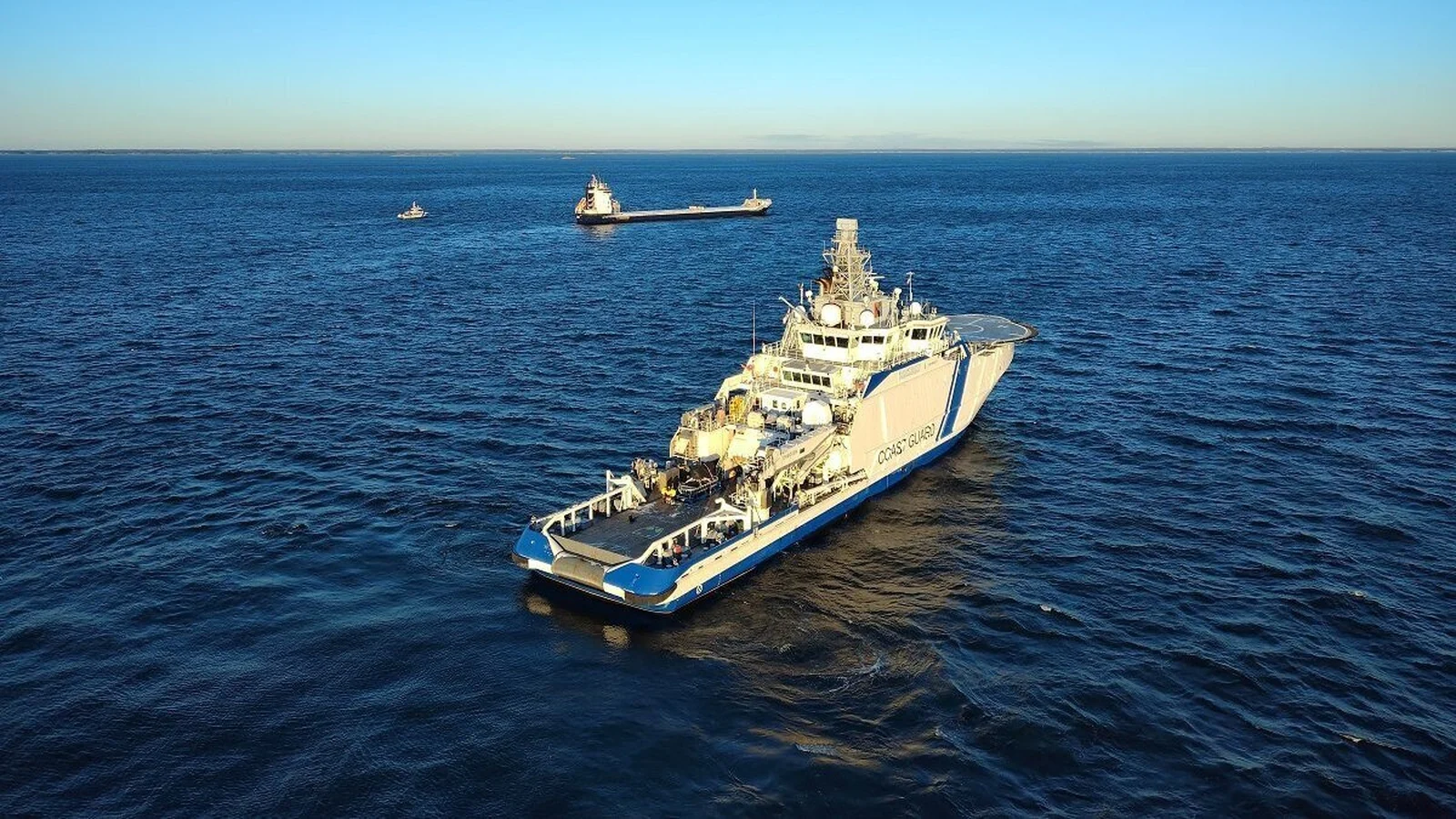
It was a gray, bracing morning when the coast looked like a map of tension: gulls wheeling above, a long low horizon, and the smell of salt and diesel. Off the Finnish coast, authorities moved in on the cargo ship Fitburg. Against the hush of the Baltic Sea, the quiet operation felt almost theatrical — navy-style boats cutting through slate water, officers clambering aboard, flashlights dancing down metallic corridors. By the time the sun had fully risen, the Fitburg, a vessel flying the flag of St Vincent and the Grenadines, was under Finnish control and 14 of her crew were being held for questioning.
“We are treating this as a serious criminal matter,” a Finnish police spokesperson told gathered reporters at a press briefing, their voice steady with the procedural calm that belies urgency. “At this stage the investigation is into aggravated criminal damage and interference with telecommunications.”
Where the Ship Came From — and Where It Was Headed
Marine traffic trackers show the Fitburg departed St Petersburg and was bound for Haifa. For investigators and onlookers alike, the course alone suggested a story with geopolitical undertones: a vessel moving from Russia through waters that have felt the reverberations of war and sabotage since 2022.
The 14 crew members now in custody represent a patchwork of post-Soviet states — Russia, Georgia, Kazakhstan and Azerbaijan — a human cross-section of the maritime world where ships register under flags of convenience and sailors hail from dozens of nations. “We’re not interested in nationality politics at this stage,” a border guard official told me. “We need to know what happened to the cables.”
Damaged Lifelines: Cables, Commerce, and National Security
The cables in question are not impulsive strings of wire. At least one belongs to Finnish telecom operator Elisa; Estonia reported a second connection — owned by Sweden’s Arelion — also suffered an outage the same day. These are not trivial disruptions. Submarine cables carry roughly 95% of the world’s intercontinental internet traffic, and the global network includes more than a million kilometers of fiber optic lines arrayed like transparent veins beneath the ocean.
“Think of them as the arteries of modern life,” said Dr. Hanna Lehtinen, a telecommunications scholar at the University of Helsinki. “A single damaged cable can slow trade, interfere with emergency services, and harm confidence in critical infrastructure. The Baltic Sea is shallow and congested; when an anchor drags or a propeller rips a line, the impact can be immediate and far-reaching.”
Shallow waters — the Baltic averages about 55 meters deep — make the seabed particularly vulnerable. Since Russia’s invasion of Ukraine in 2022, there have been several alarming incidents: outages to power cables, telecom links and even natural gas infrastructure have left Baltic neighbors on edge. A year ago, investigators blamed the Russian-linked oil tanker Eagle S for damaging a power cable and several telecom links by dragging its anchor. That case later fizzled in Finnish courts when prosecutors were unable to prove intent.
Jurisdictional Thorniness: Flags, Courts and the Law of the Sea
Here the story grows knotty. Fitburg sails under the flag of St Vincent and the Grenadines, a common practice where the flag state handles legal responsibility for a ship’s conduct. But the vessel’s journey from St Petersburg and the nationalities of the crew mean politics and legal complexity will ride along with the criminal investigation.
“Maritime law is famously complicated,” said Captain Johan Mikkelsen, a retired shipping captain who now advises Nordic ports. “You can have owners in one country, a management company in another, a ship that sails under a third flag, and a crew from five different states. If damage is done in one nation’s waters, the investigating authorities can seize the ship, but prosecution often requires cooperation with the flag state or the crew’s home countries.”
That is precisely the pattern that followed the Eagle S incident: Finnish courts dismissed charges because the prosecution could not establish intent, and recommended that negligence be pursued by the ship’s flag state or the crew’s countries of origin. The legal choreography can slow answers when speed is what communities need.
Political Ripples — and a Region on Alert
Eight NATO countries now border the Baltic Sea — Denmark, Estonia, Finland, Germany, Latvia, Lithuania, Poland and Sweden — and the alliance has been stepping up its presence along these waters in recent years. Frigates, patrol aircraft and unmanned naval drones have become a more common sight, capacity bolstered by a renewed focus on deterrence and surveillance.
“We take every reported attack on critical infrastructure seriously,” an alliance spokesperson said, declining to comment specifically on the Fitburg seizure but noting NATO’s ongoing vigilance in the region. “The Baltic is of strategic importance to the security and communications of member states.”
Estonian President Alar Karis was measured but candid on social media: “I’m concerned about the reported damage… Hopefully it was not a deliberate act, but the investigation will clarify.” Finland’s President Alexander Stubb echoed the same cautious firmness: “Finland is prepared for security challenges of various kinds, and we respond to them as necessary.”
On the Ground: Voices from Coastal Towns
In a tiny harbor town an hour north of Helsinki, fishermen paused their work to watch the news. “We rely on the internet for markets, weather, and communications,” said Saku Rantanen, a third-generation fisherman, stroking a weathered chin. “When the fibre goes down, it’s not just the city that feels it. Our co-op can’t send invoices, and sometimes the safety systems on the boats are affected. You feel very small when the wires that connect you to the world break.”
At the Elisa maintenance center in Espoo, an engineer spoke on condition of anonymity, frustration audible beneath his professionalism. “It’s not like changing a cut cable in the backyard. These lines run across the seabed, often bundled with other utilities. Repairs can take days or even weeks, depending on weather and the depth at which the damage occurred.”
What This Means for the Wider World
We live in an era where the undersea is the unseen backbone of the overland: financial transactions, emergency calls, healthcare data, and even national defense signals travel beneath waves in glass fiber. In 2020, experts estimated there were around 420 subsea cables linking Europe alone; across the globe, that figure grows each year.
When a strand goes silent, the effects ripple outward — businesses reroute traffic, telecom companies scramble to re-engineer networks, and governments must weigh whether to treat a failure as an accident or an act of sabotage. The stakes are not merely technological; they’re geopolitical and human. How resilient are our systems when the threats are underwater and accountability is entangled in international law?
Looking Ahead
For now, the Fitburg sits under Finnish control while divers, telecom specialists and law enforcement try to pin down what happened. The crew are being held, interviews are underway, and forensic surveys of the seabed will determine whether an anchor dragged a cable or something more sinister occurred. International cooperation will be crucial: whether St Vincent and the Grenadines, the crew’s home countries, or the ship’s commercial operators step up to answer questions will shape the speed and thoroughness of any legal outcome.
And the Baltic will wait, vast and indifferent. Fishermen will cast their nets, ferries will cross busy routes, and below, the quiet lines of fiber will lie coiled like sleeping snakes — until we learn whether the damage was clumsy, negligent, or deliberate.
What would you do if the invisible wires that move your money, connect your loved ones, and guide your navigation were suddenly cut? How much trust do you place in the architecture of our digital world — and how much are we willing to invest to protect it?
These are not purely technical questions. They are questions about interdependence, about how societies value and defend the invisible things that bind us together. The Fitburg episode is a reminder that in a globally connected age, a drag on a seabed can tug at the very fabric of life on land.
- Number of NATO countries bordering the Baltic: 8 (Denmark, Estonia, Finland, Germany, Latvia, Lithuania, Poland, Sweden)
- Approximate global share of intercontinental data carried by subsea cables: ~95%
- Average depth of the Baltic Sea: roughly 55 meters