When a Court Document Reopens Old Wounds: Raúl Castro and the Ghosts of 1996
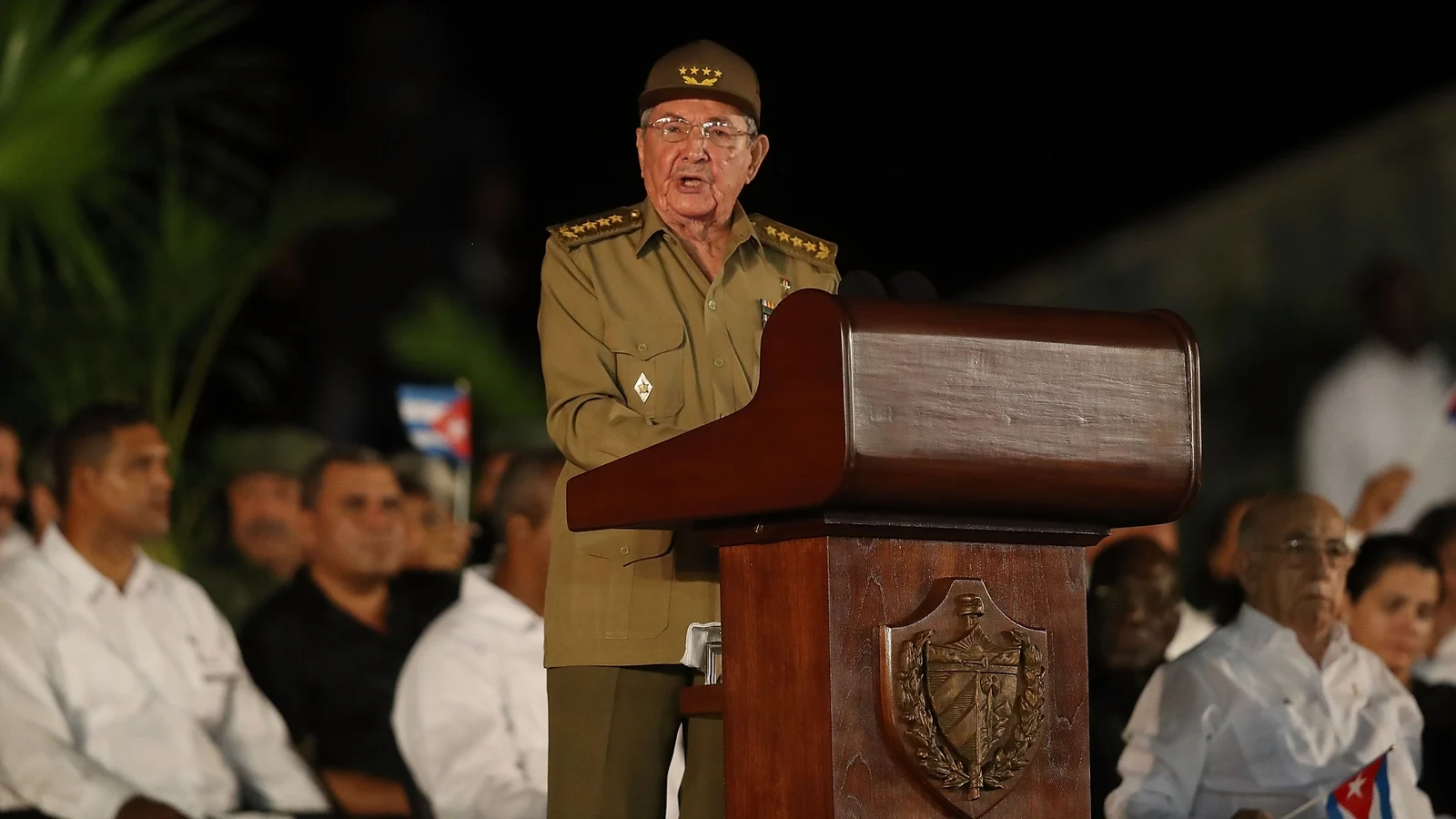
On a humid Miami morning that smelled of espresso and freshly baked pastelitos, a federal courthouse filing felt less like dry legal paper than the reopening of an old scar. The United States has indicted Raúl Castro, the 94‑year‑old former commander of Cuba’s armed forces and one of the revolution’s last surviving icons, in connection with the 1996 shootdown of two small planes that killed four men.
The indictment, filed on 23 April in Miami, names Raúl Castro on multiple counts: one count of conspiracy to kill U.S. nationals, four counts of murder, and two counts of destruction of aircraft. Five other individuals are also named.
The legal language is precise; the optics are raw. Portraits of the slain pilots—members of the exile group Brothers to the Rescue—hung behind the podium at a memorial in Miami’s Freedom Tower, where acting U.S. Attorney General Todd Blanche spoke, promising the government would not forget “its citizens.”
How a short flight became an international flashpoint
The planes were tiny—single‑engine Cessnas flown by Miami‑based exiles who said their mission was to search for rafters and broadcast messages into Cuba. On that winter day in 1996, Cuban military jets intercepted and fired on the aircraft. All four men aboard died. The International Civil Aviation Organization later concluded the incident occurred over international waters, a finding that has haunted diplomatic exchanges ever since.
“They weren’t soldiers,” said José Alvarez, 68, a retired machinist who still attends vigils in Little Havana. “They were fathers, neighbors, people who thought they were doing something human. That’s what hurts the most.”
Raúl Castro, who was serving as defense minister at the time, has been a shadowy figure ever since—stepping back from the presidency in 2018 but still widely seen as a central power broker in Havana. The U.S. has pursued accountability before: in 2003, three Cuban military officers were charged in connection with the shootdown, but none were extradited.
Echoes in Miami, murmurs in Havana
Miami’s Cuban‑American community gathered at the Freedom Tower not only to honor the victims but to make a political point: for many, the legal move is overdue. “Justice is a long road,” said Ana Delgado, whose cousin was one of the pilots. “It won’t bring him back, but it keeps the truth alive.”
In Havana, response was measured and defiant. The government has long argued the military action was an exercise in defending national airspace. President Miguel Díaz‑Canel accused Washington of grandstanding and warned that any foreign military action against the island would be catastrophic.
“Cuba does not represent a threat,” Díaz‑Canel posted on social media, framing the 20 May ceremony—ironically timed with other anniversaries of intervention and occupation in Cuban history—as yet another reminder of external meddling. “For us, 20 May marks intervention, dispossession, and frustration,” he wrote.
A fragile island and a heavy penalty
To understand the broader stakes, look beyond the courtroom to Cuba’s neighborhoods and grocery queues. The island of roughly 11 million people has been mired in an economic crisis that predates this indictment, aggravated by the COVID‑19 pandemic, declining subsidies from allies, and more recent tightening of U.S. sanctions.
Power outages and fuel shortages are not abstract statistics here; they are evening rituals. Lines stretch for hours. Internet access feels like a luxury. “When your lights go out, you talk more to your neighbors,” said Lázaro, a Havana taxi driver who asked that his surname not be used. “You also notice that politics are not just in the papers; they are in your stomach.”
Secretary of State Marco Rubio (a leading voice in U.S. policy toward Cuba) announced a proposed aid package aimed at easing the hardships, while Cuban officials condemn what they call a “devastating blockade” that their domestic economy has weathered for decades.
Why an indictment now?
Legal scholars and foreign policy experts see multiple currents converging in this decision. There is a moral component—seeking accountability for four killed on the high seas. There is a political component—an administration intent on rolling back the limited détente of earlier years. And there is a precedent: Washington has used criminal charges as a tool against foreign officials before, most notably in the case of Venezuelan President Nicolás Maduro, who has faced U.S. indictments for alleged drug trafficking.
“Indictments of foreign leaders are as much instruments of policy as they are instruments of law,” said Dr. Helena Marcus, an international law professor. “They signal a posture. They complicate diplomacy. Extradition is unlikely, but the charges shape how other governments and companies engage with a regime.”
Indeed, practical constraints loom large: there is no indication Raúl Castro has left Cuba or that Havana would permit extradition. The move is therefore as symbolic as it is juridical—yet symbols matter. They remind communities of the past and send messages about the present.
What the indictment might mean for ordinary people
For Cuban Americans who fled or were born of exile, the indictment is solace and vindication. For families in Havana, it is another reminder that their destiny is tethered to decisions made far beyond their shorelines. For the international community, it renews questions about sovereignty, accountability, and the limits of legal reach.
“We are caught between two narratives,” said Mariana Ruiz, a human rights researcher. “One says the U.S. defends its nationals and international norms. The other says these legal tools can be wielded selectively, sometimes exacerbating political tensions without solving humanitarian problems.”
- 1996: Two Cessna aircraft shot down, four people killed.
- 2003: U.S. charged three Cuban military officers; no extraditions followed.
- 2024–2026: Economic distress and intermittent power outages have intensified on the island; population ~11 million.
Questions we should be asking
What is the purpose of justice when the accused is unlikely to stand trial? Does an indictment advance reconciliation or further polarize an already fractious relationship? How do geopolitical aims intersect with the everyday lives of people who had nothing to do with state decisions?
“We must not mistake spectacle for solution,” Dr. Marcus warned. “Legal accountability and diplomatic engagement should be complementary, not substitutive.”
For now, the case will rouse passions on both sides of the Florida Straits. It will be argued in courtrooms and op‑eds, in Havana’s bodegas and Miami’s cafés. It will be used as proof of grievance by some and as evidence of righteous pursuit by others.
Looking ahead
Raúl Castro’s indictment revives a tension that has defined US‑Cuban relations for more than six decades: the collision of memory and strategy, of grief and statecraft. It forces a global audience to confront a question as old as international politics—how to hold leaders accountable without harming the people they govern.
So ask yourself: does a court summons at 94 change history, or does it merely rewrite the margins of a story whose main chapters were written decades ago? The answer matters not just to lawyers and diplomats, but to those in Havana standing in line for bread, and to those in Miami lighting candles for lost loved ones.
In the end, the indictment is not the denouement. It is another turn in a long, unfinished story about power, exile, and the price of doing politics in the shadow of empire. How we read that turn—toward justice, vengeance, or something in between—will shape what comes next.