The Long Flight Home: An Ebola Patient, a Berlin Isolation Ward, and the Uneasy Global Chain of Care
He stepped down from the plane like a figure out of someone’s worst dream — wrapped in white protective gear, a mask obscuring his face, moving with the careful deliberation of a man who has lived with risk for a long time. An ambulance engine hummed nearby. A small convoy of vehicles watched in tight formation as medics in full PPE guided him toward Charité hospital’s special isolation unit in Berlin.
The man was named by his mission organization as Dr. Peter Stafford, an American physician who has been working among Congolese patients in the eastern Democratic Republic of Congo (DRC). He arrived in Germany overnight after U.S. authorities requested Berlin’s help. For many around him, the evacuation was at once a relief and a flashpoint — a vivid illustration of everything that is both compassionate and messy about global health in an unequal world.
Who is Dr. Stafford — and why does his journey matter?
Dr. Stafford and his wife Rebekah, also a physician, have lived in the DRC for years, according to Serge, the Christian missionary organization that operates in the region. They worked at Nyankunde hospital, a modest but vital facility that cares for a wide swath of the local population — men who come in with machete wounds, mothers bringing newborns, elderly patients with chronic illnesses, and increasingly, those with hemorrhagic fevers.
“We are a small patch in a very big tapestry,” said Samuel Mukendi, a nurse at Nyankunde who worked alongside Dr. Stafford. “Peter would joke, make us laugh at the end of a long shift. He also stayed late when the beds were full. When the outbreak started, we were all scared. But we still went to work.”
According to U.S. health officials, Dr. Stafford tested positive for Ebola after exposure related to his medical work. German authorities confirmed his admission to the Charité isolation unit but declined to discuss his condition publicly. Reporters at the airport described the arrival: a physician helped into the ambulance by staff in hazmat suits, a silent convoy that felt like something out of a political thriller rather than a routine medical transfer.
The outbreak and the numbers behind the headlines
The World Health Organization has characterized the Ebola flare-up in the DRC as an international health emergency. At the time of the transfer, the outbreak had claimed almost 140 lives and produced roughly 600 suspected cases. The WHO assesses the risk from the outbreak as high within the country and across the region, but — crucially — low at the global level. An emergency committee chair emphasized that, while grave, the situation did not meet the threshold for a pandemic.
Ebola is unforgiving: it can incubate anywhere between 2 and 21 days, and case fatality rates vary widely depending on the strain, the speed of diagnosis, and access to treatment. In recent years, scientific advances — including monoclonal antibody therapies and the rVSV-ZEBOV vaccine — have changed outcomes for many patients when administered quickly. Yet these medical advances are not evenly distributed.
“We have more tools now than ever before,” said Dr. Miriam Kalu, an infectious disease specialist based in Geneva. “But a tool is only useful if it reaches the person who needs it at the right time. That is where global inequality and political instability become life-or-death factors.”
Why evacuations stir strong feelings
When a foreign national — particularly a Western aid worker — is flown out of an outbreak zone for high-level care in Europe or North America, it draws attention. For some, the move is a humane response to a sick person’s needs. For others, it is a glaring reminder of a two-tiered system in which expatriates can access the best hospitals while local patients continue to be treated in under-resourced facilities.
“I understand why my brother was brought here,” said Emmanuel, a community leader in Nyankunde. “But it makes us ask: why can’t our hospitals get the same attention? We bury our own. We still need more protective gear, more staff, more training.”
Those tensions play out in real time across eastern DRC, where conflict, displacement, and fragile infrastructure compound the challenge of containing contagious diseases. Outreach teams sometimes struggle to enter communities, and vaccine acceptance can be eroded by mistrust — a long-term consequence of instability and misinformation.
Charité’s role and the choreography of modern medicine
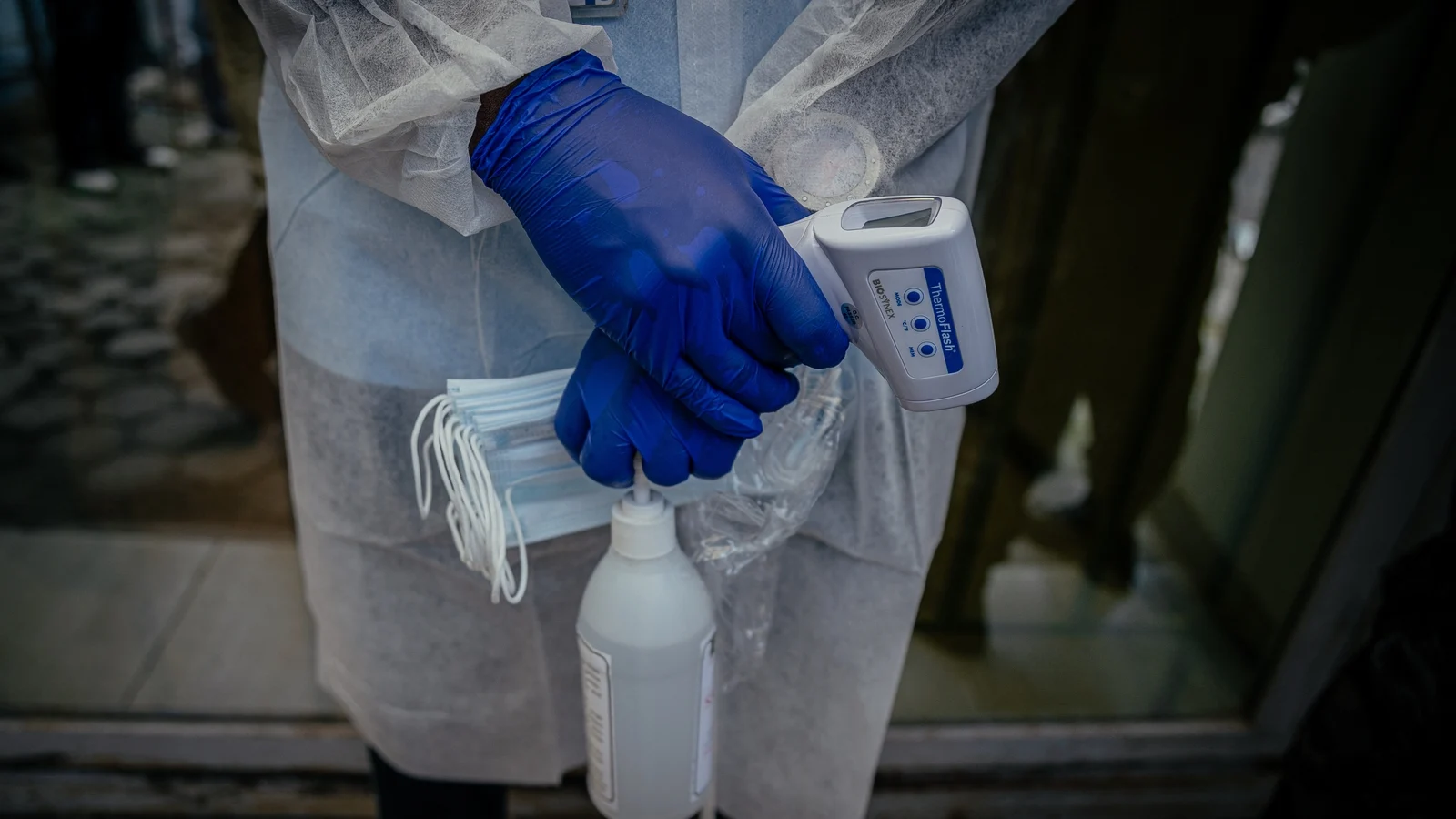
Charité, one of Europe’s most renowned hospitals, has a specialized isolation unit designed to care for highly infectious patients. German health officials say the unit can provide advanced supportive care, intensive monitoring, and tight infection control measures. A hospital spokesperson — who asked to be unnamed due to patient confidentiality — said, “Our mission is simple: to provide the best possible care while protecting the health of our staff and the wider public.”
Moving a patient from the frontlines of an outbreak to a distant specialty center is logistically complex. It involves coordination among the sending country’s health services, the evacuating nation’s diplomatic and transport apparatus, the receiving hospital, and international agencies such as the CDC and WHO. In this case, the United States requested Germany’s assistance; Dr. Stafford arrived alongside several close contacts, possibly family members, who had not shown symptoms.
“Evacuations are an act of triage and diplomacy,” said Dr. Lars Engel, an emergency medicine physician who has worked in infectious disease transport. “They require balancing individual care with public health considerations, and doing both well is not easy.”
Bigger questions: equity, preparedness, and solidarity
Stories like this force a difficult conversation: who receives the most advanced care in moments of crisis, and how do we build systems that don’t force painful choices between neighbors in different zip codes or different countries? The moral calculus is acute when an outbreak erupts in places that have long been marginalised by global funding streams.
Investments in local health systems — from training community health workers to ensuring cold chain capacity for vaccines — are not glamorous headlines. They are, however, the durable infrastructure that stops outbreaks before they need international intervention. The DRC’s repeated experience with Ebola has taught a generation of health workers lessons about rapid response, community engagement, and the fragile triumph of science over fear.
So, what do we do with this moment? Do we see Dr. Stafford’s transfer as a success of international collaboration, or as an indictment of uneven access to care? Perhaps both. Perhaps the real question is whether we will learn from the experience: to strengthen local clinics, increase equitable access to treatments and vaccines, and support health systems so that fewer people need to board planes to survive.
Closing: faces, names, and the human thread
Beyond the stark images lie deeply human details: the Stafford family, living among Congolese neighbors; a hospital corridor in Nyankunde where men recall a colleague who brought not just medicine but music and laughter; a Berlin isolation ward where clinicians prepare to do everything they can. The patient’s fate remains uncertain — as it does for many caught in outbreaks — but his transfer has already illuminated a wider truth: infectious disease does not respect borders, but neither does compassion.
Where do we go from here? How do we translate sympathy into systems that protect everyone, not just the few? The answers are complex, but the question is urgent. As you read this, someone in a remote clinic may be waiting for a vaccine shipment, a family may be praying, and a nurse may be tying on her gloves. Which side of that line will we choose to be on?