On a Narrow Road Between Borders, an Old Foe Reawakens
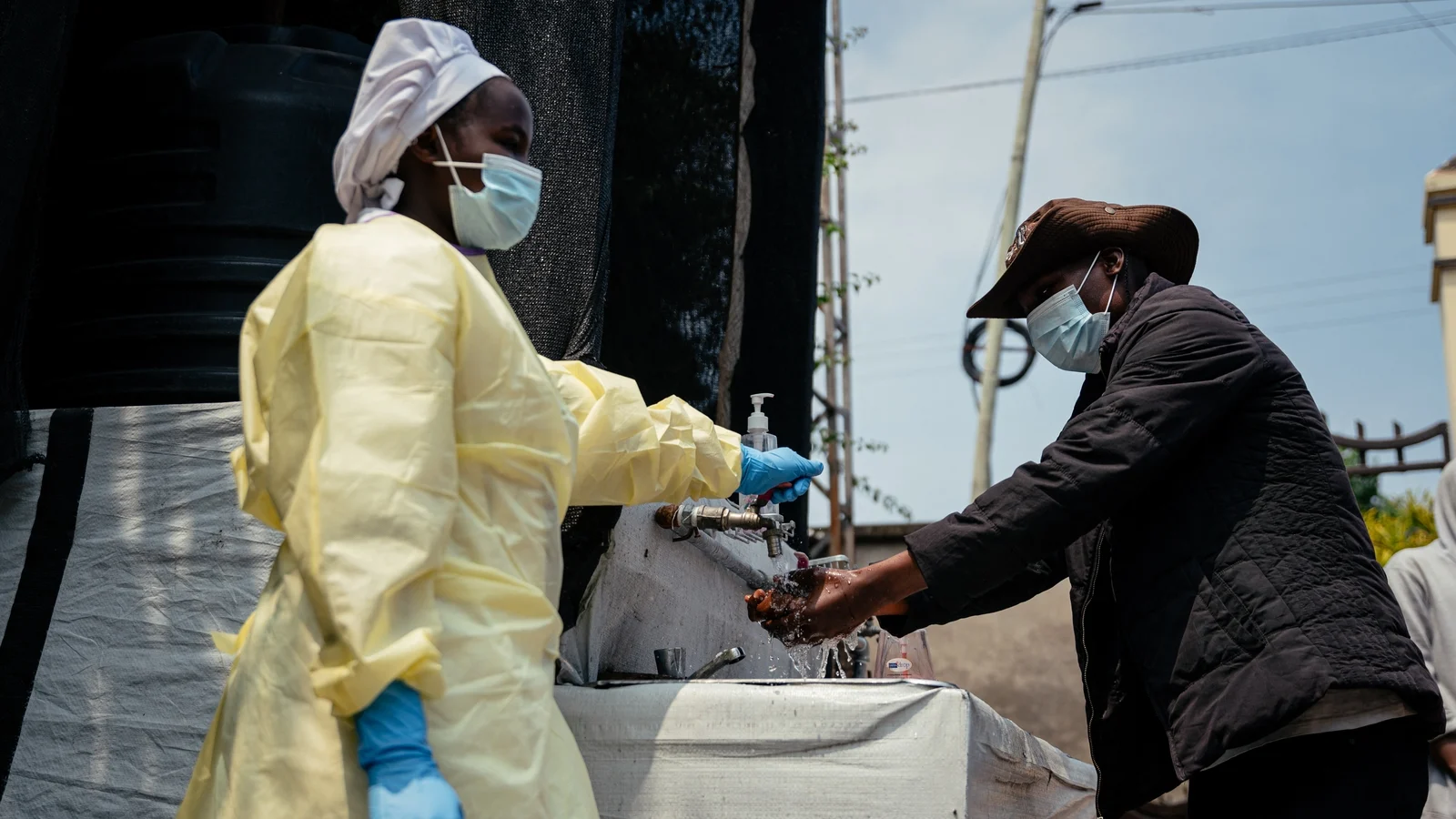
There are places where the map seems to fold into itself: dusty border crossings, mining tracks that stitch countries together, markets where Ugandan shillings and Congolese francs change hands like gossip. It was in one of those liminal spaces — a tented health post at the Busunga crossing, a hand-scrawled poster listing emergency numbers flapping in the wind — that the latest alarm over Ebola began to feel, very literally, close.
You can almost hear the movement that makes outbreaks dangerous: boots on dirt roads, motorbikes loaded with ore, traders who cross the border in the morning and sleep on the other side that night. “People here move like water,” said a miner in Ituri province, wiping grit from his palms. “We go where the work is. If sickness follows, what can we do?”
WHO Sounds the Alarm
From the marble halls of Geneva, the director-general of the World Health Organization issued words that cut through diplomatic caution. “I did not do this lightly,” he told delegates at the World Health Assembly, announcing that the outbreak in the Democratic Republic of Congo and Uganda met the threshold of a public health emergency of international concern. The tone was urgent; the message, clear: this is no local flare-up that will burn itself out unnoticed.
By the latest count shared by WHO briefings from the field, around 500 cases are linked to the current outbreak of the Bundibugyo strain of Ebola, and some 131 suspected deaths have been reported. The Bundibugyo variant — less commonly seen than the Zaire strain that dominated headlines a decade ago — carries a fatality rate estimated as high as 40% in some outbreaks.
“I’m deeply concerned about the scale and speed of the epidemic,” the WHO chief said, echoing the worry felt by clinicians on the ground and public health officials in capitals across Africa. Anne Ancia, WHO’s representative for DRC, told reporters that this is likely to be a long fight, reminding audiences that some Ebola events have persisted for years before fading.
Why Bundibugyo Matters — and Why It’s Hard to Fight
Bundibugyo ebolavirus is not new to the region; the variant was first detected in Uganda in 2007, but it has remained comparatively rare. That rarity is part of the problem: there are no vaccines or specific antiviral treatments officially approved for Bundibugyo. The most widely known vaccine, Merck’s Ervebo, was developed and licensed to target the Zaire strain, and while animal studies have hinted at some cross-protection against Bundibugyo, the evidence in humans remains limited.
“When you have an outbreak with a strain that does not have countermeasures, we have to be pragmatic and creative,” said an epidemiologist working with the Africa Centres for Disease Control and Prevention (Africa CDC). “We will examine data, weigh risks, and recommend the best path forward — whether that means ring vaccination using an existing vaccine, targeted trials, or intensified non-pharmaceutical interventions.”
A WHO-led expert panel has been convened specifically to consider vaccine options. Their task is a tightrope: balancing the urgent need to save lives now against the ethical and scientific imperatives of using products for which evidence is incomplete. The question hovering over their deliberations is stark: is it better to deploy an imperfect shield now, or to wait for clearer data and risk more transmission?
What Tools Are Available?
Right now, the toolbox is smaller than anyone would like. Ervebo (rVSV-ZEBOV), licensed for Ebola Zaire, has been a life-saver in recent outbreaks, but its efficacy against Bundibugyo has only been suggested in preclinical studies. There are experimental therapeutics and platform vaccines in development, but none sealed with the full weight of regulatory approval for this particular strain.
“We have to treat each outbreak with humility,” said Dr. Mosoka Fallah, acting head of science at Africa CDC. “Sometimes we can adapt what we have; sometimes the virus pushes us to innovate faster than our research timelines.”
Movement, Mining, and What Fuels Spread
Ituri province — the epicentre of the current cluster — is a place of contrasts. Lush green between mined scars, small towns humming with trade, and unsteady security where armed groups sometimes control roads. These conditions make public health responses fiendishly difficult. People move across porous borders into Uganda and South Sudan for work, refuge, family, or market days.
“We are a crossroads — and that is the problem,” said a nurse at a clinic in Bunia. “People come in with fever and cough and say they slept in many villages. Tracking them is like chasing footprints in a flood.” Cases have already been reported beyond Ituri: suspected infections in North Kivu and a confirmed case in Goma, a provincial capital of strategic concern where militia activity complicates response efforts.
The Africa CDC has framed the outbreak as a Continental Public Health Emergency, empowering regional mechanisms to mobilize resources, send rapid response teams, and bolster surveillance. “This is occurring in one of the continent’s most complex operational environments,” warned Jean Kaseya, head of Africa CDC. “Insecurity, mobile populations and fragile health systems are a dangerous combination.”
International Ripples: Travel Warnings and Evacuations
The outbreak’s regional reach has prompted swift diplomatic ripples. The US State Department advised Americans to avoid non-essential travel to DRC, South Sudan, and Uganda, and to reconsider travel to neighboring Rwanda — underscoring how quickly a local epidemic becomes an international concern in a connected world.
Germany announced it will admit and treat an American doctor, identified by mission groups as Dr. Peter Stafford, who contracted Ebola while working in DRC. The decision to fly patients out for specialized care is a reminder of both the intricacies of high-level treatment and the stark disparities in health capacity between countries.
“We’re grateful for the international cooperation,” said a representative from the missionary group that supported the family. “But this is also a moment to reflect: why do some countries have to transport their sick abroad while front-line workers in the affected region fight with less?”
Voices from the Ground
In the market towns and the tiny clinics, people tell stories that statistics cannot capture. A teacher in Bunia described three colleagues who fell ill within a week: “We buried one in the morning, and by afternoon others came to us for help. There is fear; there is also a fierce sense of duty. People keep coming to clinic because they must.”
An older woman at a border screening post recounted watching trucks laden with cassava and gold pass, sometimes without inspection. “We try to ask questions, but trucks are heavy and men are quick. They say: ‘We move for our children.’ Who would stop them?”
What Comes Next — and What Can You Do?
No one can promise a tidy ending. WHO officials caution that the outbreak could remain active for months, possibly longer, pointing to the sobering precedent of epidemics that have taken years to extinguish. The immediate priorities are clear: accelerate diagnostic testing, trace contacts, secure protective equipment for health workers, and, if advisable, deploy vaccines and therapeutics under strict monitoring.
But there is also a quieter, persistent need: community trust. “If people hide deaths or avoid clinics because they fear isolation, the virus wins,” said a social mobilizer who has worked through past Ebola responses. “You cannot fight an epidemic with labs alone; you fight it with relationships.”
So ask yourself: when the next outbreak flares — wherever it may be — how do we balance rapid science with local realities? How do richer countries support fragile health systems not with headlines, but with long-term investment? These are not abstract questions; they are the blueprint for resilience.
Closing Thought
Standing at the border at dusk, with mosquitoes skittering and a distant radio blaring a market announcement, it is easy to imagine this patch of earth returning to normal in a month. It would be a relief — and a surprise. Reality is messier. Outbreaks unfurl along the lines of human movement, economic necessity and political will. The story emerging from eastern DRC and across borders into Uganda and beyond is a reminder that our world is stitched together by fragile threads. Strengthening those threads — through science, solidarity and day-to-day public health work — is the task before us.