Dark Water, Quiet Islands: A Tragedy Beneath the Maldives
On a wind-cut afternoon in Vaavu Atoll, the turquoise smile of the Indian Ocean hid a deep, cold secret. What began as an expedition into coral-carved caverns turned into a years‑long echo of loss for four families in Italy, and a painful reminder to the global dive community of how quickly adventure can become a catastrophe.
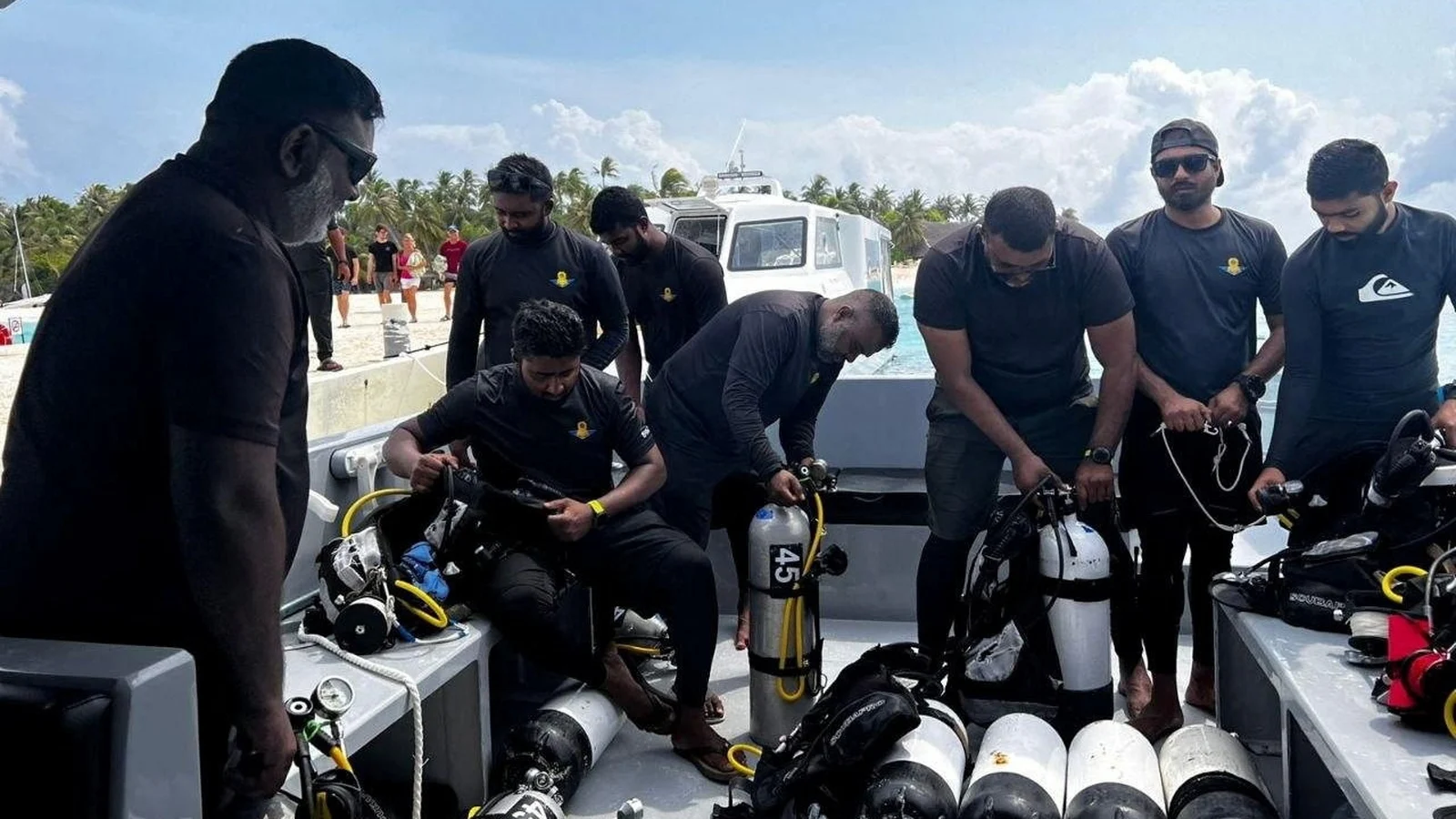
Last Thursday, a group of Italian scuba divers, experienced and eager, entered an underwater cave at roughly 50 metres (about 165 feet). The next days would see a frantic, technically difficult search, the recovery of one diver from a chamber some 60 metres deep, the heartbreaking discovery by an international specialist team that the remaining four were indeed inside that same cave, and then another blow: a Maldivian Navy diver taking part in the recovery succumbed to decompression illness.
“This operation has been technically demanding and emotionally devastating,” said Maria Conti, a spokesperson for DAN Europe, the international diving safety network that coordinated assistance. “Finding the locations of the missing divers gives families a terrible clarity. It also gives us the ability to plan a safe, staged recovery—because rushing would risk more lives.”
What happened in Vaavu?
Vaavu Atoll is the sort of place you see postcards for: low islands crowned by palms, fish markets with silver glinting in the sun, and dive boats—dhonis—moored like sleeping animals. But below the picture-perfect surface lies a labyrinth of overhangs, swim-throughs and caverns formed where ancient limestone met an unruly ocean. For many experienced divers, especially those keen on the technical challenge, cave diving here is intoxicating. For those unprepared, it can be lethal.
At around 50 metres depth, the Italian team was exploring a roughly 200-foot (about 60‑metre) long cave when things went wrong. On Friday, Maldivian authorities recovered the body of one diver deep within a cave chamber. Over the weekend, a specialist Finnish team of cave-diving experts—tasked with mapping and locating the missing divers—spent three hours underwater confirming the position of the other four bodies and collecting the data necessary to stage a careful recovery.
“We needed to know the layout precisely before we could risk sending recovery teams into those chambers,” explained Jukka Laine, lead of the Finnish retrieval contingent. “Cave penetrations at those depths are unforgiving. Visibility, silt, current, and the need for staged decompression all make every minute and every metre dangerous.”
Risk, rescue, and the price of urgency
Rescue efforts were already being hampered by rough seas and bad weather. Then, on Saturday, the mission took the cruelest possible turn: a Maldivian National Defence Force diver participating in the search developed severe decompression illness and died. Authorities temporarily suspended recovery work as they reassessed safety protocols.
“Losing one of our own is a wound to the whole island,” said Mohamed Hussain Shareef, the chief spokesperson for the President’s Office in the Maldives. “We are investigating the procedures that led up to the dive and will ensure that every step moving forward prioritizes safety—for rescuers and for the families waiting for answers.”
Decompression illness (often called “the bends”) is a known hazard when divers ascend too quickly from depth or make long, deep dives without the requisite staged decompression stops. The risk is higher with deeper dives and when divers penetrate overhead environments like caves where an immediate ascent to the surface is impossible.
The human dimension
Back in Malé and on the small local islands, the mood is muted. Fishermen who usually wrestle with nets at dawn now watch quietly as dhonis leave for the site and return empty. At the harbour in thinly populated Felidhoo, a woman in a sarong—Aisha Moosa, who runs a small guesthouse and has been working with dive groups for a decade—sits with a thermos of sweet tea and says, “We teach guests the ‘Maldivian respect’ for the sea. But even with respect, the ocean is bigger and older. Sometimes, people forget that.”
“We lost a Maldivian diver doing what many of us love—helping others,” said Lieutenant Ahmed, who asked that his surname not be used. “That pain will take long to heal. People come here seeking beauty, but they must understand the rules and the training needed.”
Numbers that nudge the conscience
How dangerous is diving? Recreational scuba is relatively safe compared with many outdoor sports, but it carries risks. DAN’s recurring reports suggest that globally there are roughly a hundred to a few hundred diving-related fatalities each year—numbers that cluster where technical diving, cave diving and poor training intersect. Cave diving accidents are a small fraction of total dives but account for a disproportionate share of fatalities because of the overhead environment, depth, and logistical difficulty of rescue.
The Maldives itself is a nation almost entirely dependent on tourism. The industry contributes a sizeable share of GDP and buoyant, internationally oriented communities have developed around sites like Vaavu. In short: lives, livelihoods and reputations are intertwined in the blue that surrounds these islands.
What the experts say
“Cave and deep technical dives require redundant systems, meticulous gas planning, and an unwavering commitment to training,” said Dr. Emily Carter, a diving medicine specialist who has worked on decompression research. “Often, accidents happen when one or more of these layers fails. When that failure occurs in an overhead environment—where direct ascent is blocked—it magnifies the consequences.”
She emphasized the burden on operators and regulators. “It’s not enough to rely on the goodwill of dive guides. There must be enforceable standards for training, for equipment and for the authorization of challenging dives.”
A complicated recovery, and questions that remain
The Finnish team’s three-hour operation to identify where the missing divers were has been described as an “important milestone” by DAN Europe. It sets the stage for a staged, carefully planned recovery expedition, likely to involve mixed-gas diving, multiple support teams, and meticulous decompression schedules. That kind of operation is slow and costly—but speed here could be deadly.
The President’s Office has said it is investigating pre-dive procedures. Families in Italy are demanding answers. Local Maldivian communities want assurances that recovery teams—and leisure divers who come to their reefs—will be protected.
Who bears responsibility when adventure leads to disaster? Dive operators, training agencies, regulators, the divers themselves—each plays a part. And then there is the sea, patient and indifferent, whose beauty invites us and whose rules we ignore at our peril.
What can divers and travellers learn?
- Get qualified for the specific type of diving: cave and technical dives require specialized training and experience beyond open-water certification.
- Insist on transparent dive plans from your operator, including contingency measures and clear certification checks.
- Understand the limits of your equipment and your body; depth, gas mixes, and staged decompression matter.
- Be mindful of local conditions—weather and currents can transform a dive site overnight.
As the families wait for closure, and as Maldivian authorities weigh how to move forward without risking more lives, the story asks uncomfortable questions: Are thrill and tourism being cautiously balanced against risk? How do small nations enforce standards without crippling a vital industry? And what responsibilities do adventurous travellers carry when stepping into environments where one wrong turn can be fatal?
For now, the islands keep their secrets for a little longer, and the sea returns to its glassy, indifferent calm. But the faces around the harbours, the grief of those who lost loved ones and the dedication of rescue teams all ripple outward beyond this atoll. When you next book a dive, will you look closer at the qualifications and the safety margins that sit between you and the deep?