A Last-Minute Pause on the Brink: How a Diplomatic Thread Held Back a Night of Bombs
It was the kind of cliffhanger that makes you forget to breathe: aircraft carriers silhouetted against a bruised horizon, commercial tankers clustered like nervous sheep in the Strait of Hormuz, and a president saying—almost offhand—that he had called off an attack that had not, publicly, been announced.
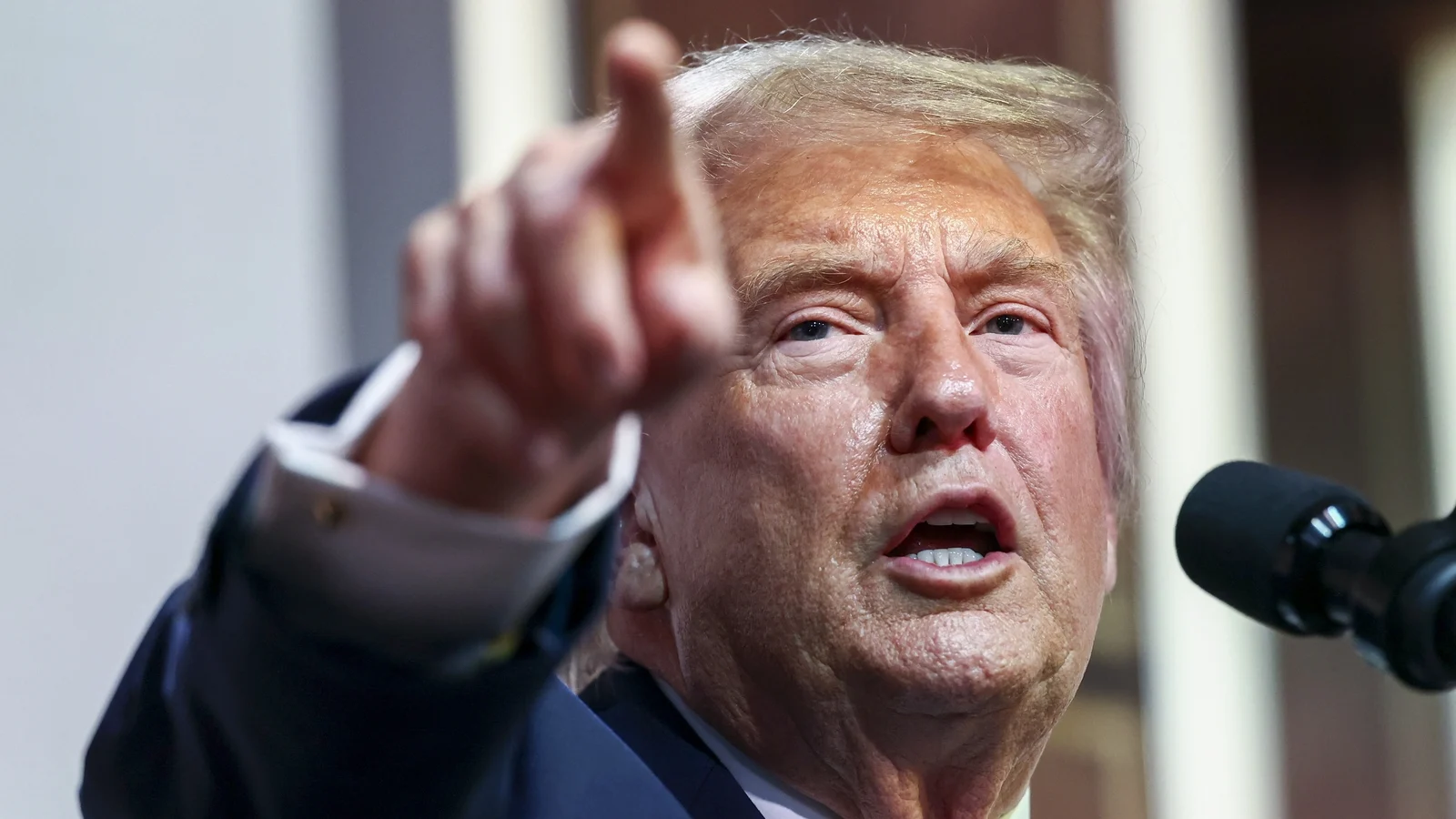
“There seems to be a very good chance that they can work something out,” the president told reporters, adding with characteristic bluntness, “If we can do that without bombing the hell out of them, I would be very happy.” The words landed in capitals and coastal towns alike, reverberating through markets and mosque courtyards, gold souks and embassy hallways.
Behind the headline was a simple, fragile narrative: Tehran had sent a proposal to Washington via Islamabad; Qatar, Saudi Arabia and the UAE had asked the United States to stand down for now; and the commander-in-chief had given the military orders to “be prepared” to strike at a moment’s notice if diplomacy failed. It sounds dramatic because it was. It also sounded perilously provisional, like a surgical pause while a scalpel hovered inches above skin.
Where the Sea Meets the World: The Stakes of Hormuz
To understand why a single phone call—perhaps a half-dozen whispered messages—can upend global flows, you have to stand on the deck of a dhow in the Strait of Hormuz. The waterway is a narrow throat between the Persian Gulf and the Gulf of Oman, and through it passes roughly one-fifth of the world’s seaborne oil trade. Any disruption here ripples to refinery floors from Rotterdam to Singapore and to grocery lists in Sub-Saharan Africa.
“When the tankers stop, the world notices,” said Leila Mansouri, a veteran shipbroker in Dubai who watches the bay like a hawk. “You don’t need a full-scale war to make prices spike. A few missiles, a few days, a few headlines—suddenly buyers get nervous, and everyone pays.”
The Message Couriers: Pakistan, Gulf Monarchies and Quiet Diplomacy
What played out was not a Hollywood summit but the old, messy craft of back-channel diplomacy. According to officials briefed on the exchanges, Tehran’s proposal was relayed through Pakistan, which has acted as a discreet intermediary since hosting an initial round of talks last month. The leaders of Qatar, Saudi Arabia and the UAE—countries with intensive and sometimes competing ties to both Tehran and Washington—urged patience.
“We were asked to buy a day,” said a Pakistani diplomat who spoke on condition of anonymity. “To give the mediators space. To let the negotiations breathe. We passed the message. But I’ll be frank: progress is difficult. The goalposts keep moving, and time is not on anyone’s side.”
Those shifting goalposts are the heart of the problem. According to a senior Iranian source, the new Iranian text mirrored earlier offers in several respects: an immediate focus on ending the fighting, reopening the Strait and lifting maritime sanctions—at least temporarily. Tehran is also said to be seeking the release of assets frozen in foreign banks—amounts described broadly as “tens of billions” of dollars.
What Washington Says — and What It Won’t
U.S. officials’ public posture has been cautious. A White House voice said the administration had not formally accepted any package, but that there had been movement on certain elements, including the possibility of releasing a portion of frozen funds and allowing limited nuclear activity under International Atomic Energy Agency supervision.
“Nothing is settled until everything is settled,” a senior administration official told me, tiredly. “We are trying to thread a needle: prevent Iran from acquiring a nuclear weapon, secure freedom of navigation through Hormuz, and reduce the violence that has cost lives and rattled markets.”
Voices from the Region: Fear, Defiance and Daily Life Interrupted
On the streets of Bandar Abbas, a port city on Iran’s southern coast, the mood was a peculiar mix of defiance and pragmatism. Shopkeeper Zahra Karim, wrapping dates in a shopstick, shrugged at talk of grand deals.
“We are used to sanctions, to threats,” she said. “People here care about bread, school fees, getting into town. Politicians will shout. But if that money comes back—even a little—it will buy fertilizer and fix the fishing boats.”
Yet Tehran’s official tone remained combative. State media amplified warnings from the Khatam al-Anbiya command that Iran’s forces were “ready to pull the trigger” should a renewed assault be launched. “Any renewed aggression… will be responded to quickly, decisively, powerfully, and extensively,” one senior military official was quoted as saying.
Why a Ceasefire is So Fragile
The ceasefire that has held after six weeks of escalating strikes is best described as uneasy. Drones have continued to fly from Iraq toward Gulf countries, where officials say some have been intercepted. Pakistan has publicly condemned a recent drone attack that reportedly originated in Iraqi airspace. In such an environment, a miscalculation—a radar blip, a misidentified flight, a rogue commander—can trigger an avalanche.
“In a volatility-prone theatre like this, restraint is the scarcest commodity,” said Dr. Miriam Alvarez, a senior fellow at a Washington-based Middle East institute. “You have multiple armed actors, proxy networks, and domestic political incentives to act tough. Diplomacy only needs a few actors to want it; war only needs one mistake.”
What Would a Deal Look Like—and Who Pays the Price?
The contours of a potential agreement are familiar from previous Iran diplomacy: limitations on weapons-grade enrichment, intrusive monitoring by the IAEA, phased sanctions relief, and guarantees about maritime traffic. But the devil is in the detail—how many centrifuges, who polices the sea lanes, and whether frozen assets are returned in full or in tranches.
“Anything less than robust verification is a recipe for renewed conflict,” warned Dr. Hassan Rouhani (not the former president), a nuclear policy analyst I spoke with. “And any deal that simply papered over the underlying grievances—economic strangulation, regional security competition—will not last.”
Questions That Remain
So where does this leave us? Is this pause the pivot point toward a meaningful settlement, or a tactical respite before the storm? Will the release of some frozen funds be enough to change Tehran’s calculus? Can regional powers bridge decades of mistrust in a few short weeks?
Every diplomat, captain and shopkeeper I spoke to returned to the same plain truth: no one wanted to see the Strait choked and markets spooked, yet many doubted whether a balance could be struck that satisfied hardliners on either side. “We have always lived with uncertainty here,” said Mansouri, the shipbroker. “This is just a different kind of uncertainty.”
Why This Moment Matters Globally
Beyond the immediate crisis, the episode lays bare a larger pattern: the world is still dangerously interlinked, and regional conflicts can prompt global ripple effects—energy shocks, refugee flows, and geopolitical realignments. It also reminds us that diplomacy, however messy and mediated, remains humanity’s best insurance against the worst impulses of power.
Will history record this as a masterful pause or a narrow escape? That depends on whether negotiators can turn the fragile breath of calm into durable peace—or whether, once again, the detonator will be pressed and the ships will sail under fire.