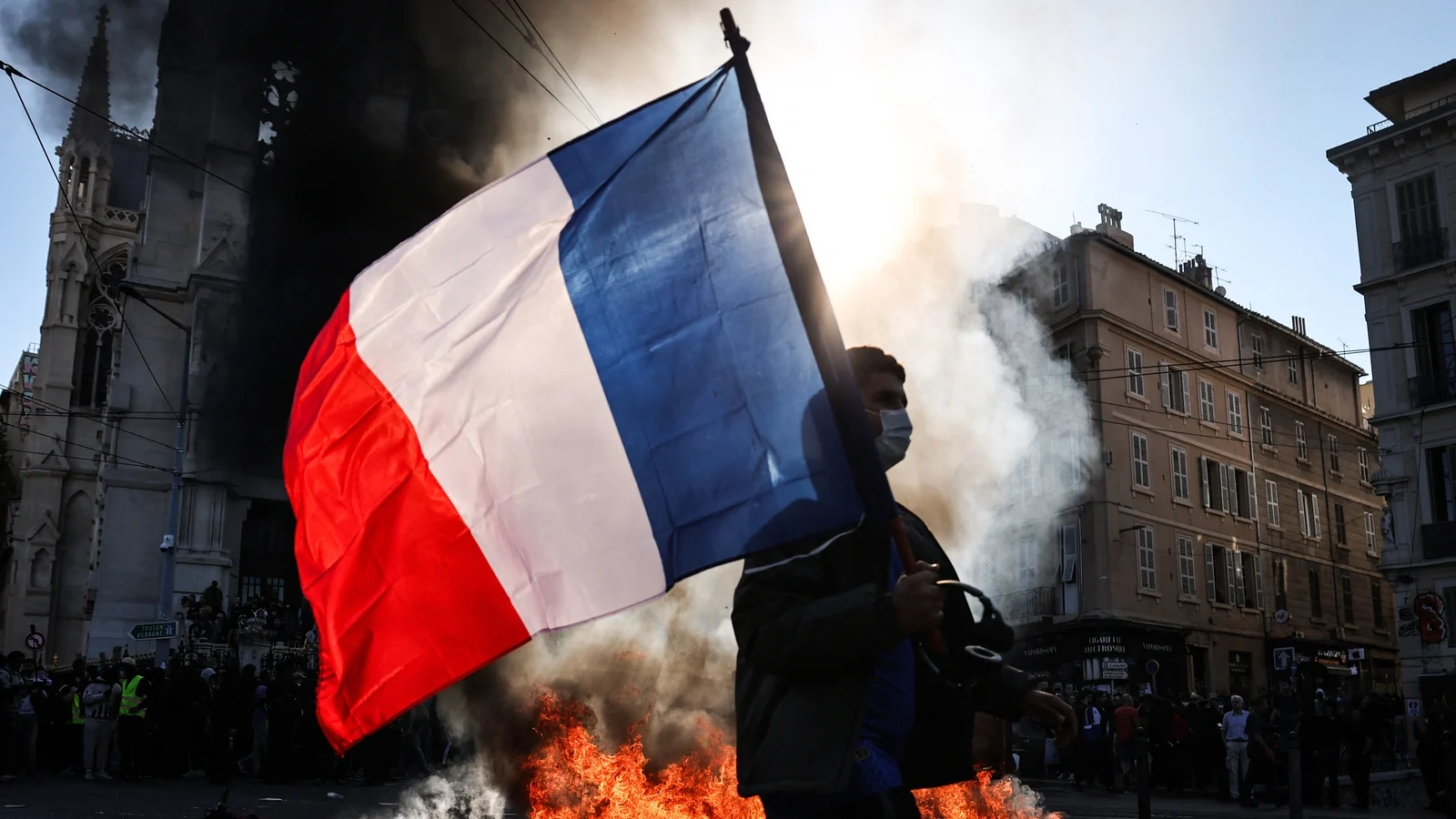
Bracing for a tense weekend, France is preparing to flood the streets with 70,000 police officers as nationwide protests build and officials warn of a serious risk of unrest.
The demonstrations are fuelled by frustration over living costs, public services and President Emmanuel Macron’s government.
The latest nationwide mobilisations come two weeks after riots and looting wrong-footed security forces, leaving a trail of damaged shops, public buildings and businesses in cities across France.
Interior Minister Laurent Nunez says authorities are determined not to be caught unprepared again.
“Everyone is on deck to ensure an extremely firm response to any trouble,” Mr Nunez said at a news conference earlier this week, outlining security plans for what he called “a very high risk” day.
Officials are also watching for the possibility that troublemakers may use Halloween masks to hide their identities.
Ms Nunez noted that existing laws already allow police to ban face coverings when public order is at risk.
The US Embassy urged travellers to steer clear of areas where demonstrations or large gatherings are expected.
French students have been protesting over conditions in schools
Protest activity began accelerating in late September as Mr Macron’s minority government opened talks on the 2027 budget.
With public debt nearing 120% of economic output and borrowing costs climbing, ministers face growing pressure to curb spending, squeezing their room to manoeuvre.
Students protesting the run-down condition of many schools, overcrowded classrooms and a university admissions system widely viewed as unfair have drawn in trade unions and a revived “Yellow Vest” movement, which is demanding action to tackle the cost of living.
Government pledges to reform education and ease fuel costs have not eased the anger.
The turmoil has provided political momentum for far-right leader Marine Le Pen, who tops opinion polls ahead of April’s presidential election, while would-be centrist heirs to Mr Macron remain split.
Meanwhile, the government is pressing ahead with a contentious law that would make rioters liable to pay up to €10,000 for damage caused either by themselves or by groups they are judged to belong to. Rights organisations and some lawyers warn the proposal could weaken the right to peaceful protest.
Over 160,000 expected at German Gen Z Halloween rallies
More than 160,000 people across Germany are expected to take part in demonstrations, organisers say, as a youth-driven movement — drawing inspiration from protest waves elsewhere in Europe — plans rallies calling for better education and lower living costs.
The planned actions come after a year marked by Gen Z-led demonstrations across Europe.
In Serbia, student-led activism helped remove the country’s long-time leader through the ballot box.
In Germany, the protests are being organised by the campaign group Gen Z regelt (Gen Z takes charge) and are scheduled in 34 cities, including Berlin, Frankfurt and Munich.
In Berlin’s famous Kurfürstendamm shopping street, some premises have been boarded up
The group says it rejects compulsory military service and is seeking greater investment in education, arguing many young Germans are struggling as costs rise.
German authorities say they expect the demonstrations, timed to coincide with Halloween celebrations, to be mostly peaceful, but they have cautioned that extremist groups may try to capitalise on the movement.
Elements of Germany’s far-left extremist scene and some organisations connected to foreign extremist movements have become involved in efforts to mobilise support, according to the federal interior ministry.
“We all have those images from France in our minds – looting, burning houses, burning police vehicles, and attacks on police officers,” said Roman Poseck, the interior minister for the state of Hesse, whose capital is Germany’s financial centre, Frankfurt.
“France must not be held up as a model in this regard.”
In Berlin, businesses along the upscale Kurfürstendamm shopping boulevard boarded up windows and planned to close early ahead of the demonstrations, citing fears of potential unrest.