Strait of Tension: How a Narrow Waterway Keeps the World on Edge
The Strait of Hormuz is not a place you stumble upon by accident. It sits like a throat between the Persian Gulf and the wider oceans, a narrow squeeze where tankers and container ships funnel the lifeblood of modern industry—oil and gas—through a corridor no wider than a city street in places.
On Wednesday, that throat briefly relaxed. Global oil benchmarks fell back from the fevered highs of the previous day: Brent crude dipped to about $110 a barrel and U.S. West Texas Intermediate dropped to roughly $102. It was a small, brittle relief after a day of thunder—literal and figurative—when exchanges of fire echoed across the water.
Project Freedom, a convoy, and a very public experiment
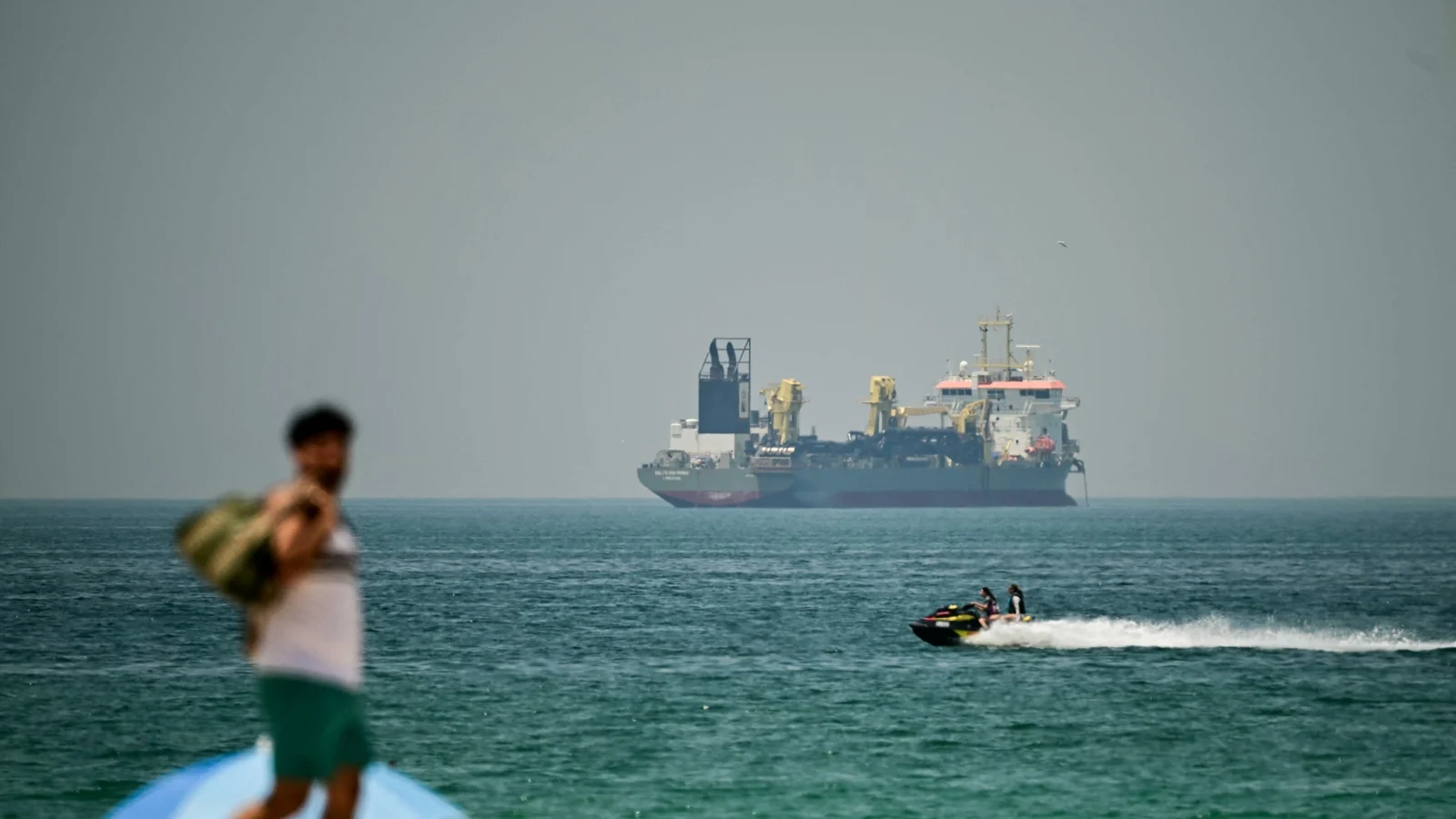
The United States launched an operation this week to reopen a route many shippers had started to regard as off-limits. In the still-purple dawn, the Alliance Fairfax—a U.S.-flagged car carrier operated by Maersk—slipped out of the Gulf under escort. Naval vessels moved alongside, not unlike an uneasy urban neighborhood watch accompanying someone through a troubled block.
“For the first time in days we saw a pathway that worked,” said Omar Haddad, a veteran pilot who guides vessels in and out of ports in the UAE. “But it was a guided pathway—not a reopening. The navy was there in force. You don’t feel normal under those conditions.”
That one convoy matters. The Strait typically handles about 20 million barrels of oil and liquefied natural gas each day—some estimates put that share at roughly a fifth of global oil trade. When traffic through the strait falters, so does the steady pulse of global energy supplies. Ships waiting in anchorage, ports scrambling for alternatives; every delay ripples into refineries, factories, and the grocery bills of people thousands of miles away.
Numbers that hum in the background
- Brent crude: ~ $110 per barrel (after a 3–4% drop following yesterday’s surge).
- WTI crude: ~ $102 per barrel (mirroring the same retreat).
- Strait of Hormuz traffic: roughly 18–20 million barrels per day—almost 20% of global seaborne oil and LNG flows.
Explosions, scorched decks, and the smell of burned fuel
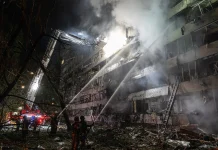
Earlier in the week, several merchant vessels reported explosions or fires. Somewhere along the coastline, an oil terminal in the UAE was struck, flames and smoke staining the horizon above one of the Gulf’s busiest logistics hubs. Residents onshore describe a surreal orange glow at night, the kind of thing that writes itself across the skyline and refuses to be ignored.
“My nephew called me crying,” said Fatima Al Mansouri, who runs a small textile stall near a marina in Abu Dhabi. “He said the boats were on fire. We all watch the news and think: will this touch us? It feels suddenly very close.”
The U.S. military said it destroyed several small Iranian vessels and intercepted cruise missiles and drones that it said threatened commercial traffic. Tehran, for its part, described its strikes as retaliatory measures aimed at thwarting foreign attempts to seize control of the Strait. Each side broadcasts its narrative; the truth in between is braided with smoke and local accounts.
Why a single convoy isn’t the same as a free highway
Analysts cautioned against mistaking the escorted passage for a full reopening. “A military corridor is not commerce returning to normal,” said Leila Ramsey, a maritime security analyst in London. “It’s a controlled experiment, not a restoration of confidence. Insurers, charterers and shipowners are still pricing for risk.” Her words cut to the heart of how markets react: not just to events, but to the probability that those events will repeat.
Insurance premiums for tankers and container ships in the region have surged in recent weeks. Some operators are already re-routing vessels around the Cape of Good Hope to avoid the strait altogether—an option that adds days or weeks to voyages, increases fuel burn and CO2 emissions, and lifts freight costs. For certain high-value cargoes, that calculation makes sense. For others, the delay is ruinous.
Voices at the edges
“We pay the cost here, and the world pays later,” said Marco Silva, a chief engineer aboard a bulk carrier waiting off the coast. “Fuel is more expensive when we detour. And when the oil market jumps, it trickles down to everything—fishing nets, diesel for our boats, the cost of bread.”
Behind every statistic are these moments. A port worker counts shifts lost because shipments are delayed. A refinery executive models scenarios for raw material shortages. An economist in Paris recalculates the inflation trajectory if energy costs stay elevated.
Peering beyond the immediate flare-up
What we are watching in the Strait of Hormuz is both a tactical confrontation and a broader signal: chokepoints matter. In an interconnected energy system, a localized security flashpoint can reshape markets across continents. It also puts a spotlight on longer-term trends: the fragility of a global energy system still dependent on concentrated routes and on geopolitical stability in a handful of producer states.
One possible response lies in diversification—more pipes, more LNG terminals, faster development of renewables. “This is a wake-up call about resilience,” said Noor Patel, an energy transition strategist. “You can hedge risks with strategic reserves and alternative supply lines, but ultimately, reducing dependence on single corridors is the healthier path.” Her optimism is tempered by reality: building alternatives takes years and political will—a commodity in short supply.
What should readers take away?
Look at the convoy and the falling oil price not as a neat cause-and-effect, but as a moment in an ongoing drama. Ask yourself: how much of the things I buy are vulnerable to a naval confrontation thousands of miles away? How do global markets translate local violence into higher prices at home? And what kind of investments—public and private—could make supply chains less brittle?
We cannot remove chokepoints from geography. We can, however, change how we think about them—planning, storing, and diversifying so that a single flash of conflict doesn’t reverberate through living rooms around the world.
Final image
On a late afternoon, a small fishing boat bobbed near the entrance to a port. An old man mended nets with practiced hands, unbothered by convoys and missile reports on the radio. “We have always lived with the sea’s moods,” he said, looking up. “But now the sea carries the world’s politics. It makes everything heavier.”
That heaviness is what markets price in the morning. It is what people like Fatima pay for in groceries the next week. And it is the thread that ties a narrow waterway off the coast of the Gulf to kitchens in Manila, factories in Germany, and school buses in Ohio.