Nightmare at Sea: Seventeen Lives Found Aboard a Drifting Vessel Off Crete
There is a particular hush that falls over a harbour when something terrible has been found at sea — a quiet that asks the wind for answers and the waves for mercy. On a chill morning this past Saturday, that silence was broken 26 nautical miles southwest of Crete, where rescuers discovered a partially deflated vessel adrift with seventeen men dead inside and two survivors clinging to the thin edge between life and death.
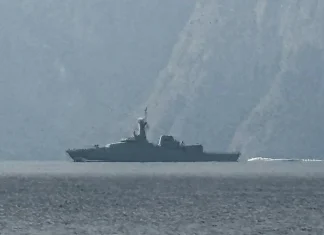
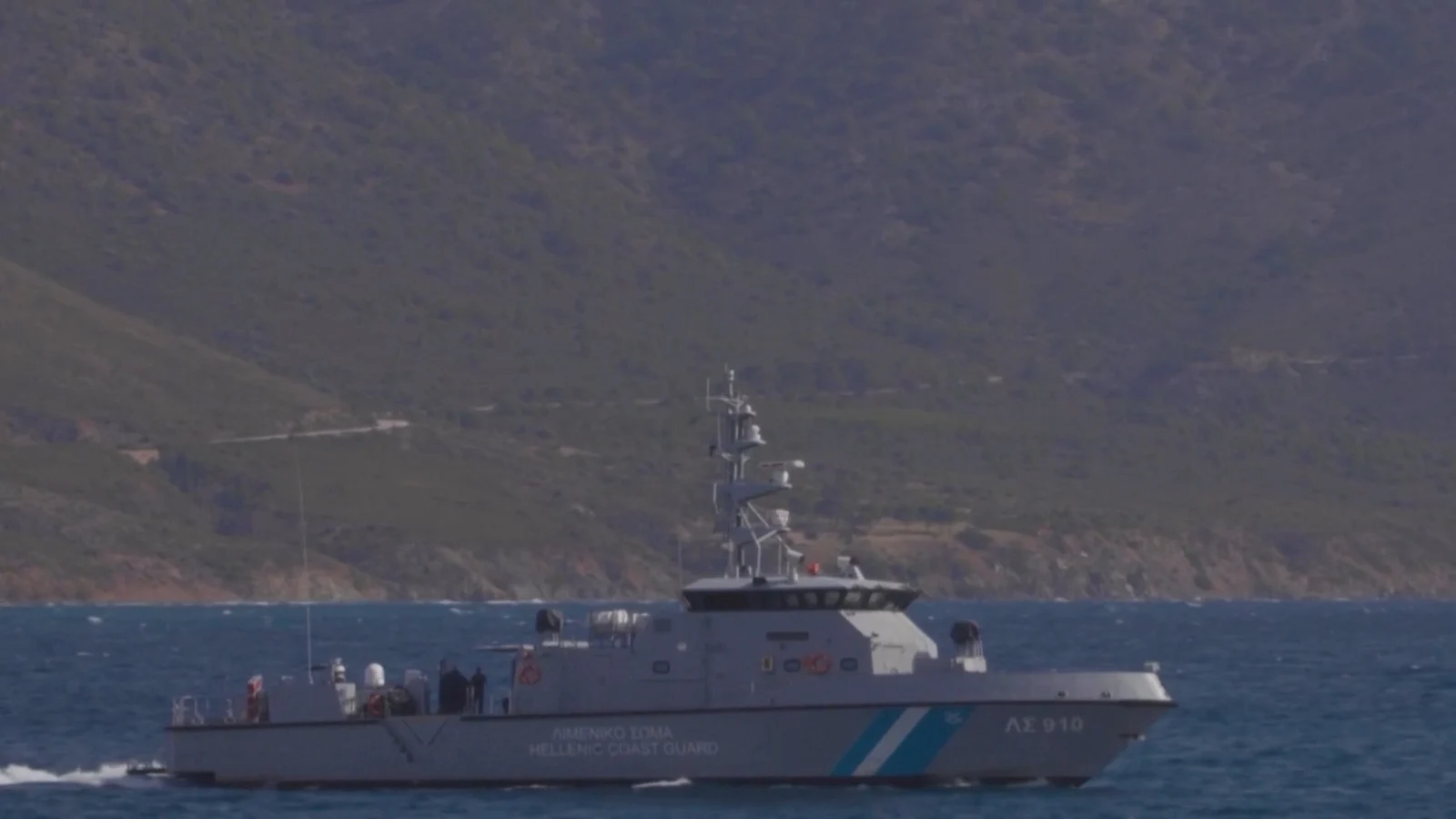
A Turkish cargo ship first spotted the boat and raised the alarm. Within hours, two Greek coastguard vessels, a Frontex patrol ship, a Frontex aircraft and a Super Puma helicopter descended on the scene. But for a group of young men — many, local officials say, apparently in their twenties — the intervention came too late.
What rescuers found
“We found the vessel taking on water and deflated on both sides,” a coastguard spokeswoman told reporters. “Seventeen people were already deceased when we arrived. Two survivors were in critical condition and taken straight to hospital.” She added that coroners would carry out autopsies to establish the precise causes of death, but that dehydration and exposure were being considered.
The survivors, according to officials, described a cramped boat, violent weather and a shortage of food and water. “There was no shelter, no way to cover ourselves,” one survivor later told medical staff, his hands still shaking. “We tried to balance, but the wind and waves took everything.” Their faces were hidden from cameras; in the hospital corridor a nurse muttered, “They look exhausted beyond what words can tell.”
Faces and voices from a Cretan port
In Ierapetra, the small port town that would receive the news, the story landed like a stone tossed into a still pond. “They were all young men,” Manolis Frangoulis, the mayor of Ierapetra, told gathered reporters. “This is not a statistic for us. These were sons, brothers. When you see how they died — crowded into a deflated rubber boat — you feel helpless.”
On the quay, fishermen in oilskin jackets and weather-cracked faces pulled nets but watched the authorities’ boats with the same quiet horror as everyone else. “We sail these seas every day,” said Yannis, a fisherman who asked that his surname not be used. “Once the weather turns, you know how it can punish you. But you don’t expect to find youth turned to silence like that.” He spat, as is the habit among the old salt, and folded his thick hands. “It could be any of our boys,” he said.
Local tavernas — the blue-and-white facades, the smell of grilled fish and lemon — were subdued. Where late-afternoon laughter typically bounces across the harbor, there were now whispered questions: where were they headed, who had arranged the crossing, what will happen next?
Routes, risks and the human calculus
For many migrants, Crete has become the gateway to the European Union. In recent months, more people crossing from Libya have targeted the island as an entry point. According to the UN refugee agency UNHCR, more than 16,770 asylum seekers have arrived in Crete since the start of the year, a surge that tracks the shifting patterns of smugglers and the logic of risk that drives desperate people toward shorter sea legs and cheaper — and often deadly — vessels.
“Smugglers constantly recalibrate,” explained Dr. Elena Petrou, a migration researcher based in Athens. “When routes become more policed, or when sea conditions change, smugglers shift departure points and target different landing spots. Crete’s geography — remote stretches of coastline and a long, porous sea frontier — makes it both attractive and tragic as a pathway.”
It is easy to talk about numbers and routes until you meet the people making the crossings. The young men found off Crete were among tens of thousands this year alone who have chosen, or been forced, onto these rubber boats — each passenger carrying a complex mix of hope, fear and calculation.
Blaming the sea, or the system?
Weather clearly played a role in this case, rescuers said, but weather is only one of a constellation of factors that produce tragedies at sea. Austerity and conflict in origin countries, closed legal pathways to asylum, and the ruthless economics of smuggling create a market where overloaded dinghies and unseaworthy vessels are the norm.
“If we are to prevent more bodies washing up at our shores, we need both immediate rescue capacity and long-term political will,” said Maria Kanelopoulou, director of a Mediterranean relief NGO. “That means more search-and-rescue resources, safer legal routes for asylum, and international pressure to dismantle trafficking networks. Otherwise, the sea will keep delivering us tragedies like this.”
Frontex’s presence in the region — aircraft and vessels among them — is meant to bolster border control and search-and-rescue capacity. Yet agencies and governments wrestle with an uncomfortable duality: stronger controls can deter crossings but can also push migrants into even riskier channels. Who, then, bears responsibility when a boat drifts and harvesting lives?
Questions that won’t go away
What happens to those who die at sea — beyond the formalities of autopsies and paperwork? Which nations will examine the push factors behind these departures? And how many more early-morning alarms will sound before meaningful policy change reduces the human cost?
“Every time I hear of bodies at sea, I ask myself if we have learned anything at all from past tragedies,” said Anna, a teacher from Heraklion who volunteers with an integration group. “We rush to retrieve, we hold memorials, and then the headlines move on. But people don’t stop fleeing just because we’re tired of their stories.”
Beyond the headlines: a shared responsibility
The faces of the dead are likely to remain as anonymous names in coroner reports: young men, described as such by local officials. Yet their anonymity underscores a more profound issue — the ways in which global systems render certain lives expendable in the pursuit of borders and deterrence.
The sea where they perished is both boundary and bridge. It separates states and connects continents. It is indifferent to human law and yet often where international commitments come most sharply into focus. Will the discovery off Crete be another episode in a grim, recurring pattern — or a catalyst for change?
As the island returns to its ordinary rhythms — fishermen hauling nets, children playing near the harbor, restaurants filling for the evening — the questions linger like a salty fog. What will we do with these questions? Will we answer them with policy, compassion, and durable alternatives to perilous crossings, or with the quiet resignation of those who have watched too many tragedies unfold?
For the families who will now wait for autopsy reports and for names to be confirmed, headlines are cold comfort. For the rest of us, the challenge is simple and unnerving: to look, to remember, and to decide whether the next time a boat drifts in the Mediterranean we will be better prepared — not just to rescue, but to prevent.