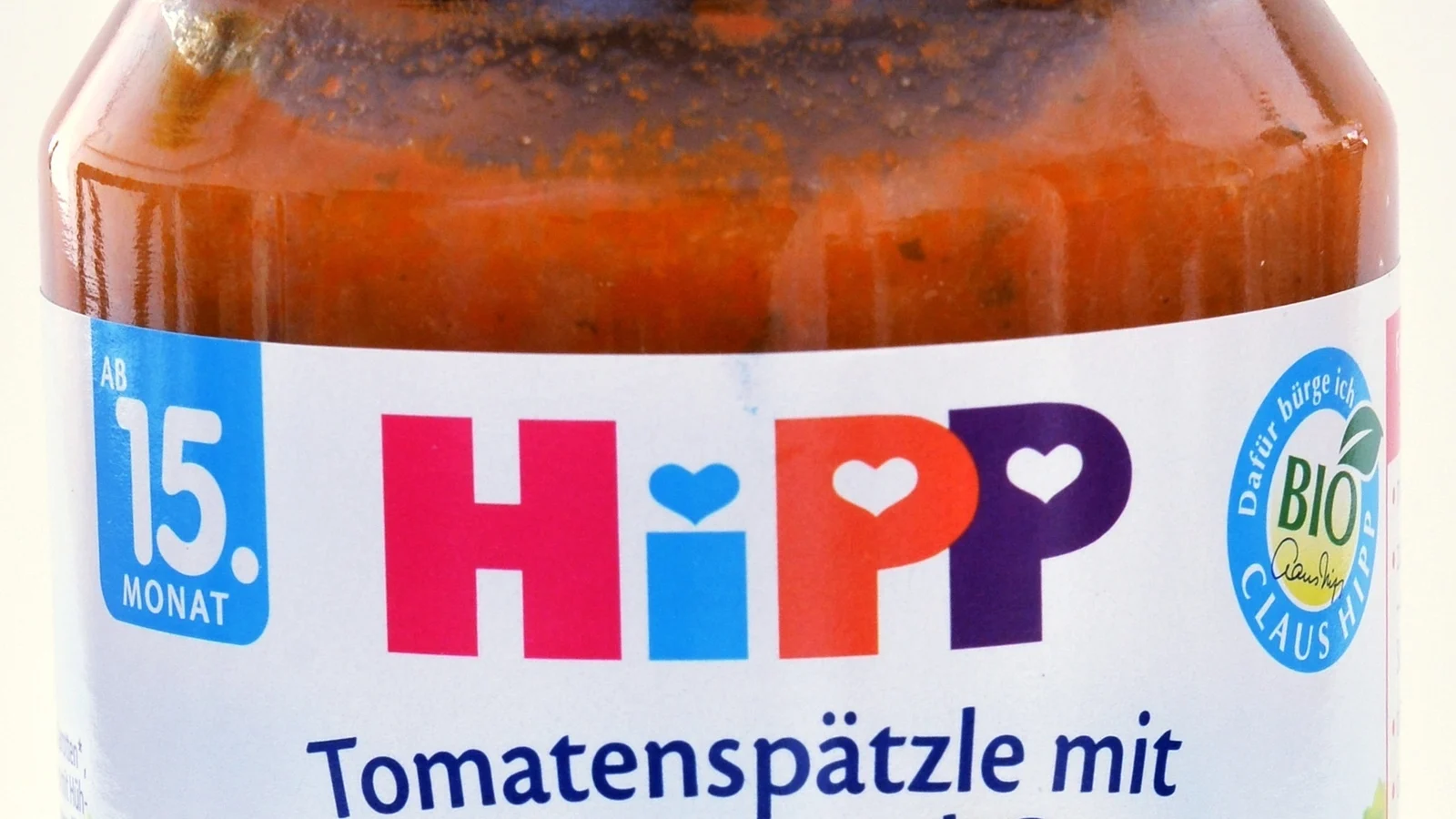
A jar on the kitchen table, a family’s quiet alarm
It begins like so many small domestic dramas: a tired parent reaching into a grocery bag for a quick dinner, a plastic jar of baby food caught by morning light on the kitchen table, the familiar label promising organic carrot and potato purée. In the Eisenstadt-Umgebung district of Austria, that ordinary moment became the start of something far more unnerving.
“I picked it up and something felt—off,” a local mother, Martina H., told me. “The lid looked like it had been opened before. My heart dropped. I have a nine-month-old; we use HiPP because it’s supposed to be safe. I just started shaking.” Her voice tightened around a small, private fury: the violation of a trusted ritual—the feeding of a child.
What happened: a product recall that rippled across borders
Officials in Burgenland, the easternmost Austrian state, say that sample testing of one 190g jar of HiPP Vegetable Carrot with Potato returned by a customer showed signs of rat poison. The jar carried a red circle sticker on the bottom and appeared to have a damaged or missing safety seal. That triggered the kind of chain reaction retailers dread: an immediate recall from roughly 1,500 SPAR supermarkets across Austria, and rapid removals in several neighboring markets.
Police statements reported that preliminary lab results from similar jars seized in the Czech Republic and Slovakia detected a toxic substance, and HiPP—the well-known German baby food maker long associated with organic and family-friendly branding—said it could not rule out deliberate contamination.
“We are treating this as an external criminal interference,” a company spokesperson said in a prepared statement. “Our priority is the safety of children and full cooperation with the authorities.” SPAR Austria confirmed it had pulled the affected jars from shelves in countries where it operates, including Austria, Slovenia, Hungary, Croatia and parts of northern Italy.
Signs to watch for
Authorities asked consumers to check jars carefully. Red flags include:
- Broken or missing safety seals on the lid
- Open or otherwise damaged lids
- An unusual smell coming from the jar
- A sticker with a red circle on the bottom (as noted in the cases reported)
SPAR and HiPP advised customers not to feed the contents to children and offered full refunds for returned jars. Police also urged anyone who handled the product to wash their hands thoroughly.
Voices from the frontline: fear, frustration, and cautious gratitude
In the small market town where the first jar was reported, emotions ran from anger to gratitude. “I’m furious that someone could mess with baby food,” said Lukas, a shop employee who helped remove affected stock. “But I’m also glad we caught it early. We could have had a real tragedy.”
A pediatric nurse at a nearby clinic, who asked not to be named, described the ripple effects in her ward. “Parents are calling. They’re terrified,” she said. “Even if only a handful of jars were contaminated, the breach of trust is enormous. Babies rely on us to protect them. When that feels broken, it’s devastating.”
Not everyone is convinced a wider conspiracy exists; some locals pointed to supply-chain vulnerabilities. “Packaging gets damaged during transport,” offered an elderly customer in Eisenstadt’s Sunday market. “But you never, ever expect it to be poisoned. That is another level.”
Understanding the risk: what rodenticide can do and when to seek help
While the specific compound has not been publicly detailed in full forensic reports, many rodenticides used in Europe are anticoagulants—substances that can interfere with blood clotting and cause internal bleeding in severe cases. Health authorities in Austria, including the Austrian Agency for Health and Food Safety (AGES), have urged immediate medical attention if a baby has consumed the affected product.
“If there’s any possibility an infant has ingested rodenticide, treat it as an emergency,” advised Dr. Eva Müller, a pediatric toxicologist at a Vienna hospital. “Symptoms may not appear immediately. Look for unusual bruising, persistent vomiting, lethargy, or bleeding from the gums or nose. Call emergency services and bring the jar if you still have it—knowing what was ingested can guide treatment.”
Medical services in Austria and most EU countries maintain poison control centers and emergency protocols for such incidents. Rapid access to blood tests and antidotes—vitamin K for certain anticoagulant rodenticides, for example—can be lifesaving.
Practical steps for worried parents
- Stop feeding any jars of HiPP Vegetable Carrot with Potato bought from SPAR Austria.
- Check lids and seals; look for the red circle sticker noted by authorities.
- Return affected jars to the point of purchase for a full refund.
- If a child has consumed the product, seek immediate medical care and keep the jar for testing.
- Wash your hands thoroughly if you handled the jar.
Beyond the jar: what this incident says about trust and food systems
A single tainted jar is a local event that becomes a global signal: we live in a time when food moves across borders in minutes, where a product opened or altered in one place can be sold in another. The cross-border lab findings in the Czech Republic and Slovakia underline the transnational nature of modern retail networks—and the need for equally rapid, cooperative responses.
“This is a wake-up call,” said a food safety researcher at the University of Vienna. “Tampering is rare, but it tests the integrity of packaging, surveillance, and recall systems. We need tamper-evident designs that are robust and a regulatory framework that ensures traceability from factory to shelf.”
The episode also taps into deeper anxieties about how commercial brands build and lose trust. HiPP, with decades of reputation among parents who prize organic baby food, now faces the task of proving that trust remains warranted. How companies communicate in the hours and days after a crisis—what they disclose, how quickly they act, and how they support affected families—shapes public memory as much as the lab data.
Questions to sit with
What would you do if you found a breached safety seal on something you gave your child? How much trust should we place in packaging and brand reputation? And at what point do we shift from private anxiety to public demand for systemic change?
For now, the practical answer is simple: heed the recalls, return affected jars, and reach out to health professionals if there’s any concern. But the harder work—of rebuilding confidence, tightening supply chains, and making sure that a family’s dinner table is never again the site of a crime scene—remains.
As investigators in Austria continue to probe who tampered with the jars and how the contamination occurred, parents in living rooms across the region will be checking lids one more time, fingers tracing plastic seals that now feel heavier with meaning. In the hum of an ordinary evening, that small vigilance is an act of care—and of insistence that our youngest deserve better than the fear that filled Martina’s kitchen that day.