When Oil Sails, War Dollars Flow: Ukraine’s Plea and the Global Price of Convenience
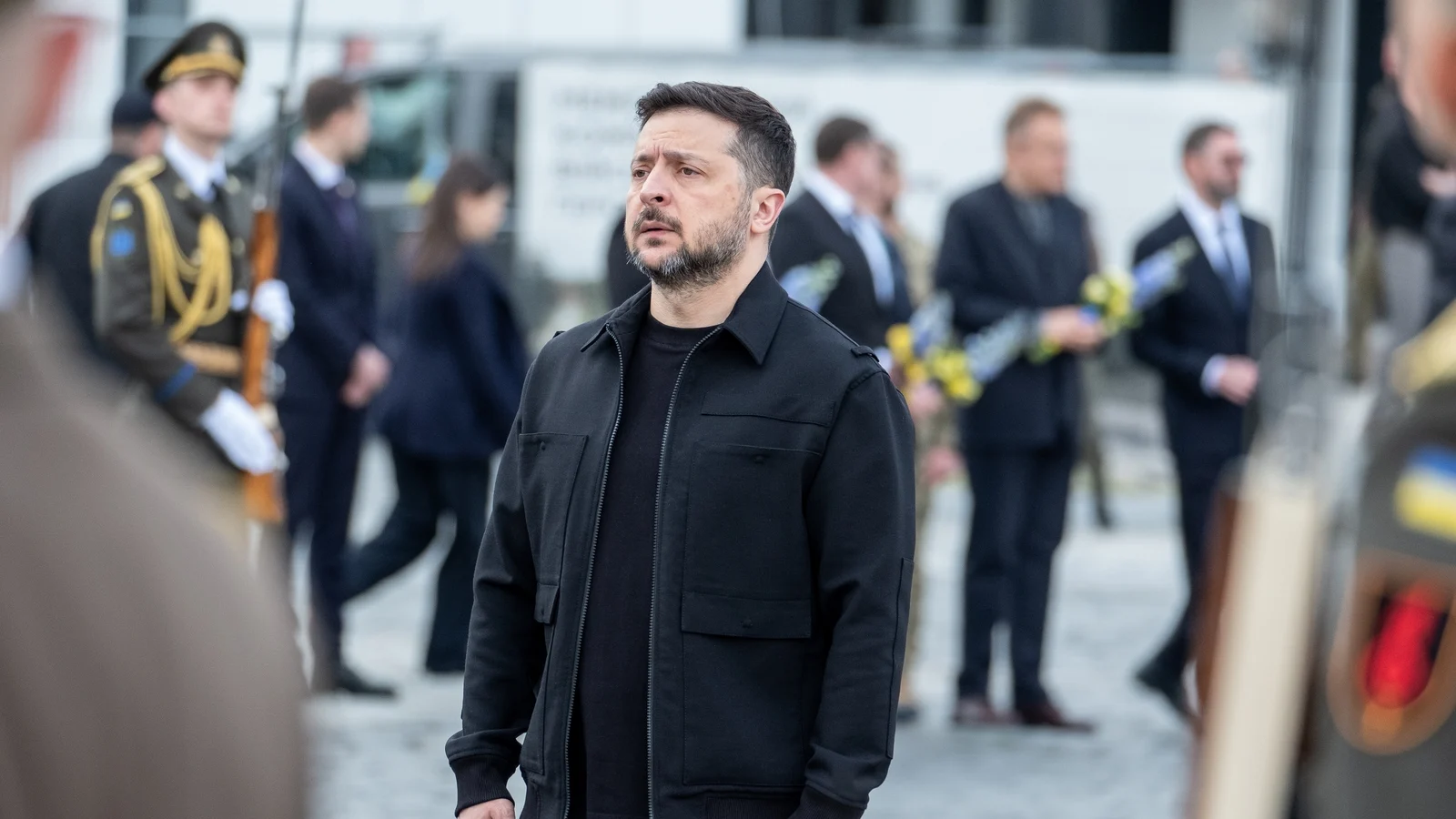
There is a simple, brutal arithmetic playing out on the high seas: barrels of oil that change hands between anonymous tankers become bullets, drones and shattered homes in Ukraine. That is the argument Ukrainian President Volodymyr Zelensky made this week, his words heavy with counting and grief—“Every dollar paid for Russian oil is money for the war,” he wrote on X—after a controversial U.S. move to ease sanctions on oil destined to calm an energy shock tied to the Middle East conflict.
It is easy to imagine the scene: a line of black-hulled tankers ghosting across a grey Atlantic, crewed by workers who are strangers to this calculus, loaded with crude that will end up in refineries, markets and, according to Kyiv, in the coffers of a military machine. Zelensky’s post, precise and unflinching, said more than words—it offered a ledger: more than 110 tankers, carrying over 12 million tonnes of crude, roughly $10 billion in value, now potentially marketable because of a month-long waiver the U.S. Treasury granted to ease surging energy prices.
Why Washington eased the tap
The waiver—short, temporary, aimed at calming global markets—was framed by its proponents as pragmatic. Energy markets are brittle; a flare-up in the Middle East can send ripples from the Gulf to grocery shelves in Europe and to utility bills in Seoul. “The urgency was clear: if prices spike at the wrong time we see cascading impacts across developing and developed economies alike,” said a Washington-based energy analyst who asked not to be named. “A short waiver is a pressure valve.”
But what looks like triage in political capitals can feel like betrayal elsewhere. Two days before the waiver’s extension, Treasury Secretary Scott Bessent reportedly said the U.S. would not renew it—only for the department to reverse course. The U-turn has amplified a tension that has become painfully familiar in modern geopolitics: the collision of near-term domestic pain and long-term strategic commitments.
On the ground: lives, losses, and a city that remembers
In Chernihiv, a northern city whose churches and courtyards have witnessed centuries of history, the war announced itself in the small, sharp ways that make numbers personal. Local officials said a 16-year-old boy was killed and four people wounded in one overnight attack. “We make soups here and collect firewood,” said Olena Kovalenko, 42, a teacher whose apartment overlooks a square ringed with battered Soviet-era buildings. “We are tired of standing under alarms and counting the minutes between explosions.”
Kyiv’s tally of recent assaults underscores the human cost behind Zelensky’s calculation: in the last week alone, he said, Russia launched more than 2,360 attack drones, over 1,320 guided aerial bombs and nearly 60 missiles of various types at Ukrainian cities and communities. Each number is, in Zelensky’s formulation, bought with energy revenue.
“When my neighbor’s shop burned we all lost a common memory,” said Mykhailo, a grocer in Chernihiv who lost part of his stock to a strike. “You cannot say the price of oil is just a number after that.”
The mechanics of sanction-busting
It’s worth pausing on how this trade happens. Sanctions work by choking channels—ports, banks, insurance—and making oil shipments harder and more expensive. But the global oil market is a web: traders reroute cargoes, change ship names, employ so-called “dark fleet” tactics where AIS transponders are switched off, and use ship-to-ship transfers in remote waters. What once was visible on a public map becomes, at best, partial.
“Sanctions are only as effective as the enforcement and the political will behind them,” said Dr. Fatima Rahman, a sanctions expert at a European think tank. “A temporary waiver provides legal cover for transactions that would otherwise be restricted, and it creates a precedent. Markets respond less to black-and-white rules than to signals about how those rules will be applied.”
If Kyiv’s claim that 110 tankers carry 12 million tonnes of crude is accurate, the economic implications are not abstract. Zelensky argued that the potential $10 billion represented “a resource that is directly converted into new strikes against Ukraine.” Whether that money is immediately fungible for weapons procurement or indirectly fuels a broader economy, the symbolic link between fossil-fuel revenue and conflict funding is stark and hard to ignore.
Global ripple effects: energy, politics, morality
For countries facing rising fuel bills, the calculus is agonizing. Governments must balance the immediate need to keep homes warm and industry running against the geopolitical and moral fallout of appearing to subsidize aggression. For many European nations heavily dependent on energy imports, the decision is not binary: it is a daily negotiation between prices at the pump and pressure in the diplomatic pipeline.
“Sanctions are not a magic wand,” said an anonymous European diplomat. “They require coordination—and sometimes they require sacrifice.”
- More than 110 tankers were reported to be carrying sanctioned Russian crude.
- Those cargoes were estimated at upwards of 12 million tonnes, roughly valued by Kyiv at $10 billion.
- Zelensky reported thousands of drone and bomb attacks in recent weeks, and dozens of missile strikes.
What this debate asks of us
As readers, what do we demand of our governments? Is it acceptable to stabilize energy markets at the possible cost of emboldening a military aggressor? Or is it reckless to ignore immediate economic pain in the hope of long-term strategic advantage? If sanctions are a tool of statecraft, what does their wavering say about the cohesion of the alliances that depend on them?
We should also ask: who pays for the choices made in high rooms? The answer is often the same: ordinary people—shopkeepers in Chernihiv, commuters watching their budgets, sailors on anonymous tankers—carry the consequences.
Toward a broader view
This episode is more than a dispute over policy; it is a prism through which global trends are visible. Energy security, financial interconnectedness, the limits of sanctions regimes, and the human toll of modern warfare—each is threaded into the story of a waiver and a presidential rebuke. It’s tempting to reduce the matter to blame: one side easing off, another counting strikes. But the fuller truth is messier, made of competing priorities, imperfect enforcement, and the brute arithmetic of supply, demand and political expedience.
As the tankers sail, as markets dip and spike, as families bury their dead and rebuild their lives, the rest of the world watches—and chooses. Will short-term relief trump longer-term resolve? Will sanctions regimes adapt into tighter, smarter tools? Or will they fray under pressure, letting commerce flow where conflict brews?
There are no easy answers, only choices. And those choices echo far beyond the decks of the tankers that sailed into headlines this week.
What do you think—should short-term energy stability ever override sanctions intended to constrain a wartime economy? Share your thoughts below and keep the conversation alive; the stakes are not just geopolitical, they are deeply human.