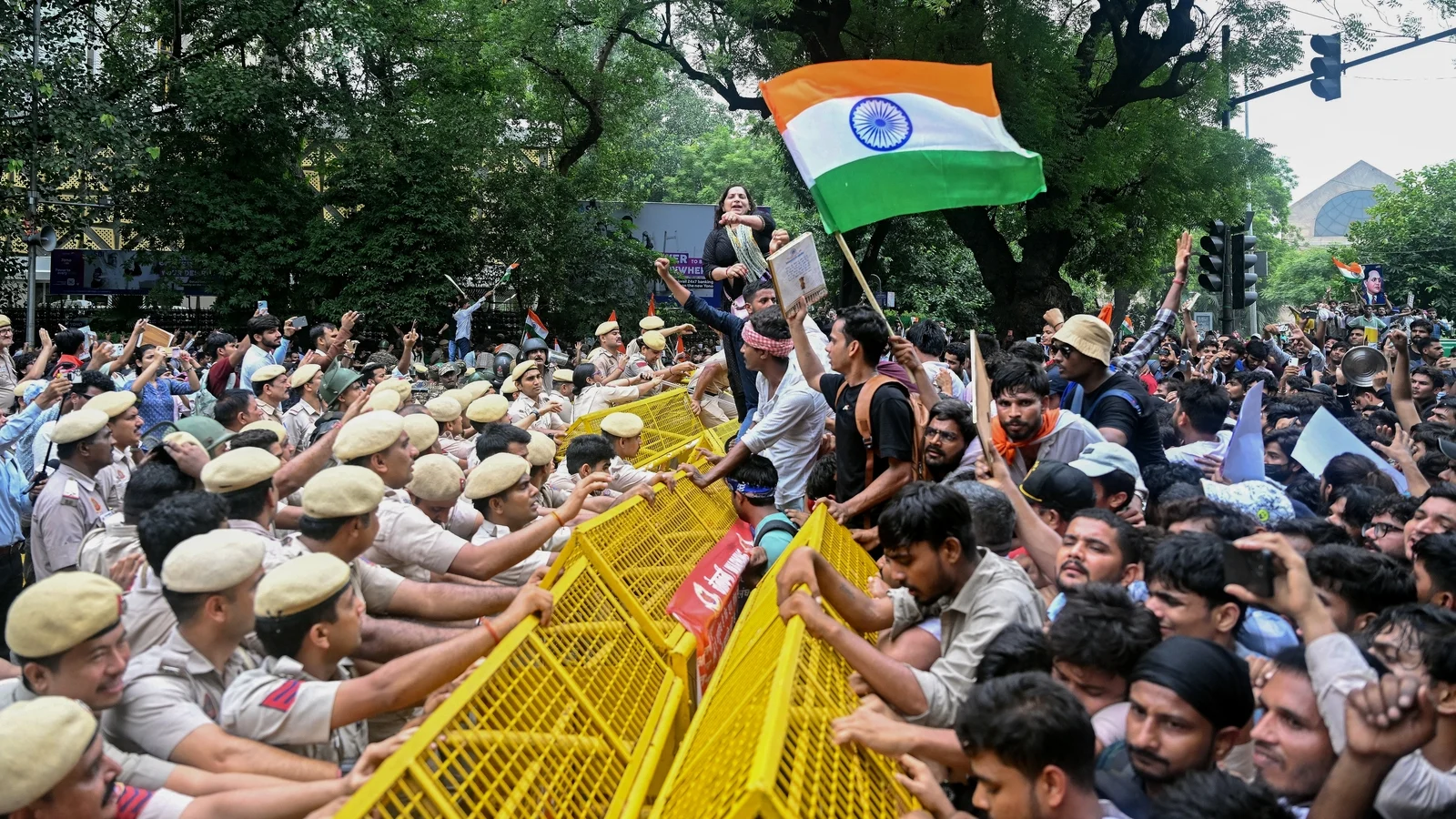
Tear gas hung in the air near New Delhi’s Jantar Mantar today as police baton-charged and fired shells at a crowd of mostly young students who tried to march to parliament, escalating protests over alleged irregularities in major exams.
Witnesses said the demonstrators scattered for cover as officers moved in, using lathis and tear gas to break up the march in the Indian capital.
At the heart of the anger is a demand for the resignation of Education Minister Dharmendra Pradhan, with protesters citing exam-related controversies that include question paper leaks and technical glitches.
From early morning, thousands began assembling despite a steady monsoon drizzle and layers of police barricades, turning the gathering into one of the largest demonstrations New Delhi has seen in five years.
The latest mobilisation follows a flashpoint over the weekend, when prominent activist Sonam Wangchuk was forcibly taken to hospital on Saturday, ending his 20-day hunger strike backing youths and the satirical Cockroach Janta Party (CJP) movement.
Since launching in May, the CJP has amassed millions of social media followers, channeling frustration with the country’s education system as well as unemployment.
“Is this a war zone? Why is the police resorting to tear gas assault on peaceful protesters?” CJP said in a post on X.
The surge of support for the movement is being viewed as one of the most significant challenges to Hindu-nationalist Prime Minister Narendra Modi since he secured a third term in office in 2024.
Protesters disperse after police fire tear gas shells in New Delhi
India’s economy has expanded rapidly, yet millions in the world’s most populous nation continue to struggle for stable, well-paying work — a backdrop that has sharpened discontent.
Last month, around 2.2 million aspiring medical students were made to sit for a re-examination under tight security after the earlier test was cancelled due to a question paper leak that sparked nationwide outrage.
That controversy followed another scandal involving the online marking system used for exams taken by nearly two million secondary school students.
The CJP said two of its leaders met a senior minister today and handed over a letter detailing their demands after the government contacted them in the morning.
Authorities also cut internet access in parts of central New Delhi, and police said organisers had not received permission to hold the protest.
“Any person violating these prohibitory orders shall be liable for prosecution,” Delhi Police said in a statement.
Mr Modi, speaking publicly ahead of parliament’s monsoon session, did not refer to the demonstrations.
In the upper house, however, Mallikarjun Kharge, a senior leader of the opposition Congress party, raised the issue.
“Thousands of students have gathered at Jantar Mantar. The government is trying to use force, suppress voices, and drive them away,” he said.
Opposition lawmakers also shouted slogans from their benches in the lower house, demanding the education minister’s resignation and justice for students.