When Sirens Cut Through a Quiet Street: A Night of Fear on the Pope’s Brother’s Block
Last evening, as the sun sank behind the flat-topped roofs of New Lenox, a small town on the fringe of Chicago’s sprawl, an ordinary suburban street became the scene of an anxious, almost cinematic police response. Neighbors stepped onto lawns in slippers, clutching phone screens, while patrol cars threaded headlights through maple shadows: a bomb threat had been phoned in to the home of John Prevost — one of the brothers of Pope Leo XIV.
The mood was not rabid panic so much as a grainy, stunned disbelief. This is a place of barbershops, a Polish bakery that still folds dough by hand, and wide porches where folks wave to each other at dusk. “You never expect to hear sirens for something like this,” said Maria Kowalski, who’s lived two doors down for 18 years. “We worry about ice on the roads, not about bombs.”
A careful sweep, and a sober finding
Police sealed off the immediate area, asking residents to step back while bomb technicians and investigators made a methodical sweep. After hours of searching, officials concluded there were no explosives and no hazardous materials. The threat was unsubstantiated — but that finding did not erase the flurry of questions about motive, origin, or timing.
“We treat every threat as credible until proven otherwise,” said Lt. Daniel Herrera, who led operations that night. “The safety of residents is our first priority. Fortunately, there was nothing dangerous found on the premises.”
Investigators said they were continuing to trace the source of the false report. In an era of easily amplified messages — some honest mistakes, others deliberate provocation — tracking the genesis of a hoax can be as important as the physical search itself.
Politics, Piety, and a Pope from Chicago
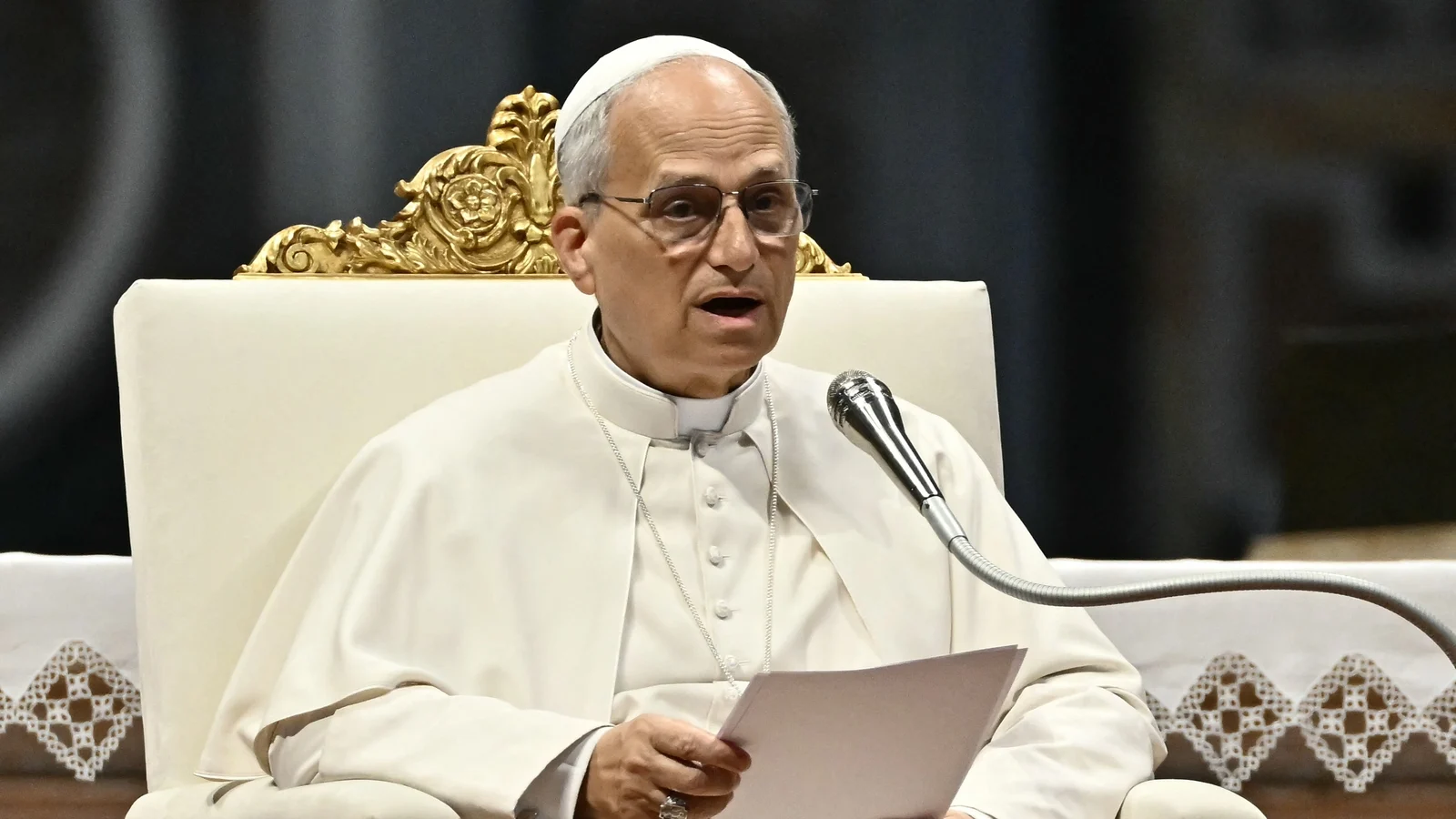
At the center of this small-town drama is a family that suddenly occupies a large, global stage. Pope Leo XIV, born in the Chicago area and now leader of an estimated 1.3–1.4 billion Catholics worldwide, has been vocally critical of recent military actions in the Middle East. His rhetoric has been unusually sharp: in public appearances abroad, he has denounced the diversion of vast sums to warfare while communities suffer.
That moral clarity has made him a lightning rod. Back home, a chorus of praise and condemnation has followed. National political figures, including former President Donald Trump, have publicly derided the pontiff’s stance, calling him too liberal and “weak on crime,” while simultaneously praising certain family members who align politically with them.
John Prevost’s house sits on the same street that police cited when they initially reported the location tied to the threat. He is one of several siblings who have been pulled into the glare of public scrutiny because of their brother’s prominence. “This kind of attention isn’t something we asked for,” said Louis Prevost, who lives in Florida and has been mentioned favorably by some pro-MAGA commentators. “We’re ordinary people with a lot of ordinary worries.”
Neighbors, clergy, and the pulse of the parish
At St. Martin’s, the parish two miles away where several Prevost family members once attended, Father Andres Molina spoke with a mix of sorrow and resolve. “Our faith teaches us to pray for peace, but also to act responsibly toward one another,” he said. “Threats like this hurt families and communities regardless of whom they are aimed at.”
In a city with a deep Catholic heritage — neighborhoods where Polish, Irish, Mexican and Filipino communities find their rituals and rhythms — the news rippled. “Chicago raised him,” said Rosemarie Delgado, who runs the Polish bakery that has been on the corner longer than most of the town’s council members. “People here feel like they know the family. When something like this happens, it feels personal.”
Threats, Misinformation, and the New Normal
This incident is not an isolated quirk. Around the world, public figures — especially those who cross spiritual and political lines — have seen threats increase, whether anonymous calls, menacing letters, or coordinated online harassment. Security professionals warn that in polarized climates, symbolic acts of intimidation can be as damaging as actual violence.
“A hoax bomb threat functions the way an angry tweet does: it creates disruption, fear, and the sense that public life is unsafe,” said Olivia Kim, a security analyst who consults for religious institutions. “Even when there is no device, the emotional and material costs are real: evacuations, lost work, trauma for children.”
Ask yourself: how does a society balance robust debate with the safety of those who speak out? How do we protect families who share a name or a street with public figures without shutting down civic conversation?
What the facts can tell us — and what they can’t
Some context helps frame the immediate fears. The Catholic Church’s global reach is massive — over a billion adherents — and its leader’s comments carry weight across continents. Tensions over foreign policy can ignite passions domestically, especially when leaders criticize military priorities and question alliances or strategies.
But beyond the headlines and hashtags, there are everyday lives. In New Lenox, children went to bed shaken; for some elderly residents, the night’s sirens revived memories of other eras of anxiety. “I remember the Cold War drills,” said 78-year-old Harold Jensen, a retired teacher. “We were taught to duck under our desks. Tonight, we watched our phones.”
Aftermath and a wider reflection
In the hours after the all-clear, life resumed its suburban cadence. Mowers hummed again. Traffic lights held their steady amber pulses. But the conversation lingers: about the safety of loved ones, the responsibilities of public speech, and the thin line between criticism and intimidation.
“We can disagree vehemently without endangering one another,” Father Molina told parishioners on Sunday, his voice both weary and steady. “Church leaders should be free to speak conscience. Citizens should never be targets for that courage.”
The investigation into who made the call and why will continue. For now, the community has done what small towns often do: pull together, swap casseroles, and keep a watchful eye on one another. “We’re shaken,” Maria Kowalski said, “but we’re not broken.”
Questions for readers
- How should communities protect private citizens who become public figures by association?
- When does political disagreement cross the line into intimidation?
- What safeguards should be in place to prevent the spread and impact of false threats?
These are not easy questions, but they are necessary. In a world where local streets can suddenly intersect with global controversy, the answers will shape not only security policies but the health of our public life and the dignity of everyday people caught in the crossfire.