Night of Fire: Tel Aviv Under a Sky of Falling Stars
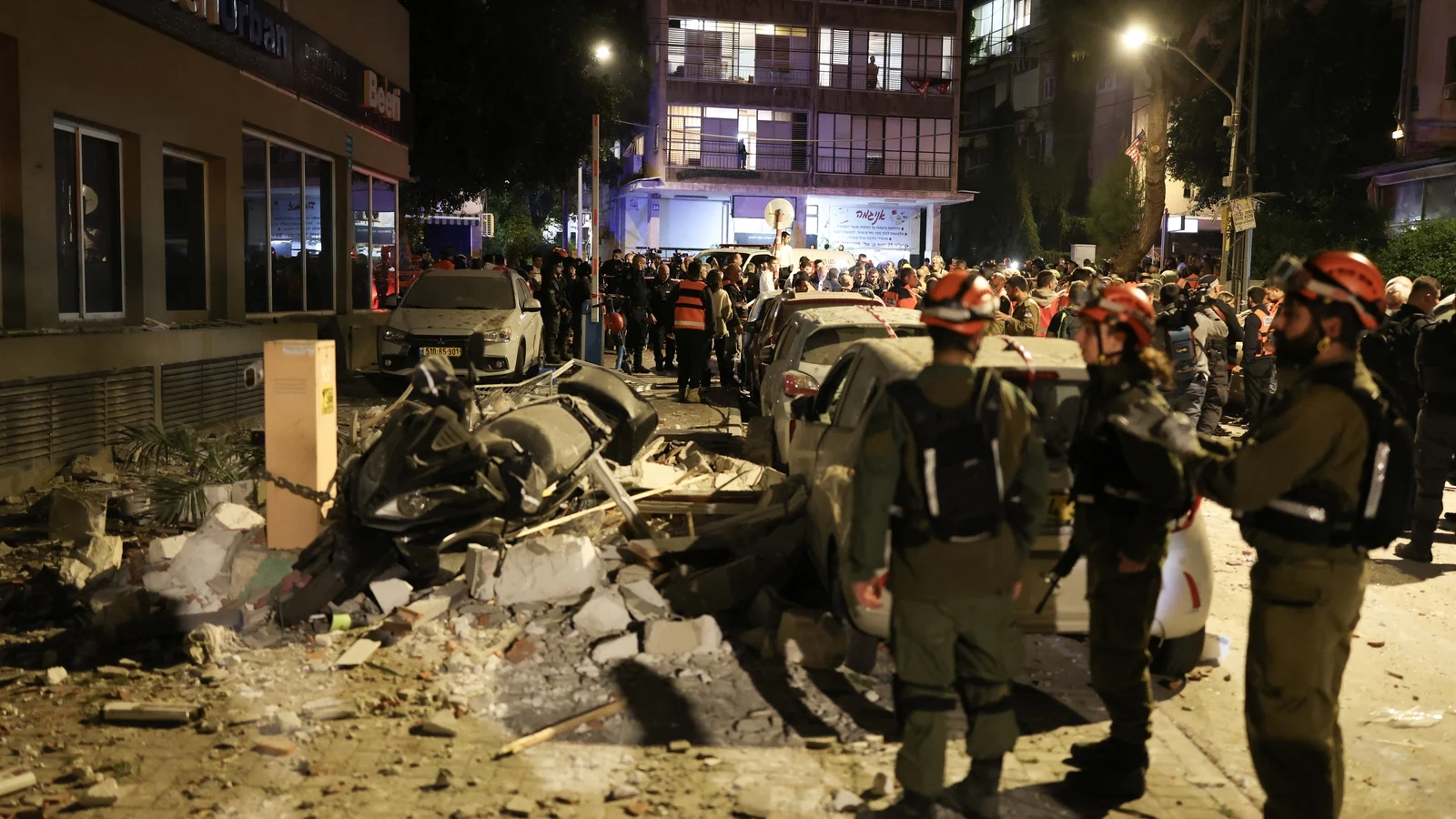
Late into a warm Mediterranean night, the sirens came like a chorus of grief. People spilled from cafes and homes into the narrow streets of Tel Aviv, faces tilted up as tracer-like streaks tore across the sky and blooms of light unfurled where missiles met air. “You could see the city rearrange itself in an instant,” said a paramedic who worked through the night. “We treated burns, shock, the smell of smoke—people who had just been at dinner were gone in a second.”
Iranian state television declared the strike a reprisal: missiles armed with cluster warheads—ordnance designed to disperse dozens of smaller bomblets over a wide area—had been launched toward Israel’s largest metropolis. Israel, for its part, has long warned that Iran has repeatedly relied on these munitions, which scatter lethally and complicate any attempt to intercept them above densely populated neighborhoods.
The attack killed two people in Tel Aviv and pushed the official toll in Israel from the wider conflict to at least 14. Elsewhere, a projectile struck near Iran’s Bushehr nuclear power plant; Tehran told the International Atomic Energy Agency there had been no casualties or damage. Still, the IAEA chief renewed a plea for maximum restraint, warning that a mistake near nuclear facilities could unleash calamity beyond the battlefield.
What the Night Revealed
There is a brutality in modern warfare that is both intimate and indiscriminate. Cluster munitions do not distinguish between combatant and sidewalk cafe. They are designed to erase an area, to turn streets into minefields for rescue crews days after the flash. Families in Tel Aviv now sweep up unexploded fragments with gloved hands; hospitals catalog injuries that do not always appear on scans.
“I keep thinking of the playground by Dizengoff,” said a schoolteacher who spent hours sheltering children in a basement classroom. “We held hands and sang quietly to keep from listening to the explosions. How do you explain that to a seven-year-old?”
The Wider Arc: A Conflict Spreading Like Ink on Water
What began in late February as strikes by Israel and its ally the United States against high-ranking Iranian figures has become a widening shadow across the Middle East. Tehran confirmed the killing of Ali Larijani, a key security official, and said his son and deputy were also killed in Israeli operations. Iran’s Supreme National Security Council—an organ Larijani led—said the targeted killings were among the most significant since the first day of the war, when Iran’s supreme leader was reported killed in a strike.
Iran’s new supreme leader, Mojtaba Khamenei, has signalled a hard line. A senior Iranian official told reporters that proposals to reduce tensions or broker a ceasefire were rejected; the message from Tehran was blunt: peace talks are off the table until the United States and Israel “accept defeat” and pay compensation. It remains unclear whether the young leader attended the foreign policy meeting in person or by video.
Beyond Borders: Missiles, Drones, and the Anatomy of Escalation
The violence has not been confined to the capitals of Israel and Tehran. Across the Gulf and into Iraq and Lebanon, missiles and drones have struck ports, oil terminals, diplomatic compounds and residential buildings. Human-rights monitors estimate that more than 3,000 people in Iran alone have died since the attacks began, while Lebanon has reported more than 900 fatalities since fighting there intensified in early March.
Gulf Arab states have been hit by an estimated 2,000 missile and drone strikes, many targeting the United Arab Emirates. The goal, analysts say, is to paralyze nodes of global trade and logistics—intimidation writ across infrastructure.
The Strait of Hormuz: A Narrow Passage, a Global Pressure Point
The Strait of Hormuz, some 21 miles at its narrowest, is a choke point for a fifth of the world’s seaborne oil. When those lanes close, the effect ripples from port to pump.
Overnight threats to tankers linked to the United States and Israel have left the waterway effectively sealed. Oil prices rose about 3% in a single day and, shockingly for markets already on edge, are roughly 45% higher than before the war’s outbreak at the end of February. Airlines warn that surging jet fuel prices will translate into hundreds of millions in extra costs—costs that passengers will eventually feel in higher fares and fewer routes.
“We have moved from a regional clash to a systemic shock,” said a maritime security analyst in Dubai. “When shipping lanes are threatened, the global economy is the next casualty.”
- Strait of Hormuz: ~20% of seaborne oil trade
- Estimated deaths in Iran since late February: 3,000+
- Reported deaths in Lebanon since March 2: 900+
- Missile/drone attacks on Gulf states: ~2,000+
- Oil price increase since Feb 28: ~45%
Voices from the Ground
“We live two fears now—one from above, one from what comes next,” said a shopkeeper in Beirut who has already lost part of his storefront to a strike. “There is no place to hide that doesn’t feel temporary.”
A sailor who ferries goods around the Gulf described days of waiting at anchor, rerouted, and unsure whether insurers will cover the losses. “We could be out here for weeks while the market decides what it’s worth,” he said. “Families at home need wages; we are trying to keep engines running.”
In Tehran, residents divided between grief and anger gathered at shrines and street corners. “We are shocked and grieving, but we will not bow,” said one woman lighting candles at a neighborhood mosque. “They think silence will follow death. It never does.”
Diplomacy, Desperation, and the Question of Restraint
On the diplomatic front, the United States has struggled to marshal wide support for its operation. NATO partners have been wary of becoming entangled; President Trump lashed out on social media, saying the US has had such “military success” that it no longer “needs” allied assistance—comments that drew sharp rebukes from European capitals urging caution.
International agencies have sounded alarms beyond the immediate theater of war. The World Food Programme warned that if the fighting drags into June, tens of millions more people will face acute hunger—hunger born from disrupted supply chains, higher fertiliser prices, and parched budgets in fragile states.
“We are seeing the convergence of conflict, economics, and climate pressure,” said a senior food-security advisor in Rome. “When access collapses, the human toll multiplies far beyond battlefield casualties.”
What Should We Make of This Moment?
Here is where the story becomes not only about missiles and political statements, but about the fragile scaffolding of modern life. From playgrounds in Tel Aviv to tanker decks in the Gulf, to the refrigerated warehouses that keep a continent fed—everything rests on the assumption that the world remains connected and that risks can be managed.
Do we accept a new normal—rising prices, tighter borders, hidden front lines—or do we demand a different course, one where mediation, not missiles, dictates the next chapter? That is the question governments, markets, and citizens now face.
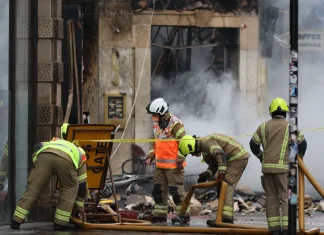
As rescue workers in Tel Aviv clean up fragments of a night that will live in memory, as captains chart longer, costlier routes around a closed strait, and as families in Tehran and Beirut mourn, we are reminded that geopolitical shocks are not abstractions. They are sounds, smells, and the sudden absence of a child at a dinner table.
What would you do if the sky above your city became a battleground? How much are we willing to pay—at the pump, at the grocery, in human lives—to see this end? The answers will shape not just the coming weeks but the map of a world attempting, precariously, to hold together.