Smoke over the Gulf: When a Waterway Became the World’s Pressure Point
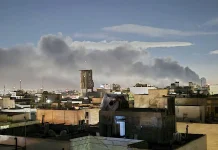
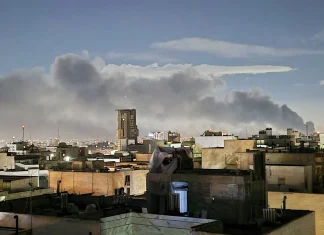
There are images that lodge in the mind: black smoke curling from storage tanks outside Tehran, folk huddled in doorways as air raid sirens wail, an oil tanker idling in the pale dawn, its crew staring at a churning horizon. These images are not only postcards from one region in crisis; they are signposts for a global economy learning — again — how fragile its circulatory system can be.
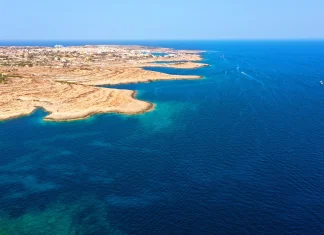
In the space of days, the Strait of Hormuz, a narrow throat of water no wider than a long bridge and through which roughly 20% of the world’s crude oil normally transits, stopped being an abstract strategic term. It became a chokepoint, a bargaining chip, and, for many, a very present danger.
Echoes of Conflict: Sirens, Missiles and Markets
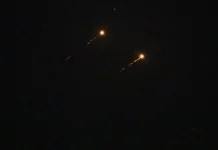
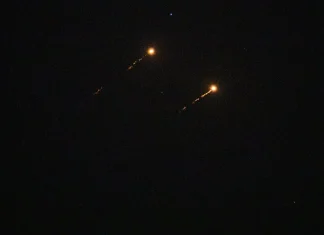
Bombs and missiles do more than rearrange buildings; they reshape markets and moods. After a renewed barrage of missile and drone strikes from Iran toward neighbouring states — and a volley that briefly set off alarms in Tel Aviv — energy benchmarks and global equities swung wildly.
Oil, which had already been flirting with triple digits since the shocks of 2022, spiked past $100 a barrel before retreating as traders took solace in short-term signals that a broader confrontation might be limited. Wall Street, which opened lower, rebounded into positive territory when political leaders suggested the fighting would be brief — a reminder that even amid devastation, the markets are trying to price certainty into chaos.
But certainty is thin. Shipping lines announced suspensions and diversions. One global carrier formally halted certain Gulf exports; port authorities reported dozens of vessels sheltering or rerouting. Maritime insurers raised premiums. An industry contact in Dubai, a veteran shipbroker, told me quietly: “We used to follow charts. Now we follow the headlines.”
Voices from the Ground
Walk through the neighborhoods brushing Tehran’s industrial outskirts and you feel the heat from oil depot fires even before you see the smoke. “My neighbor lost his shop to the blast,” said Laleh, a teacher watching children play under the murky sky. “We are not trained for this; we are just trying to be human.”
In Bahrain, where a fire at an oil facility led the national energy company to declare force majeure, a refinery engineer asked to remain unnamed: “You design systems for leaks and storms, not for being in the middle of a political game. We’re running on emergency procedures and prayers.”
At a small port café in Muscat, a Harland & Wolff-decommissioned sailor turned barista explained the mood among seafarers: “The crew calls their families every night. They say the sea is calm, but everything else isn’t. We feel like chess pieces on a board where no one tells us which move is the right one.”
Officials and Analysts Speak
Diplomats talk in cautious cadences. A European official, asking not to be named, described an unfolding plan to escort commercial vessels once direct hostilities subside. “Think of it as a temporary shield,” they said. “But every shield invites a strike.”
Meanwhile, an academic who has studied Iran’s political currents for decades leaned on his cane and said bluntly: “A new generation of leadership sees deterrence through action, not negotiation. They measure power not in treaties but in the maps they redraw nightly.”
Statistics that Matter
Numbers give shape to alarm. Consider these facts now circulating among analysts:
- About 20% of global crude typically passes through the Strait of Hormuz.
- Since the waterway was effectively blocked, shipping firms reported around ten vessels coming under attack in or near the strait.
- A single day’s spike in benchmark crude pushed prices above $100 per barrel — levels not seen consistently since the shock of Russia’s 2022 invasion of Ukraine.
- On the ground in Lebanon, cross-border exchanges of fire since early March have been devastating: reported casualties run into the hundreds, with more than 1,000 wounded.
Those figures are not sterile; they translate into higher pump prices, strained supply chains, and families counting the cost of lost livelihoods.
From Capitals to Corners: The Political Chessboard
Diplomacy is moving at two speeds. On the one hand are the public statements: denials, ultimatums, vows of further strikes. On the other hand are quiet conversations about escort missions for tankers, contingency plans for energy rationing, and emergency economic measures.
One European foreign minister told me, “We are preparing for the defensive — for now. But any escort mission across that stretch of water carries obvious risk. You sail in, you become a target for someone’s strategic calculus.”
The calculus is not abstract. Iranian-backed groups across the region — from Yemen’s Houthis to Lebanese militias — have publicly pledged solidarity. Allies from other states have offered rhetorical backing. What was once a contained regional contest now has the look of a proxy-laden arena where every move reverberates globally.
Human Costs and the Cold Rituals of War
Not all losses make headlines. The dignified transfers at Dover Air Force Base — solemn ceremonies where the fallen are returned to American soil — have become recurring reminders of the human toll. Families grieve in slow-motion, while policy-makers parse the strategic logic that led soldiers to distant airfields and bases.
“When they bring him home, there will be empty boots at the table,” a friend of a fallen marine told me. “That is the part that doesn’t fit into briefings.”
What Comes Next? Questions to Sit With
So where do we go from here? If the strait remains blocked, expect ripples: higher fuel costs, longer shipping routes around Africa, and tougher choices for central banks balancing inflation and growth. If the corridor reopens too quickly, it may only paper over deeper grievances that sparked the conflict.
And while officials trade bravado — who will determine the war’s end? — families and shopkeepers will judge the outcome by one measure: can they return to sleep without the siren’s wail?
Ask yourself: when a single waterway can sway the global economy, what does that say about our interconnectedness? Whose lives do we count when we talk about sanctions, blockades, and strategic deterrence?
Closing Notes: The Texture of a Troubled World
There is nothing inevitable about the course of events. Battles are fought in rooms and on maps, but their consequences are lived in kitchens, on hospital stretchers, and in the cramped bunks of seafarers. The smoke over Tehran, the smouldering fields of refinery towns, and the quiet halls at Dover are different verses of the same song: a world where local grief becomes global policy in an afternoon.
For now, the Strait of Hormuz is a question mark. The answer will be written in policy papers, on sailors’ manifestos, and in the slow arithmetic of grief. Until then, we watch, we listen, and we remember that the distance between a missile and a marketplace is shorter than we think.