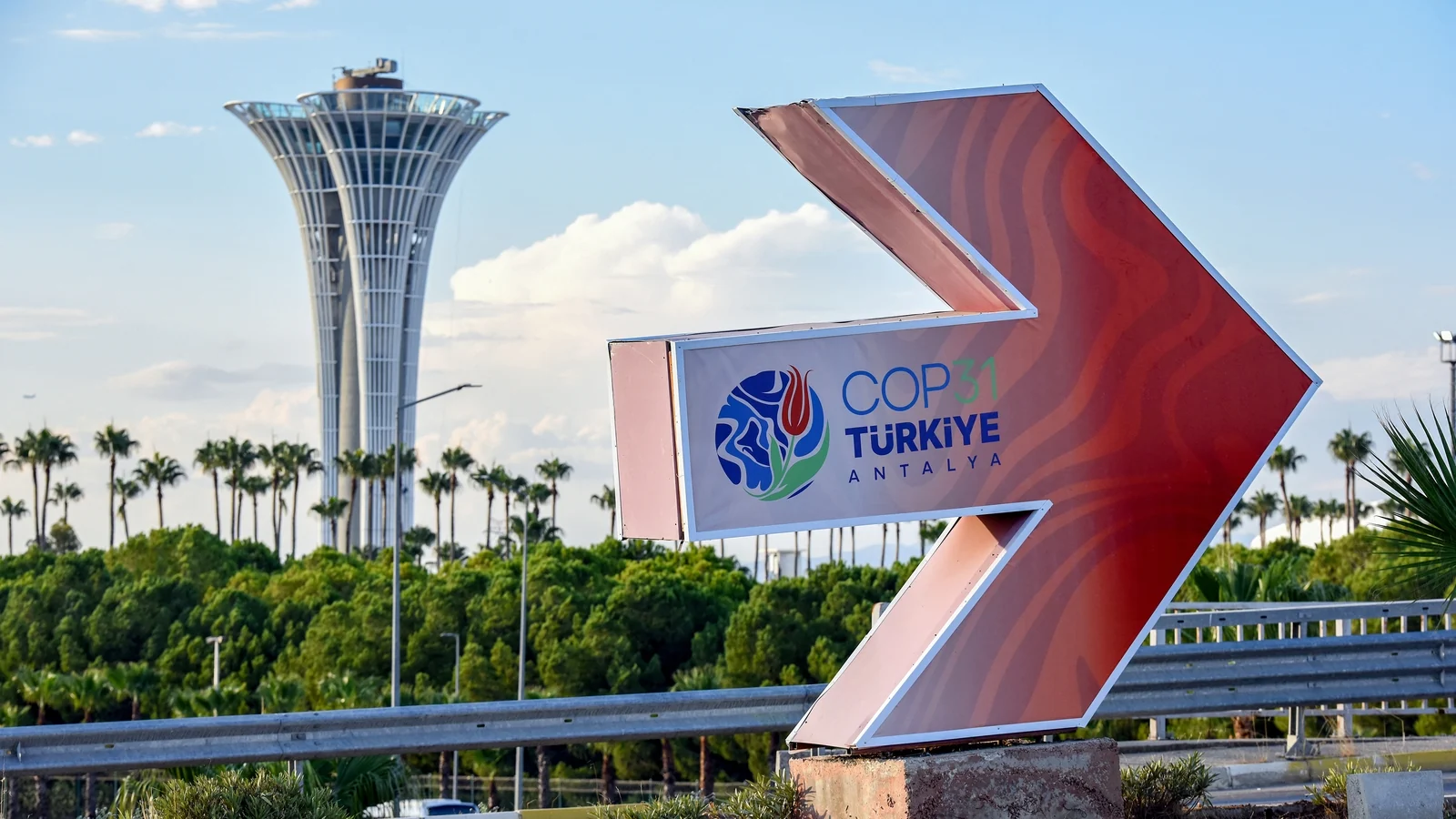
As nearly 200 nations arrive in Antalya for the COP31 climate summit, Ireland is stepping into a central role in the European Union’s push to turn years of pledges into concrete results.
Delegations from around the world are gathering in Turkey for negotiations on cutting greenhouse gas emissions, funding climate action and safeguarding communities increasingly exposed to the effects of global warming.
With Ireland holding the rotating presidency of the Council of the European Union, it will steer the EU’s negotiating work at the talks, coordinating closely with the European Commission.
Minister for Climate, Energy and the Environment Darragh O’Brien said the bloc must engage developing countries with more understanding and a greater willingness to listen, after sharp divisions at last year’s summit in Brazil.
Darragh O’Brien, pictured at COP30 in Brazil last year, says Ireland wants to help rebuild trust and increase investment and climate action
Ahead of the opening of COP31, Mr O’Brien said a key focus has to be following through on promises already on the table — with particular emphasis on financial support pledged to countries most vulnerable to climate impacts.
Despite international agreements intended to scale up assistance, many states have found it difficult to access the funding required to protect people and infrastructure.
Mr O’Brien said Ireland’s aim is to help restore trust in the process and to make sure commitments translate into real investment and measurable action.
Irish environmental and development organisations, however, say success will hinge not only on the total sums committed but also on how the money is delivered and what conditions come with it.
ActionAid Ireland Chief Executive Karol Balfe, who chairs Stop Climate Chaos, is urging governments to prioritise grants-based public finance, arguing that loans can deepen the debt burdens of poorer countries.
She maintains that nations which played a relatively small role in causing climate change should not be forced to borrow to deal with its consequences.
Ms Balfe is also calling for stronger backing for communities facing losses and damage that cannot be avoided.
Another major point of contention in Antalya is the global economy’s continued reliance on coal, oil and gas.
Australia’s Climate Change and Energy Minister Chris Bowen, who is leading the negotiations, is pressing for tangible movement on electrification.
In practice, that involves shifting transport, heating and industrial processes away from direct fossil-fuel use and towards electricity.
Representatives from almost 200 countries will attend this year’s summit
The COP31 presidency is also championing a voluntary pledge — separate from the formal negotiating track — to raise electricity’s share of global final energy consumption to 35% by 2035.
That initiative sits outside the core talks, where all participating countries must agree on any final text.
Read more:
What is COP31 and why does it matter?
The cautionary tale of the disappearing town
The EU is backing quicker clean electrification while also pushing to deliver on the existing commitment to transition away from fossil fuels.
Mr Bowen has said he will not pre-empt whether explicit language on fossil fuels will appear in the concluding agreement, underscoring how difficult it can be to secure consensus.
The negotiations come as the United Nations Environment Programme warns that current policies leave the world heading for about 2.8 degrees of warming this century.
Even though temperatures are expected to rise beyond 1.5 degrees, scientists emphasise that limiting each additional fraction of a degree can still reduce future harm.
The summit is due to run until 20 November.
The final outcome will be measured by whether governments can agree steps that speed up emissions cuts and provide accessible support to the countries facing the greatest dangers.