On the Front Lines: How Ebola Is Unearthing Old Wounds in Eastern Congo
The sky over Goma has the color of ash and the feel of something waiting to happen. Markets hum in the daytime, but at night the city’s hills hold a silence that belongs to places expecting bad news. Here, a new chapter of an old catastrophe is unfolding: a Bundibugyo strain Ebola outbreak in the Democratic Republic of the Congo is colliding with years of conflict, mistrust, and frayed public services — and the result is a public health emergency with human faces.
“When people are already scared of militias, when they have lost faith in institutions, a disease can spread faster than the virus itself,” says Dr. Eve Robinson, an epidemiologist with Médecins Sans Frontières who has been working in eastern DRC. “We’re seeing that now.”
Numbers that Tell a Story
Official tallies are stark: roughly 600 suspected cases and more than 140 deaths have been reported so far, figures that prompted the World Health Organization to declare a public health emergency of international concern. Those numbers, however, are likely the visible tip of an iceberg. “Surveillance here is patchy,” Dr. Robinson adds. “What we count is almost certainly an underestimate of the true situation.”
What makes this outbreak particularly unnerving for epidemiologists is the culprit: Bundibugyo ebolavirus, a strain less familiar to global response teams than the Zaire strain that made headlines in 2014–2016. Unlike Ebola-Zaire, for which there are licensed vaccines and some therapeutic options, Bundibugyo has few — if any — specific medicines or validated vaccines ready to deploy. That scientific gap turns every confirmed case into a wider alarm bell.
From Ituri to the Borderlands
The outbreak is believed to have started in Ituri province and in a matter of weeks has threaded into neighboring North Kivu, the province that hugs the Rwandan border. Goma, a bustling cross-border trade hub, now feels like the calm before a storm: one confirmed case within the city’s reach; many more likely to follow.
“Trade routes are veins,” says Jean-Baptiste, a taxi driver who ferries traders between towns and across the border. “They feed the city. But when something sick travels those veins, it moves fast. And people who need to work don’t have a choice — they keep moving.”
Why Communities Matter More Than Sterile Wards
It’s tempting to imagine outbreaks are solved inside glossy treatment centers, with IV bags and white coats. In the reality on the ground, control happens where people live, mourn, and make decisions about their dead.
“You don’t control Ebola in the treatment centres alone,” Dr. Robinson says. “You control it by working in and with the communities.”
That truth surfaced painfully when an Ebola treatment centre in eastern Congo was set on fire after locals were denied access to retrieve the body of a man who had died. News footage and witness reports described a burned structure, crowds in anger, and a collapse of the fragile trust that emergency responders rely on.
“They took my uncle away and told us he must be buried ‘their way’,” a resident of the town, who asked not to be named, told a visiting nurse. “We have our ways. They won’t listen, so we acted.”
Safe and dignified burials are not just logistical boxes to tick. They are cultural processes packed with meaning. If communities are excluded or treated as obstacles rather than partners, people hide deaths and funerals — precisely the conditions in which Ebola spreads fastest.
- Community engagement and trust-building
- Early case finding and contact tracing
- Safe and dignified burials
- Clinical care with infection prevention
These pillars are simple to name and horribly complex to practice in regions where conflict and fear are part of daily life.
On the Clinic Floors and Behind the Glass
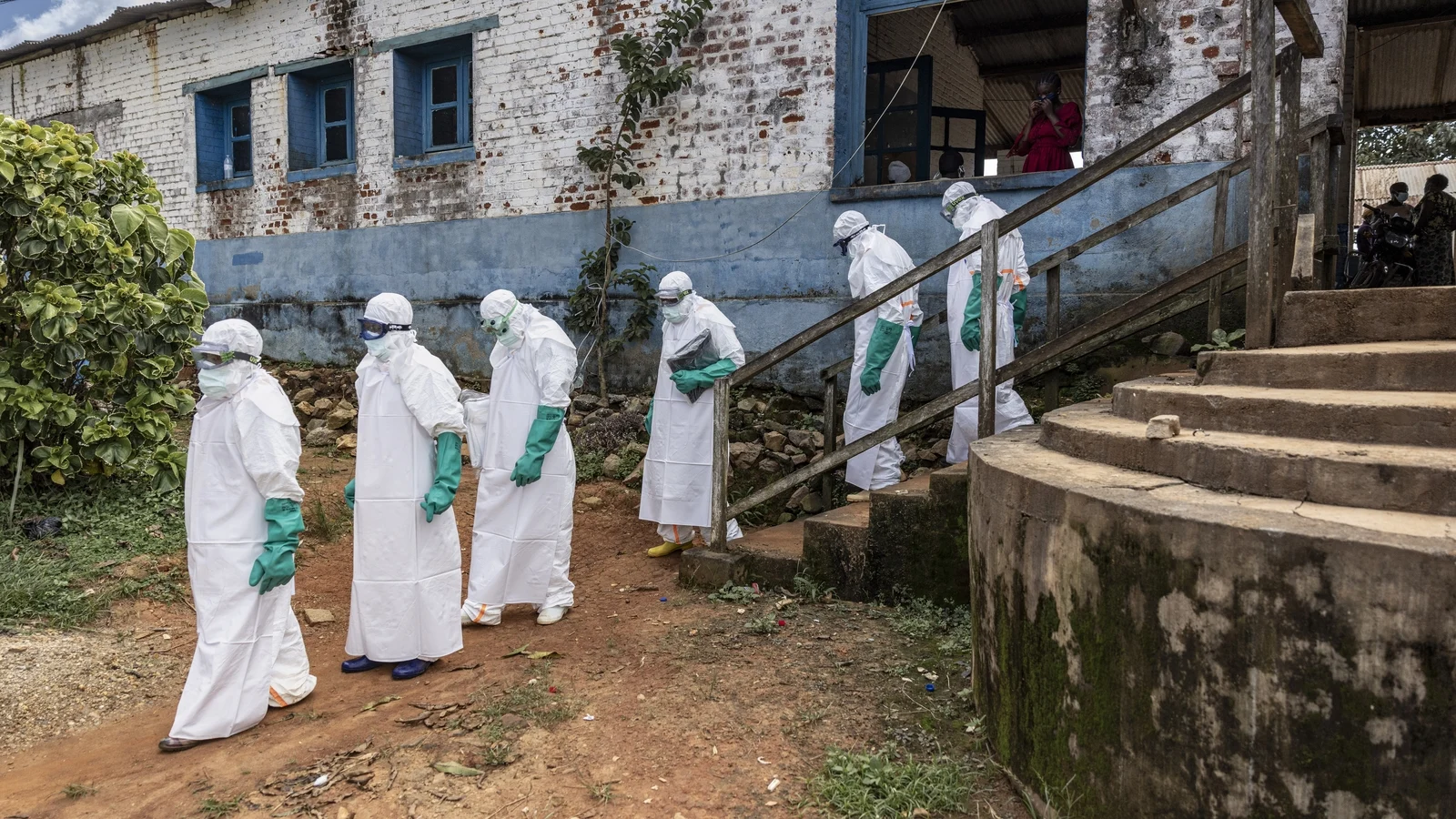
MSF has established a treatment centre in the hardest-hit areas, and staff report it is operating at full capacity. “Our tents are full, and we are shifting patients around like a person shuffling a deck,” said an MSF logistician, who requested anonymity. “We need more staff, more supplies, and, honestly, more time to build trust.”
At the same time, the international movement of people has pulled the outbreak into global headlines. Charité university hospital in Berlin confirmed that a US citizen who contracted Ebola in the DRC has been admitted to their high-security isolation unit. The patient, identified by an aid organization as Dr. Peter Stafford, is reportedly not critically ill. His wife and four children tested negative on initial PCR tests and are quarantined in a separate part of the unit.
“Because the course of the illness can change, he remains under close observation and is receiving treatment,” Charité said in a statement. Hospital staff have made the family area as child-friendly as possible: the children can see their father through a glass partition and communicate via an intercom. The White House has said the family were brought to Germany because it is roughly 12 hours closer than the United States for medical evacuation purposes.
Science, Patience, and the Global Response
Developing a vaccine or therapeutic targeted specifically at Bundibugyo will not be instantaneous. “Even with modern platforms, creating, testing and rolling out a new vaccine takes months,” Dr. Robinson warns. “We can repurpose some tools, but a specific, proven solution for this strain is not in our pocket yet.”
That reality forces responders back to the basics: surveillance, rapid isolation, contact tracing, and the painstaking work of conversation. Health promoters walk the streets, explain symptoms, and teach families how to isolate a sick relative. They build burial teams who can conduct culturally sensitive funerals that reduce the risk of transmission.
“It starts with listening,” says Amina, a local health promoter who has worked in Ituri for eight years. “If you come and tell people what to do without understanding their lives, they will close their doors. If you sit, drink tea, hear their stories — then sometimes, slowly, they open their gates.”
Why This Matters to the World
When outbreaks happen in conflict zones, they expose deeper global inequities: neglected health systems, underfunded surveillance, and scientific attention that gravitates toward problems affecting wealthy nations. Every surging case in the DRC is a reminder that pathogens do not respect borders — and that global solidarity is not a moral luxury but a practical necessity.
As you read this, consider the people living through the outbreak — not as statistics, but as neighbors: market sellers, drivers, mothers, medics. The decisions we make as a global community — to fund R&D for neglected strains, to resource rapid-response teams, to invest in community health workers — will shape whether this becomes a contained chapter or a long, sorrowful book.
So I’ll ask you: when news from faraway places collides with your life, what do you feel compelled to do? Donate to trusted relief groups? Call your representative about global health funding? Or simply carry the memory of a family buried in a village far away and let that memory reshape how you think about public health and solidarity?
For now, in Goma and Ituri, people wait. Treatment tents swell. Burial teams walk at dawn. And the oldest prescriptions of epidemic control — listening, partnership, dignity — are proving, once again, to be the ones that truly save lives.