Bulldozers at Dawn: What the Demolition of a UN Compound in East Jerusalem Really Means
At first light, the rumble was not just of metal on stone but of an idea being pulverized: the fragile promise that international institutions and the rules that protect them still matter in a city where politics and history collide on every corner.
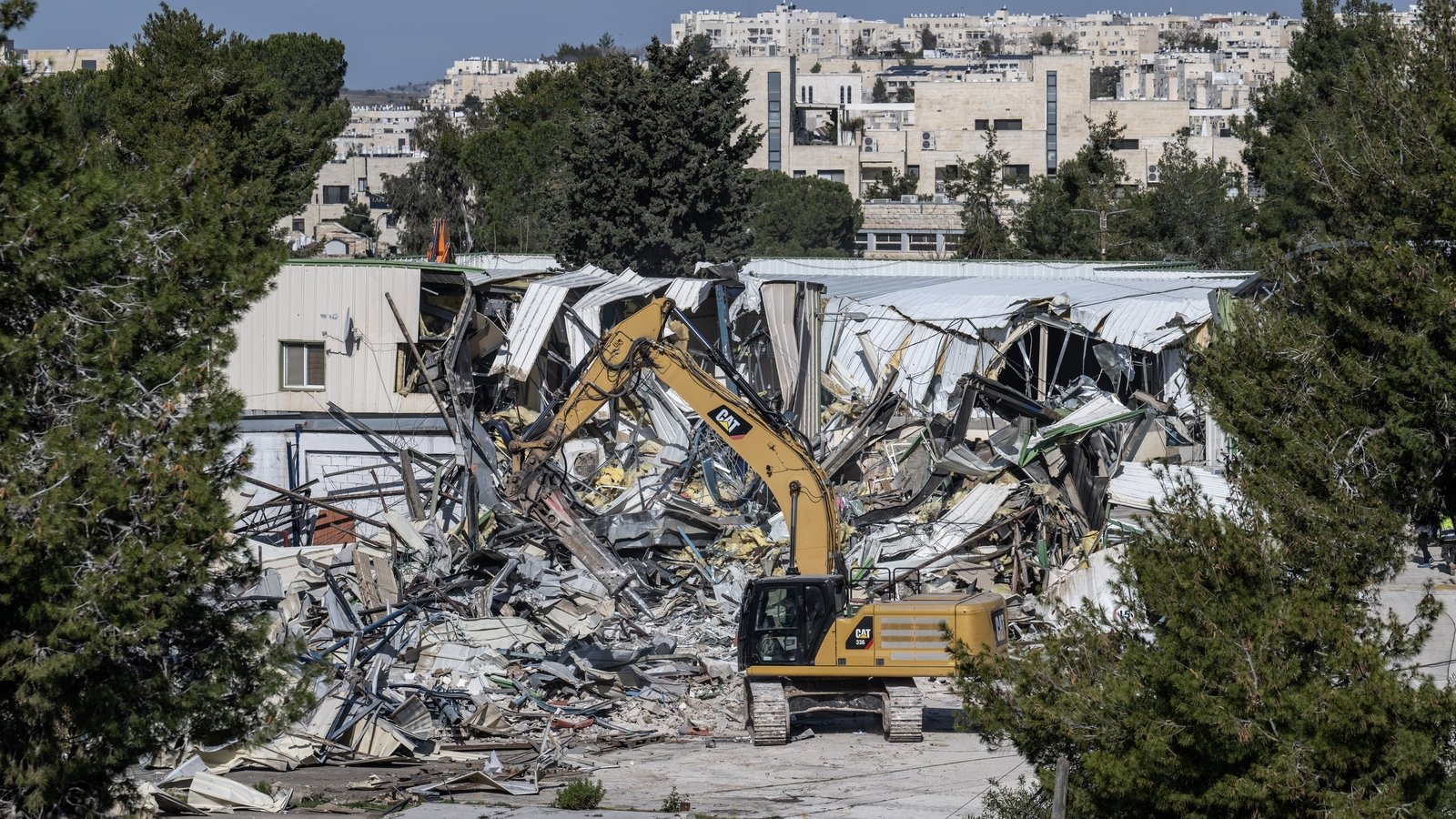
Early one morning this week, Israeli forces moved into the United Nations Relief and Works Agency (UNRWA) compound in East Jerusalem. Bulldozers, flanked by soldiers, tore into the shells of buildings where dozens of agency staff once worked, ripping through offices, storerooms and the institutional memory of an organization that has been a lifeline for Palestinians since 1949.
“This is an unprecedented attack against UNRWA and its premises,” Jonathan Fowler, a UNRWA spokesperson, told reporters, standing near the compound’s rubble. “It constitutes a serious violation of international law and the privileges and immunities of the United Nations.”
What happened — and why it matters
The site had stood largely empty since last year, after Israeli authorities ordered UNRWA to vacate all its premises and stop its operations inside Israel. Tensions escalated after accusations from Israeli officials that some UNRWA staff had ties to Hamas — accusations the agency has acknowledged in part by dismissing some employees, while insisting much of the evidence has not been made public.
In October 2024, Israel’s parliament passed a law banning UNRWA from operating in the country and forbidding officials from contacting the agency. This week’s demolition followed a seizure of the site and, according to Israeli authorities, was carried out lawfully; the foreign ministry said the compound “does not enjoy any immunity” and that the action was consistent with “both Israeli and international law.”
Itamar Ben-Gvir, Israel’s far-right national security minister, posted video from the compound as a bulldozer began its work: “This is a historic day, it’s a holiday,” he said, a line that landed like a provocation in a neighborhood still raw from conflict and displacement.
Voices from the rubble
On the sidewalk opposite the compound, shopkeepers and residents gathered, cups of strong coffee steaming in their hands. “We used to see the teachers, the social workers, people carrying boxes,” said Mariam Abu Khalil, a former UNRWA teacher who lives nearby. “They were part of the neighborhood. They helped our children and now the place is dust.”
Hakam Shahwan, who served as chief of staff at UNRWA’s East Jerusalem headquarters until the order to vacate, watched the demolition by video. “The destruction today is another message to the world that Israel is the only country that can demolish international law and get away with it,” he told me, his voice a mix of exhaustion and anger.
But not everyone shared Shahwan’s framing. “There are serious security concerns,” said an Israeli municipal official who asked not to be named. “We have to protect citizens.” This was echoed in the foreign ministry statement emphasizing legality and municipal claims that the agency had failed to pay property taxes.
Why a compound in East Jerusalem is more than just property
UNRWA’s footprint in the occupied Palestinian territories has been substantial: since its founding in 1949, the agency has provided schooling, healthcare, social services and emergency shelter to generations of Palestinian refugees. Today it serves millions — registered refugee figures have hovered around several million — and operates hundreds of schools and clinics across Gaza, the West Bank, Lebanon, Jordan and Syria.
To many Palestinians, the compound in East Jerusalem was a physical reminder that an international system existed to provide some continuity amid statelessness, occupation and recurring wars. To Israeli authorities, it had become, in their words, a security liability and a symbol of alleged bias.
The legal status of East Jerusalem itself is knotty: most countries and the United Nations regard it as occupied territory; Israel asserts sovereignty over the whole city. That unresolved dispute hangs over everything that happens there — including whose laws apply, who gets taxed, and who can claim protection for their premises.
Destruction and disinformation
Beyond the immediate physical loss — buildings, files, storage rooms rumored to hold aid supplies for Gaza and the West Bank — there is the damage to trust. UNRWA officials say they have been the target of a “sustained disinformation campaign,” an erosion of credibility that complicates aid delivery at a time when humanitarian needs are enormous.
“The effect is cumulative,” said Dr. Lena Haddad, an international law scholar who studies humanitarian actors in conflict zones. “When you undermine the perceived neutrality of an agency that runs schools and clinics, you make every aid worker and every child more vulnerable.”
On the ground in Gaza and the West Bank, that vulnerability translates into fewer safe spaces for education, less reliable health care and greater strain on families already coping with bereavement and displacement. The attacks of October 7, 2023 — which Israeli authorities say killed approximately 1,200 Israelis — and the subsequent Israeli military campaign — which Gaza authorities report has resulted in tens of thousands of Palestinian deaths — have strained the region to breaking point. Whether exact casualty figures are debated, the human cost is undeniable.
Small details, loud signals
Neighbors I spoke with pointed to smaller losses that have a big emotional weight: the wall where UNRWA teachers pinned student art; the storeroom where winter coats were kept for children who could not afford them; a makeshift garden where a volunteer would plant basil and mint for community events.
“It was never just paperwork,” said Samir Odeh, a retired nurse who used to volunteer at UNRWA’s clinics. “Those rooms belonged to mothers bringing babies, to students studying for exams, to elders getting vaccinations. They are part of our story.”
Questions this demolition raises for the wider world
What happens when the protections accorded to international organizations are eroded? How do communities survive when the institutions they lean on are swept away — legally or otherwise? And what does this moment tell us about the future of humanitarian work inside prolonged conflicts?
These are not abstract queries. They touch questions of international law, the politicization of aid, and the hard ethics of operating in places where lines between civilian and combatant, charity and politics, are deliberately blurred.
“When an organization like UNRWA is delegitimized,” Dr. Haddad said, “it becomes easier to justify extraordinary remedies. The more these moves are normalized, the more space opens for actors to bypass norms that were designed to limit violence.”
Looking ahead
For now, the compound lies exposed to the sky. The neighborhood carries on — children still run with soccer balls through alleys, cafés still serve cardamom tea — raw normalcy reshaped by the day’s events.
UNRWA has vowed to continue its mission where it can. Israeli officials have defended the demolition as lawful. And local residents, who have seen countless chapters of loss and resilience, are left to fill the silence with memory and question.
As you read this from across oceans and time zones, ask yourself: what should the international community do when the very institutions meant to mitigate suffering are themselves targeted? And what role should citizens, journalists and policymakers play to make sure that a place like this — small but significant — is not simply erased from the map of accountability?