On the Open Sea: When Aid Boats, Drones and Diplomacy Collide off Crete
The Mediterranean at dawn has always been a place of soft light and hard histories—a long ribbon of sea where trading vessels, fishing boats and migration routes cross like stitches on a map. Last week, however, that familiar seam was pierced by something new and volatile: Israeli naval forces boarding a flotilla of pro-Palestinian aid ships hundreds of miles from Gaza, near Crete, and taking dozens of activists into custody.
The numbers matter because they are human: organizers say roughly 175 people were intercepted from more than 20 vessels; Israel says dozens of those were transferred to Greek shores where they will disembark. Among the detained were seven Irish citizens, an elderly mariner of 76 and activists as young as their mid-20s. It is a small constellation of faces that now stands at the center of a complicated international knot.
What happened on the water
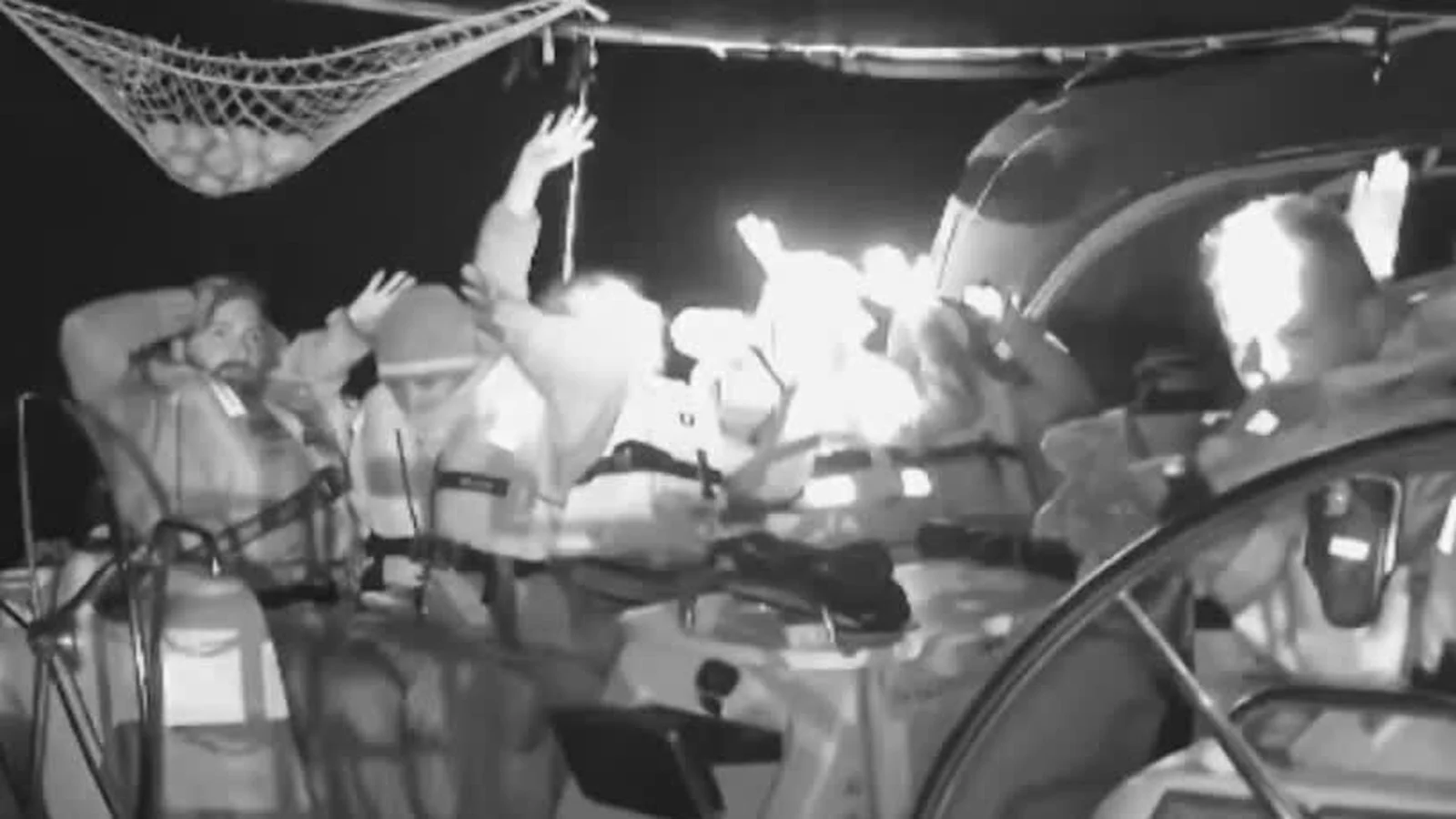
Eye-witnesses describe a startling sequence—drones overhead, the thump of fast launches, and commandos fast-roping onto deck. “They came on us one boat at a time,” said one activist who asked to be named only as a volunteer observer. “We were west of Crete. There was nowhere near a sense we were close to Gaza.”
Caoimhe Butterly, an Irish activist aboard an independent observer vessel that shadowed the flotilla, told reporters she and others were over 1,000 miles from Gaza when the interceptions began. “We had prepared for interception in our minds, not in arithmetic,” she said, voice flat with fatigue. “But the place they boarded us—international waters—changes everything. Under maritime law, that’s not a theater for unilateral seizures.”
Organizers of the Global Sumud Flotilla called the seizures “piracy” and accused Israeli forces of extending their control far beyond the borders of their own waters. “This was the unlawful seizure of people on the open sea,” the group said in a statement. For its part, Israel’s foreign ministry thanked Greece for accepting some of the flotilla participants and said the vessels had been stopped “before reaching our area.”
Small boats, big politics
These are not ships of state but a loose, determined convoy of activists, educators, medics and retirees who sailed from Barcelona in mid-April with sacks of humanitarian supplies and an even heavier cargo: moral pressure on a blockade that has lasted since 2007 and tightened further amid the war since October 2023.
“We’re not naïve—we know the risks,” said Mikey Cullen, a Dublin teacher and poet who was on one of the boats. “But interception this far north? That was not part of the calculus. If anything, it has made us more resolute.”
Behind the chants and banners are statistics that do not fade with slogans. Gaza’s roughly 2.3 million people still face severe shortages of food, medicine and building materials, according to UN agencies. Even after a ceasefire and promises to increase aid flows, humanitarian groups and local officials continue to warn that deliveries are insufficient. When the flotilla set out, its organizers said they wanted to open a corridor for aid agencies—an attempt to turn private seafaring into public leverage.
Faces at home: worry and protest
In Dublin, the spare bedroom that Fiacc O Brolchain left behind is a small, quiet capsule of ordinary life. His wife, Rachel McNicholl, stood at a rally in front of Leinster House and spoke of her shock. “He’s 74. He’s sailed between Sicily and Greece his whole life,” she said. “We didn’t think he’d end up in Israeli custody.”
Margaret Connolly, the sister of President Catherine Connolly, was reported to be aboard one of the vessels, though that particular ship appears still to be sailing toward Greece. The Irish Department of Foreign Affairs said it is providing consular assistance to citizens impacted by the interception and is actively monitoring the situation.
Across Europe, capitals reacted. Spain said it “energetically condemns” the operation and summoned Israel’s charge d’affaires to protest the detention of its nationals. Madrid’s foreign ministry emphasized it was in contact with organizers and other governments whose citizens were aboard.
Law on the waves
International maritime law draws lines—territorial seas usually extend 12 nautical miles from a coast; beyond that lies the high seas, where no single state can exercise sovereign control. Activists argue the boardings violated these principles. “We were well outside any state’s territorial waters,” Butterly told Ireland’s Morning Ireland. “This was a manifest overreach.”
Legal experts are already parsing what happened. “There are provisions for interdiction when a vessel is suspected of weapons smuggling or piracy,” said Dr. Lena Markova, an international maritime lawyer. “But any use of force on the high seas that does not fall into these narrow categories requires solid legal justification—one which has not yet been presented publicly.”
The World Health Organization weighed in too, reminding states that international humanitarian law obliges them to allow people safe access to medical care during armed conflicts—an argument that situates this maritime incident within a larger humanitarian frame.
Why should anyone care?
Because this episode is more than a confrontation at sea. It raises questions about where one nation’s security perimeter ends and another’s sovereignty begins. It asks whether humanitarian gestures by private citizens should be criminalized—or whether they should push the international community to act when formal channels falter.
“I keep thinking of the 76-year-old mariner,” said an organizer who was on the flotilla. “He came because he didn’t want to watch from a distance. That kind of courage—and that kind of vulnerability—complicates any attempt to make this a simple story of state security.”
And it asks us, the watchers on land: what do we owe to people in places where supply lines are choked and hospitals struggle? How far will civil society go when institutions fail? How far will states go to police those who push back?
Looking forward
As diplomats shuffle notes between capitals, the detained activists await disembarkation, consular visits and possibly legal proceedings. Greece, Spain and other European governments are said to be in touch with Israel and organizers. The humanitarian needs in Gaza remain acute. The Mediterranean—this ancient crossroad—has suddenly become the stage for a new kind of confrontation between private conscience and public power.
What happens next will tell us as much about the balance of international law as it will about the potency of a small group of people who decided to cross a sea in the name of opening a door. Will their action change anything on the ground in Gaza? Will it shift the conversations in European parliaments, in diplomats’ back rooms, and in the busy cafés along the side streets of Crete? For now, the sea keeps its own counsel, and the flotilla’s lamps bob like questions waiting for answers.
Where do you stand on the right to sail for a cause—especially when that sailing collides with the raw power of a state at sea? The answer may define more than a single night of boarding; it may help decide how much space remains, in law and in conscience, for acts of compassion across borders.