Under the shadow of fragile talks: the killing that rippled through Gaza and Cairo
Late one humid night in Gaza, the usual rhythm of air-raid sirens and distant thunder of shelling was punctured by news that made the city hold its breath: Azzam Al-Hayya, a son of Khalil al-Hayya — a senior Hamas negotiator — had been struck in an Israeli airstrike and later died of his wounds, according to health and Hamas officials.
It was not just a death. In a place where family and politics are braided together, it was a statement — a sliver of violence that threatened to unspool the fragile threads holding a ceasefire and US-mediated talks together in Cairo. For residents walking the rubble-strewn streets, it was also raw grief, another body to bury in a city that has buried too many.
A funeral that felt like an argument
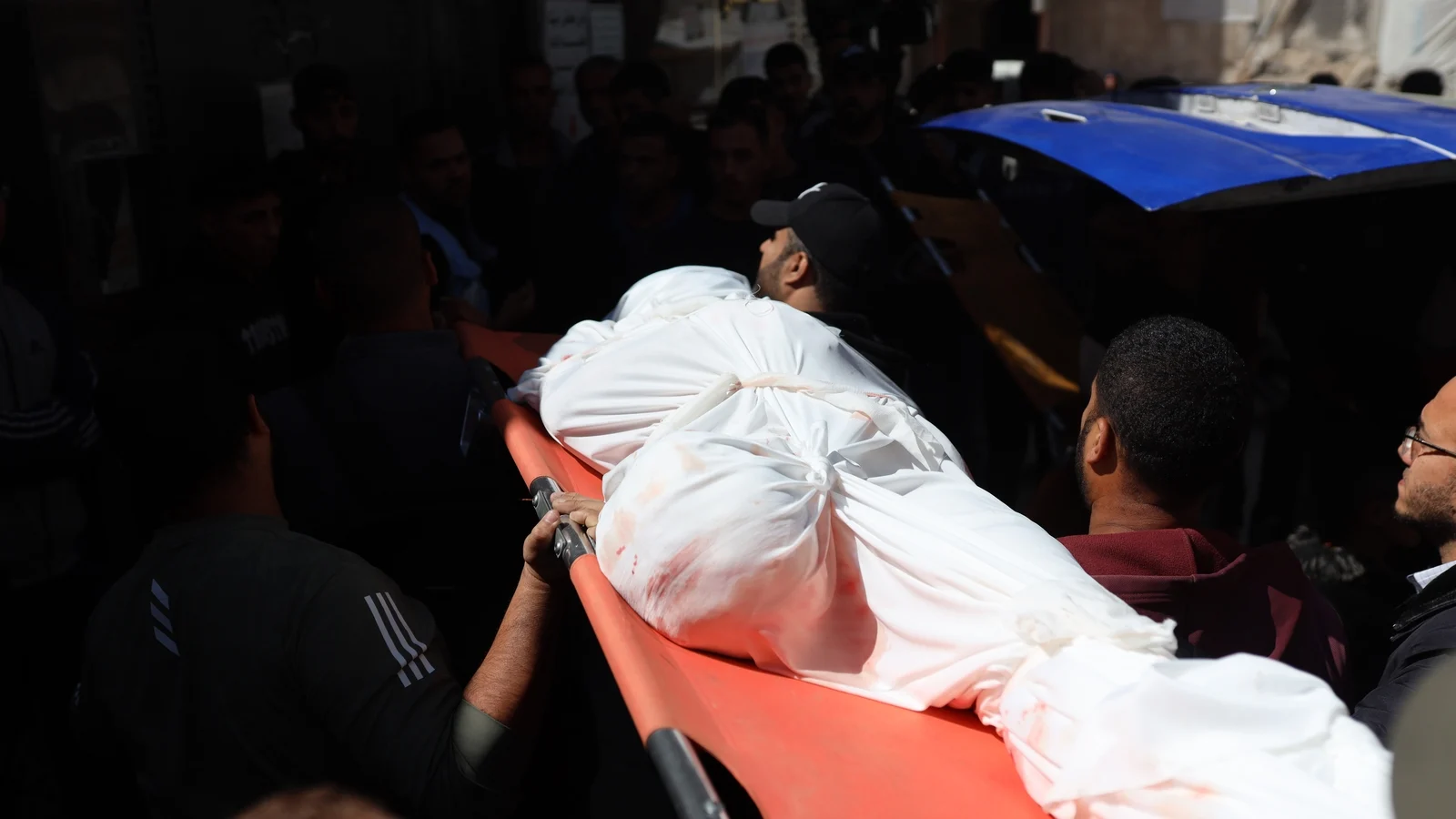
At the morgue and in the narrow lanes that fed into the cemetery, the scene was unmistakably Gaza. Women in black stood shoulder to shoulder; men raised their hands in the old chorus of grief and defiance. White shrouds — the final, simple covering — were kissed and carried. “Allahu akbar,” rose and fell through the mourners, a refrain of sorrow and conviction.
“My brother was a son, not a symbol,” a sister told me inside the crowded morgue; her voice was a brittle mixture of pride and exhaustion. “You can kill our bodies, but you cannot kill the reasons we keep standing.”
Dozens attended the burial, the funeral procession weaving past dented cars and makeshift food stalls where shopkeepers were sweeping dust from yesterday’s rain. Children watched from rooftops, their schoolbooks still stacked at home. A neighbor, Ahmed Abu Salem, a small grocer, summed up how ordinary life and politics collide here: “We opened our shop this morning to sell bread and olives, and by afternoon we were attending a funeral. How are families meant to live like this?”
Who is Khalil al‑Hayya — and why this loss matters
Khalil al‑Hayya is no stranger to grief. The veteran Hamas leader, who has led delegations at mediated talks, has lost several sons in previous Israeli strikes: one in Doha in an attack last year, and two others in Gaza in 2008 and 2014. He is said to have seven children. That pattern — targeting the families of prominent figures — is part of a long and bitter chronicle that feeds mutual recrimination.
“They are not just hitting buildings,” said Hazem Qassem, a spokesperson for Hamas, in a statement that evening. “They are targeting a negotiating delegation’s capacity to continue talking.” Whether one accepts that interpretation or sees the strikes as tactical military moves, the optics are devastating: a negotiator grieving at home while a city mourns.
Talks in Cairo: on paper, fragile; in practice, fragile and fraying
In Cairo, delegations quietly shuffled through corridors. Regional mediators, representatives of Palestinian factions, and diplomats who have spent years trying to broker pauses in violence were again trying to stitch a future from the tatters of the present. The talks — described by some in Gaza as implementing a US-backed plan to move from ceasefire to reconstruction — hinge on painful compromises, most notably the question of disarmament.
“You cannot ask someone to lay down arms while rockets are raining down on your neighborhoods,” a senior Hamas official told a Reuters reporter, echoing a sentiment heard often among locals. In diplomatic language, the current sticking point is clear: Hamas says it will not seriously engage on disarmament until Israel completes obligations from the first phase of the deal, including a halt to attacks.
On the other side, Israeli officials say their strikes are tactical, aimed at dismantling command centers and stopping militants from staging attacks on soldiers and civilians. An Israeli military statement, issued after one reported strike on a Hamas command center in northern Gaza, said the targets were militants “operating to advance and carry out terror attacks.” The military did not respond to requests for comment on the killing of Azzam Al‑Hayya.
Numbers, context and the human toll
Numbers, cold and blunt, sit under everything that has happened. Local medics report at least 830 Palestinians have been killed since the ceasefire deal took effect; Israeli authorities say militants have killed four of their soldiers in the same period. Each number contains families like the Hayyas, markets shuttered by fear, and classrooms emptied of children.
- At least 830 Palestinians killed since the ceasefire’s start, according to local health officials.
- Israeli officials report four soldiers killed by militants in the same timeframe.
- Targeting of Hamas-run police and security points has intensified, Reuters reported, as Israel seeks to weaken the group’s hold on Gaza.
In Nuseirat refugee camp, children sifted through refuse piles for salvageable items — a quiet, tragic reminder that in Gaza the war’s ripple effects are economic as well as physical. A teacher there, Leila, said, “They dream of being astronauts one day. Now they dream of a school that isn’t damaged.”
The broader picture: negotiation under fire
What happened in Gaza and Cairo is not just a local story. It is a vignette in a much larger narrative about how modern conflicts are negotiated, how violence can leak into diplomatic rooms, and how leaders make decisions while their families suffer. There are strategic calculations — pressure to degrade an opponent’s capabilities, to send signals — but there are also human costs that reverberate across generations.
“When you strike a family member of someone at the table, you are striking the table itself,” argued Dr. Samir Haddad, a regional analyst who has advised mediators in past negotiations. “It is a risky tactic: it can either force a concession or harden positions. Today it looks like the latter.”
What comes next — a pause, an escalation, or something in between?
The immediate future is a mix of urgency and uncertainty. Mediators in Cairo will try to keep talks alive; Hamas will argue its grievances, insist on ceasefire conditions being met first, and likely point to the killing of Azzam as proof that the other side is not yet committed to peace. Israel will continue to insist its operations are defensive and aimed at preventing attacks.
But beyond the statements and the strategy, there are ordinary people who will decide the meaning of what happens next. Will the parents who buried Azzam go on to demand peace, revenge, or simply safety? Will the negotiators in Cairo feel emboldened to press on, or will the grim arithmetic of new deaths steer them back from compromise?
These are questions with no easy answers. Here is one that feels essential: when the cost of every political decision is counted in blood, how do the rest of us — international mediators, far-off governments, and citizens watching on screens — ensure that diplomacy is not merely a stage for violence to play out on?
We must ask ourselves, as we read these headlines and look at these numbers: whose lives are being negotiated, and what will we, as a global community, accept as the price of a fragile peace?