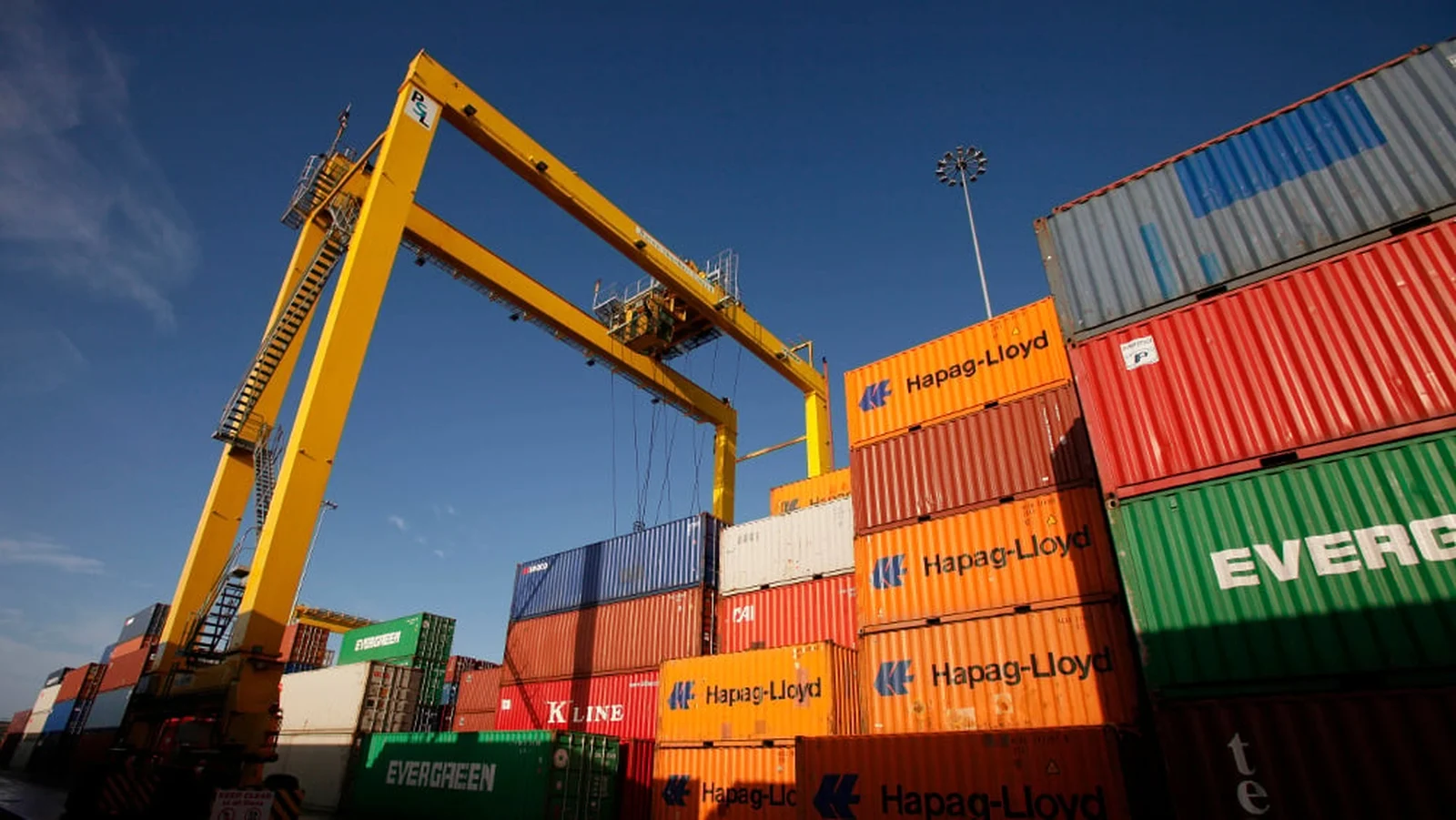
Countdown to a Tariff Turf War: The July Ultimatum That Has Brussels and Wall Street Watching
There’s a new kind of clock on the mantel in Brussels — not the slow, ceremonial one that chimes at parliament, but a ticking, political timer born of fireworks, nationalism and old-fashioned negotiation. It’s counting down to 4 July: the United States’ 250th birthday, and, for now, the deadline President’s aides say will decide whether a fragile US–EU trade truce becomes a permanent handshake or a slamming of doors and tariffs.
Walk down Rue de la Loi on a bright spring morning and you can feel the episode as much as read about it. Coffee cups steam outside the Commission, diplomats move quickly between meetings, and traders in cafés refresh feeds for updates. “It’s like watching two neighbors fight over a fence that both of them need to lean on,” said Emilie Novak, who runs a small export consultancy in Brussels. “Every day without agreement is anxiety for small businesses, farms and auto suppliers.”
A deadline wrapped in history and politics
The ultimatum is simple enough in headline form: an agreement inked last summer to cap many duties at 15% has not been fully enacted by the EU, and Washington — impatient and politically conscious ahead of its national milestone — has set a deadline. If the EU does not carry out agreed tariff reductions by 4 July, officials in Washington say duties could jump much higher.
“We set the terms; we expect compliance,” said a senior White House official speaking on condition of anonymity. “Deadlines matter in diplomacy and in commerce.”
On the other side, an EU Commission spokesperson told me, “We are committed to implementing the deal, but the bloc has procedures — scrutiny by member states, parliament and safeguards to protect consumers and critical sectors. That takes time.”
What’s at stake: trade, industry and trust
The U.S. and EU are not small players on the global stage. Together they account for trade flows well into the hundreds of billions annually — a relationship measured in factories supplied, ports bustling and services exchanged. The deal that set many European goods at 15% tariffs was intended to stabilize those flows after a period of tariffs and counter-tariffs.
But beneath the headline rate are complications: special sectoral measures for autos, legacy tariffs on steel and aluminum, and the legal fallout from U.S. courts that have questioned the president’s authority to impose sweeping duties without Congressional backing. Earlier this year, a U.S. appeals court and other tribunals pushed back on the administration’s wider tariff strategy, prompting a temporary 10% global duty while Washington seeks firmer legal footing.
Then came another blow: a U.S. trade court handed down a 2–1 ruling striking down the most recent 10% global levy, ordering refunds to the importers who challenged the policy. “The court reaffirmed that trade policy must live within the law,” said Sofia Ramos, a trade lawyer who follows the case. “That ruling constrains unilateralist impulses and raises the political stakes for any quick, sweeping re-tariffs.”
From port docks to vineyard terraces: local voices
In Hamburg, a mid-sized auto parts supplier worries that higher duties could trip supply chains that are now tightly integrated across the Atlantic. “Our wiring harness plant ships to Detroit and to Stuttgart; changes like that don’t stay on a tariff schedule — they cost jobs and idle machines,” said Markus Lenz, who manages exports for his family business.
On the other side of the continent, a winemaker in Bordeaux frets about wine tariffs that once saw bubbly slowed at customs. “We’ve already rebuilt markets, bottle by bottle,” said Amina Lafitte, whose labels sell in New York bistros. “A sudden spike in duties would push our wines out of the price range of new customers.”
Even Cyprus, which currently holds the rotating presidency of the Council of the European Union, has felt the heat. Officials there have worked to keep “positive momentum,” convening talks between MEPs and member states. “Presidency means facilitation; we cannot impose a time frame on a bloc of 27 sovereign governments,” said a Cypriot diplomat.
How courts, Congress and global rules shape a modern trade fight
Trade disputes are rarely resolved at a negotiating table alone. They bounce between the negotiating rooms and courtrooms — and sometimes to the floor of national legislatures. In Washington, the fight has spilled into the judiciary, with judges increasingly scrutinizing whether the executive can unilaterally reconfigure global commerce.
Meanwhile, U.S. officials have opened new probes into imports tied to forced labor and overcapacity — investigations that could produce future tariffs targeted at specific countries and products. This approach shifts the battleground from broad-brush tariffs to sector-by-sector fights, potentially stretching negotiations over months or years.
“Targeted measures are where the trade wars are heading,” said Tomás Delgado, an economist at an international trade institute. “It’s less about slapping on a universal tax and more about surgical responses to perceived unfair practices. That’s slower, more complex, but also more defensible in law.”
What businesses and citizens should watch
- July 4 deadline: A symbolic and practical marker; movement before then could ease tensions, stalemate could harden them.
- Court rulings: Recent judicial pushback against sweeping tariffs shows legal constraints matter.
- Member-state signoff: The EU deal still needs consensus from 27 capitals — a process that can be messy.
- Sector probes: New investigations into forced labor and overcapacity may spawn more targeted measures.
Beyond tariffs: what this moment tells us about globalization
At its heart this is not just a quarrel about customs stamps. It is a convolution of populist politics, post-pandemic supply-chain anxiety, and an international order wrestling with a new reality: economic competition in a multipolar world where trade policy is a tool of national strategy. How policymakers resolve this standoff will send signals about whether trade remains a rule-bound system or becomes a series of tactical maneuvers.
“Trade is the simplest place to show strength,” said Lidia Kowalska, a policy analyst in Warsaw. “But it is also the place where you reveal your propensity to coordinate with allies. If the U.S. raises tariffs dramatically, it won’t just change prices — it will change trust.”
For the people running factories, serving food, or shipping wine barrels, the theoretical debates translate into payrolls, freight costs and customer lists. For voters, it ties into questions of fairness, sovereignty and who benefits from globalization.
Where do we go from here?
No one expects instant clarity. Diplomats will keep talking, lawyers will keep arguing, and businesses will keep hedging. But the 4 July deadline has introduced a rhythm — and a reminder — that trade policy is time-sensitive and human. It can be used to consolidate alliances or as leverage when politics grows impatient.
So as the anniversary fireworks approach, consider this: do we want trade that is calm, predictable and anchored to mutual benefit — or trade that becomes another arena of brinkmanship in an increasingly fractious world? The answer won’t be decided by a single headline, but by the weeks and votes that follow.
Whatever happens, people on both sides of the Atlantic will feel the consequences in grocery bills, factory floors and the small joys of a shared glass of wine. And that is why a deadline that sounds like a diplomatic tick-tock matters to us all.