On the Shore of Tension: A Day in the Persian Gulf Where Flags and Oil Meet
The morning air over a port city on the Persian Gulf tasted faintly of diesel and sea salt. Fishermen in faded caps smoked their first cigarettes beneath fluttering flags, traders in crisp thobes argued over the price of dates, and a string of tankers sat offshore like sleeping whales — massive, patient, and impossibly vulnerable.
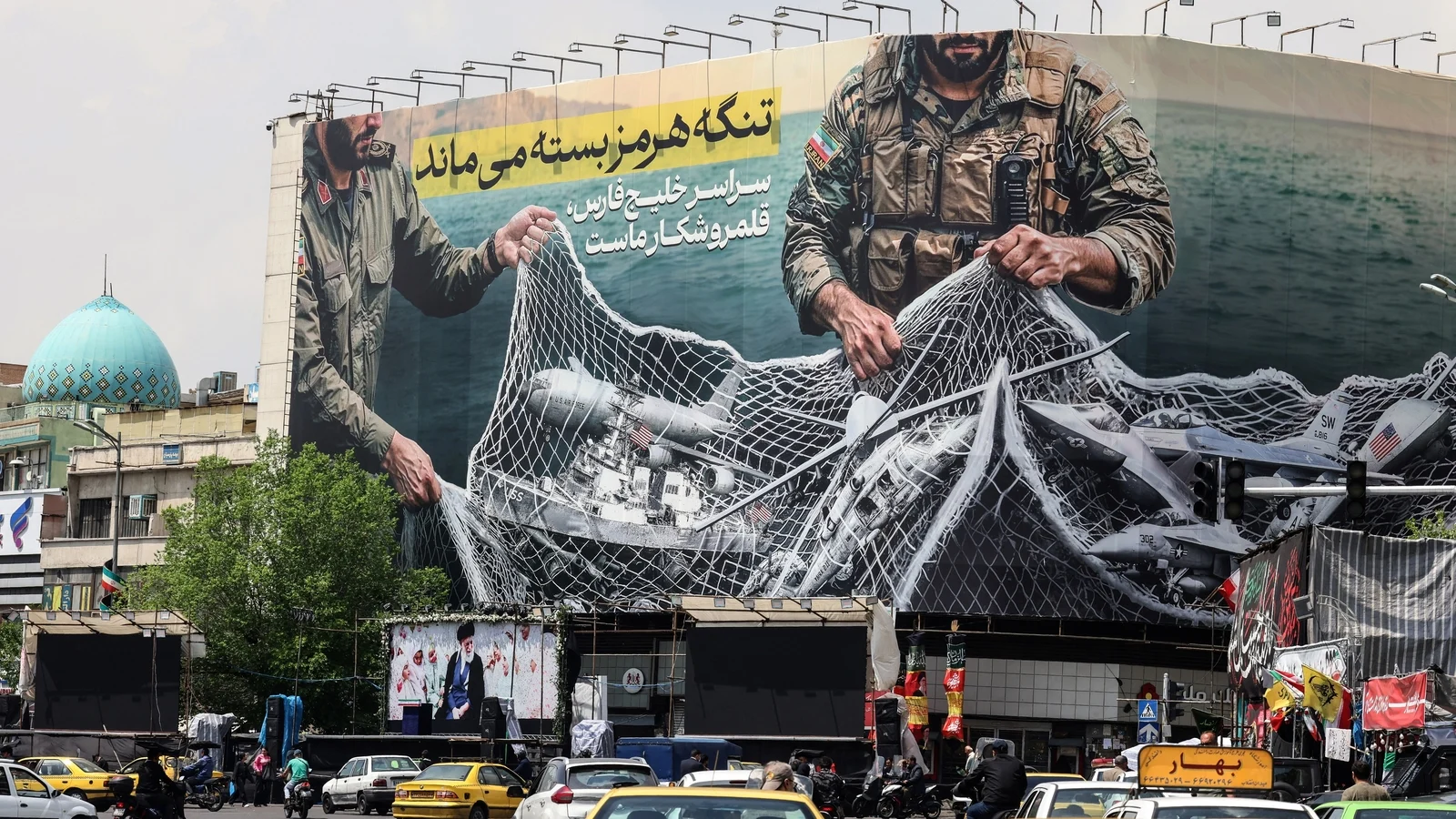
It was Persian Gulf Day, a day of ceremony and memory, and yet the rituals of the shore were braided together with the hard, modern rhythms of geopolitics. At the heart of it all, a new, uncompromising declaration: Iran’s newly installed supreme leader, Ayatollah Mojtaba Khamenei, said his country would protect its “nuclear and missile capabilities” as integral national assets, no matter the cost.
“Ninety million proud and honourable Iranians… regard all of Iran’s identity-based… capacities — from nanotechnology and biotechnology to nuclear and missile capabilities — as national assets,” Khamenei declared in a statement read on state television. “They will be protected just as they protect the country’s waters, land and airspace.”
A Rhetoric of Resistance
The rhetoric was calibrated to be both a rallying cry and a warning. “Foreigners who come from thousands of kilometres away to act with greed and malice there have no place in it — except at the bottom of its waters,” he added, reviving an old epithet and situating it in a new, more militarized context.
Locals I spoke with in the port market recited the line with a complex mixture of fear and defiance. “We are used to speeches,” said Hossein, a dhow captain whose family has plied these waters for three generations. “But when the leader speaks of missiles and the sea in the same breath, you feel the boat he’s talking about — and you feel small.”
These remarks come amid a precarious dance: a fragile ceasefire has held, but Tehran and Washington are engaged in a stand-off that revolves around one of the world’s narrowest and most consequential waterways — the Strait of Hormuz.
The Strait: A Sliver of Sea, a World of Consequences
There’s an old sailor’s superstition that water remembers. The Strait of Hormuz remembers centuries of empires and recent decades of sanctions, threats, and drills. It is also the chokepoint through which roughly one-fifth of the world’s crude oil flows — a statistic that transforms local decisions into global price tags.
When a major power talks about “control” of that strait, global markets lean in. Tanker activity is diverted, insurance premiums climb, and traders in London and Singapore reset their spreadsheets. “A closure or interruption in the strait isn’t just a regional headache,” said Amina Rahman, an energy analyst based in Dubai. “It’s immediate inflation for importers and a test of endurance for economies that can’t easily substitute the crude that flows through Hormuz.”
Blockade, Countermeasures, and the High Stakes of Security
Washington’s answer has been blunt: a naval blockade intended to choke off Iranian oil exports and squeeze Tehran’s finances. The White House has also floated a more elaborate plan — keeping ports closed to Iran while coordinating with allies to impose higher costs on Tehran’s attempts to disrupt the free flow of energy.
“We will continue to protect the free flow of maritime traffic,” a senior U.S. official told reporters, “while leaning on partners to make clear that sabotage and coercion carry consequences.” The official would not be named for this report.
From the Iranian perspective, those measures are an illegitimate chokehold. President Masoud Pezeshkian called the blockade “contrary to international law” and “doomed to fail,” arguing it would only deepen tensions and instability across the Gulf. “This is not protection; it is provocation,” he said in an impassioned statement.
Life Along the Waterline
Back in the markets and on the piers, the geopolitical chess game has a human face. A dock worker named Leila told me that weeks of tense stand-offs had already cut into her family’s income. “When a tanker sits offshore waiting, there’s less work,” she said, fingers stained with oil. “We sell fewer fish, renters demand more from us, and you wonder if your children will be able to afford college.”
A tanker captain, who asked to remain unnamed, added a practical coda to the political theater: “We’ve been asked to pay ‘fees’ for passage — private deals, whispered in the night. They call it new management. We call it a gamble with insurance and our crews.” Reported accounts suggest some vessels were being charged up to $2 million each for safe transit — an extraordinary sum, and one that many seafaring companies would prefer never to test.
Negotiation Channels: Hints of Détente
Despite the bluster, back channels are alive. Pakistan has been acting as intermediary, facilitating indirect talks between the United States and Iran. Tahir Andrabi, a spokesperson for Pakistan’s foreign ministry, told journalists that if Washington and Tehran could engage in “real-time conversations” — even a phone call — it might ease sticking points that keep translators and mediators perpetually busy.
Negotiators reported that Iran floated the idea of pushing discussions about its nuclear programme to a later date — a move seen by some diplomats as an attempt to decouple nuclear issues from the immediate maritime crisis. But Washington’s stated red line remains firm: preventing Tehran from acquiring nuclear weapons capability is a major rationale for its posture in the region.
What’s at Stake Beyond Oil
At first glance this is a resource fight. At a deeper level, it is a reckoning over international law and the norms that glue maritime trade together. Is the sea a sovereign extension of territorial claims, or an international commons? That legal debate matters because it determines how countries from the tiny island-state to the superpower may react — with lawsuits, with sanctions, or with gunboats.
Gulf Arab allies have not been silent. Officials in Abu Dhabi and Riyadh have likened Iran’s tightening control of the strait to piracy. “We do not accept toll booths in international waters,” one Gulf diplomat said privately. “Security in the Gulf cannot be delivered by intimidation.”
And yet, for many Iranians watching from the teahouses and the university quads, the assertion that nuclear and missile programs are “national assets” taps into a broader narrative about dignity, self-reliance, and resistance to foreign pressure. How do you weigh sovereignty against the economic pain of isolation?
Where Do We Go From Here?
There are no tidy endings in this story. The strait remains open for the moment, but the rhetoric, the naval posturing, and the chokehold on ports are all pressure points that could snap. For the global consumer, the story is a reminder of how intimately modern life is tethered to a strip of water a few dozen miles wide.
What choices will leaders make when the next flare-up comes? Will diplomacy find a way to separate nuclear negotiations from maritime security, or are the two now forever entangled? And in ports and markets and living rooms across the region, how long can ordinary people absorb the cost of geopolitics?
Walking away from the shoreline, I kept thinking of the dhow captain’s hands, salt-stiff and steady. “We have always been tied to the sea,” he said. “It feeds us and it frightens us. I only hope the people who make the big decisions remember that.”
Ask yourself: if a sliver of water can tilt the global economy and daily life, how should the international community balance rights, security, and the everyday dignity of people who live on the margins of such storms?