Labour says it will put Britain back at the “heart of Europe” — but what does that really mean?
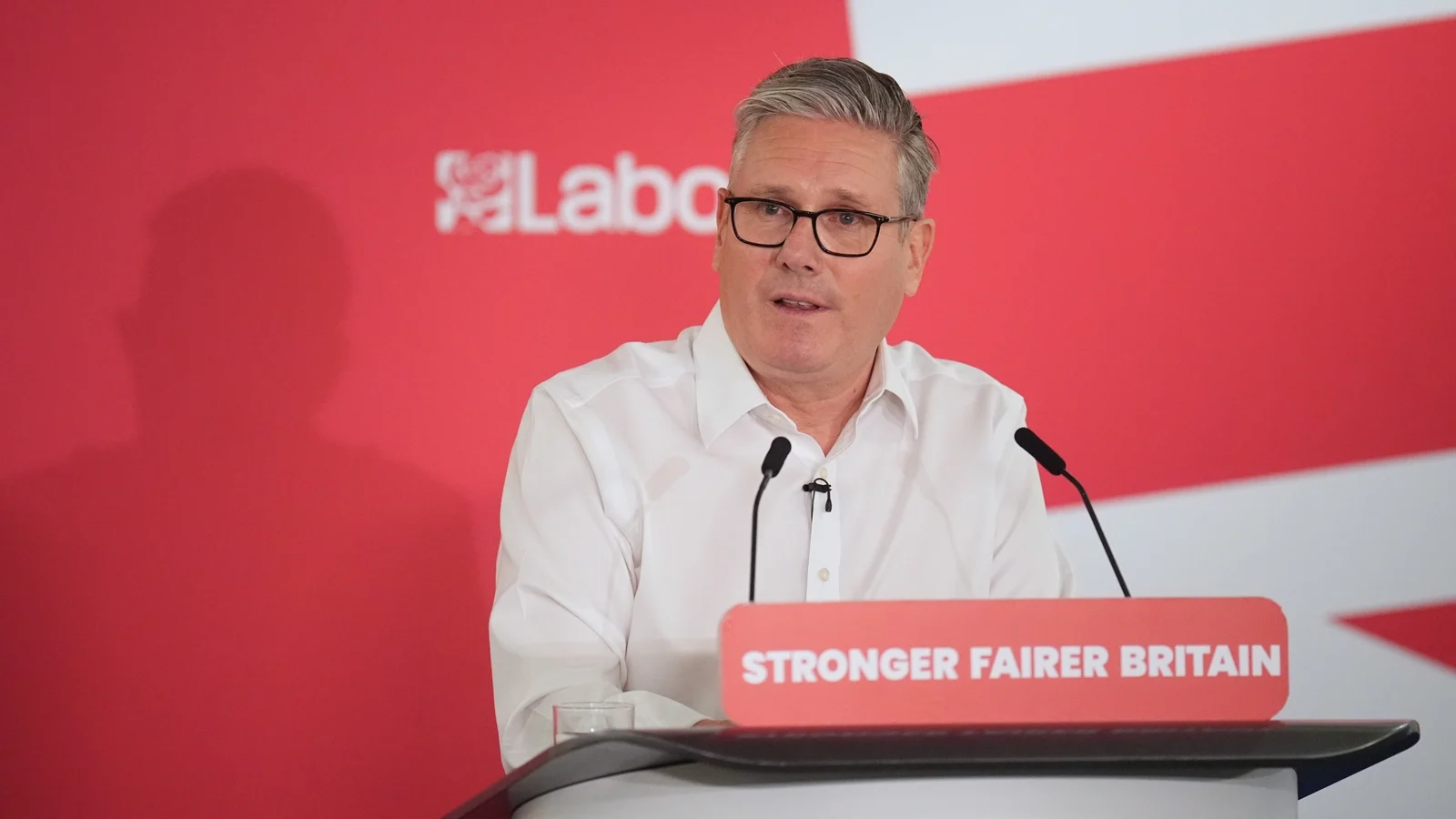
The room hummed like an old train station. Flags—Union Jacks threaded with blue stars—fluttered as people took their seats. There was the familiar scent of coffee and damp coats, the low murmur of conversation turned up a notch when the Labour leader stepped to the lectern.
“We will put Britain at the heart of Europe again,” the leader declared, voice both rehearsed and warm, the phrase landing like good news. Around the hall, phones lifted to record. In the pubs and kitchen tables that will judge this promise, reactions were already being baked like scones: some sweet, some slightly burnt.
A slogan wrapped in history and emotion
For many, those five words are a deliberate tug on memory and identity. To younger voters, “Europe” is shorthand for foreign holidays, Erasmus exchanges, and cheap flights. To older voters, it recalls decades when Britain’s foreign policy, trade deals and even TV schedules were more visibly aligned with the continent to the east. And for the millions who voted to leave, the word can still carry the sting of sovereignty regained.
“Put Britain at the heart of Europe—yes please,” said Lila Adeyemi, a café owner near King’s Cross, stirring her tea thoughtfully. “My suppliers come from Italy and France. Paperwork has doubled since 2019. If this means fewer customs forms, more customers and less worry, I’m all for it.”
Not everyone echoes that sentiment. “Heart? Soulless,” grumbled Tom Ellis, 62, a retired dockworker in Dover, a town that felt the Brexit earthquake most keenly. “We voted for control. If that goes soft, who’s to say what we voted for?”
What policy might look like — and what it won’t
On paper, the pledge can mean many things: closer trade arrangements, a security partnership, co-operation on research and climate goals, smoother travel for workers and tourists, or simply a tone-shift in diplomacy. Labour spokespeople have hinted at negotiating a “comprehensive, pragmatic partnership” with the EU—words chosen to keep both markets and voters engaged.
But talk and treaties are different beasts. Trade with the EU remains integral to Britain’s economy: before 2020, roughly four in ten of UK exports of goods went to EU countries, according to national statistics offices. Services—banking, legal, creative—are harder to quantify but are a British strength and a sticking point in any new arrangement. And then there are people: estimates suggest around 3.5–4 million EU nationals live in the UK, contributing across the NHS, hospitality, construction and classrooms. Any new policy will have to grapple with those intertwined human and economic threads.
“This isn’t 1990. The EU has changed; so has Britain. We must design a partnership fit for supply chains, services and security,” said Dr. Aisha Khan, a trade analyst at a London think-tank. “That may mean sector-by-sector agreements, not a single off-the-shelf deal.”
Local stories, global ripples
Walk through Grimsby’s fish docks or the vegetable markets of Kent and you’ll hear practical worries louder than abstract geopolitics. “We used to load oysters straight onto vans bound for Brittany,” said Margot Tremblay, a fisherwoman who now keeps two sets of export paperwork on her boat. “There’s cost and delay now. When the paperwork gets lighter, it changes lives.”
In Manchester, an independent games studio that once hired EU creatives with ease now reports longer visa lead times and higher legal fees. “We spend more on forms than on coffee,” joked lead designer Raul Mendes, but his eyes were serious. “Talent comes first. Policies that make that simple again are welcome.”
Numbers matter — and they complicate the romance
Promises are political art; economics is stubborn. The UK’s trade balance with the EU still accounts for a large slice of business: exports and imports to the bloc exceed 40% of total goods trade in most recent robust surveys. Investment flows and collaborative research on climate and health are also deeply embedded.
At the same time, the global context is shifting. The EU has been tightening its green regulations, reshaping supply chains to reduce reliance on geopolitically risky suppliers. China’s Belt and Road, US trade policy, and the aftermath of the pandemic have all nudged countries toward more resilient, sometimes regional, economic strategies. For Britain, a “heart of Europe” approach will need to balance openness with resilience.
Security and values: the quieter, harder conversation
Trade is the headline, but security co-operation—shared intelligence, joint training, coordinated responses to cyber-attacks—might be the most durable benefit of closer ties. “We can choose to be resilient together,” said a former diplomat now advising on defence policy. “Threats don’t respect shorelines; they come through networks.”
Then there are values: human rights, labour standards, environmental commitments. Whether a closer partnership will mean aligning more closely with EU norms—on green regulations, data protection, or workers’ rights—will be a political battleground within Britain as much as across the Channel.
Voices from the street
To capture the texture of opinion, I walked from boroughs of inner London to quieter seaside towns. People aren’t thinking in policy drafts; they are thinking in daily life.
- “My daughter’s visa took months,” said Mehdi Rahman, a nurse. “If closer ties speed that, if it means better staffing in hospitals, why would anyone say no?”
- “We wanted fishing rights,” said Elaine, a pescatarian from Cornwall. “We still remember the promises. Any deal must not forget communities like ours.”
- “I’m cynical,” admitted Yusuf, a student from Birmingham. “Politics keeps big decisions behind closed doors. Show us the detail and we’ll listen.”
Questions that matter to you (and to the future)
What does “heart” mean when borders are porous and markets global? Can a country reweave its relationships without unpicking the social threads that made a different choice years ago?
And for those reading this on a phone in Lisbon or a laptop in Lagos: how does a Britain closer to the EU change your world? More travel, smoother visas, faster tech collaboration? Or new trade rules that ripple into supply chains you rely upon?
Looking ahead: promises, pivots and politics
Labour’s pledge to place Britain back at the “heart of Europe” is a statement heavy with history and hope. It is also an invitation to negotiation—between parties, sectors, regions and generations. The real work will be translating that musical slogan into legal text, economic frameworks and lived experience.
Politics will try to make certainty out of uncertainty. But readers should remember: policy is a process. Expect debates, pilot schemes, compromises. Expect local victories and disappointments. Expect that the rhetorical heart sometimes beats more slowly than the political pulse.
So, what do you make of it? Is a Britain at the heart of Europe a balm—a practical route back to smoother trade and cooperation—or a return to a past many are not ready to relive? The answers will be forged in towns like Dover and cities like Manchester, in Whitehall meeting rooms and Brussels corridors, and in the margins where people live their lives. Which side of the story will you watch, and which part will you help write?