A Frayed Quiet: Washington Talks as Bombs Still Fall
There is a strange hush to diplomacy when the sound of airstrikes still hangs in the air. Today, delegations from Lebanon and Israel sat across from one another inside an austere State Department room in Washington, attempting to stitch together a longer peace as a temporary ceasefire — already fragile and bloody — approaches its scheduled end.
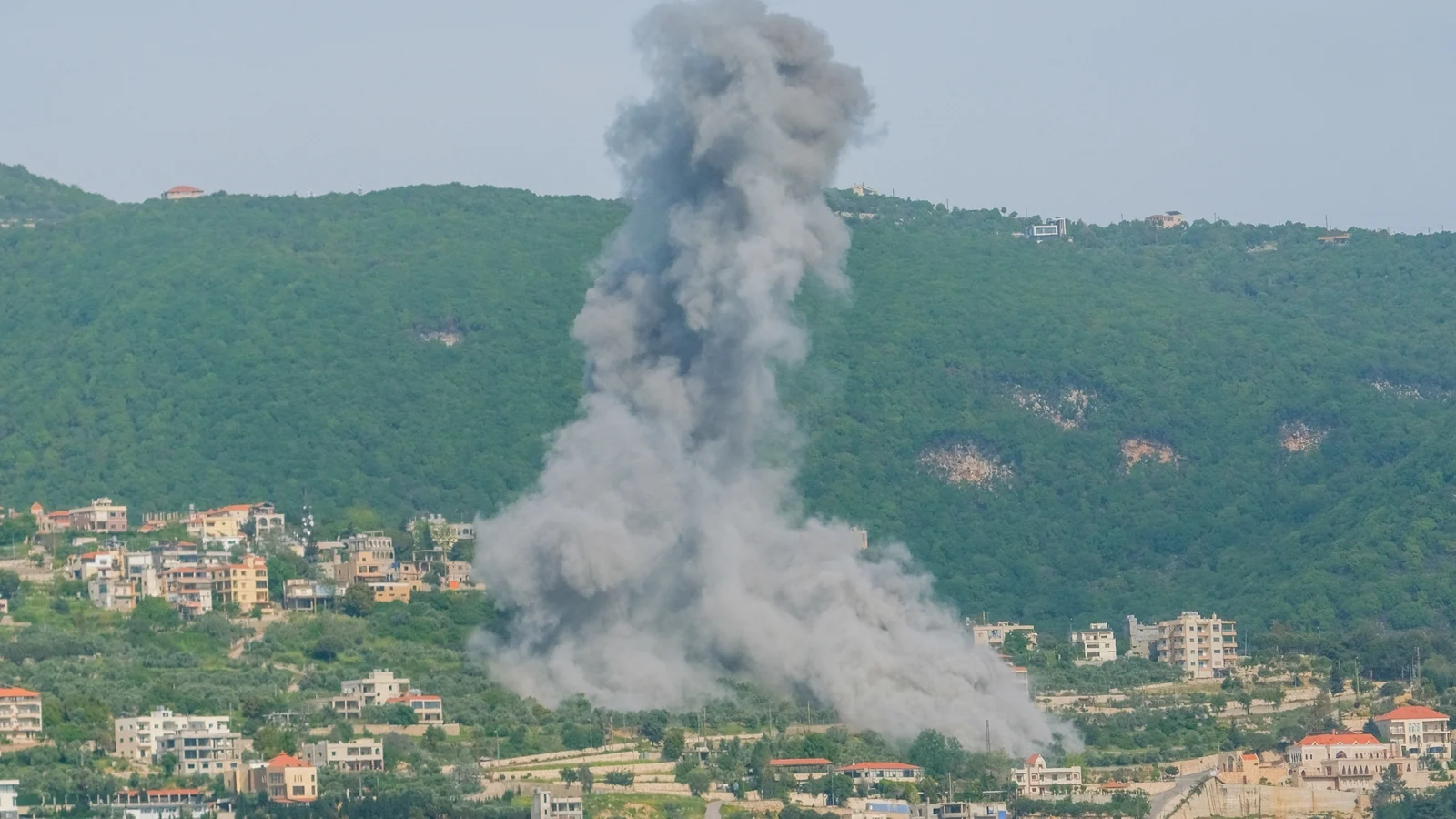
Outside, the narrative is raw and immediate. Israeli forces say they struck Hezbollah positions in southern Lebanon, warning civilians in several towns to evacuate before the raids. Lebanon’s state news agency and the health ministry report strikes that killed dozens only a day earlier — including children. An AFP tally, based on Lebanese authorities’ figures, puts deaths during the ceasefire period at more than 400, while Lebanon’s overall death toll since the strikes began is reported at over 2,800, including at least 200 children. These are not abstract numbers; they are schoolrooms emptied, marketplaces shuttered, lives upended.
The diplomatic gambit
Talks began in the capital just after 9am local time and stretched into a day of intense negotiation. Washington’s role is familiar: mediator, stage-setter, and sometimes lightning rod. The two sides have no formal diplomatic ties, and this meeting — the third of its kind in recent months — unfolded under the same uneasy optimism that has marked previous rounds.
“The first objective is simple and urgent: stop the killing,” a Lebanese official involved in the delegation said, speaking on condition of anonymity. “We will push for a consolidation of the ceasefire and full respect for Lebanese sovereignty.”
American envoys involved in the mediation included experienced diplomats and political appointees. A U.S. State Department statement framed the talks as an effort to restore Lebanese authority across its territory and to prevent armed groups from entrenching themselves — language that echoes a broader, decades-long debate about statehood, militias, and regional influence.
On the ground: stories from Lebanon’s borderlands
Drive south from Beirut and you feel the country’s layered history in every turn: citrus groves smudged by dust, stone houses with satellite dishes, the hum of market vendors selling za’atar and olives. Yet in towns near the border — villages like those around Rosh HaNikra and the hilltops that overlook the coastal plain — the tension is not historical; it is immediate and seismic.
“We left with nothing but the clothes on our backs,” said Nawal, 42, who fled her village with her two children. “We piled into a car with neighbours and drove inland. My son keeps asking when we can go home. How do you tell a child what a ceasefire means when the planes still arrive?”
Hezbollah and Israeli forces traded accusations today over drone activity near the border. Israeli officials reported a Hezbollah drone fell into Israeli territory, wounding several civilians. Hezbollah said it struck Israeli soldiers at the Rosh HaNikra site. Whether these incidents are one-offs or a prelude to renewed escalation remains the central fear.
Humanitarian strain
Hospitals in southern Lebanon have been stretched thin. “We’re running out of surgical supplies and blood,” said Dr. Elias Haddad, a surgeon at a regional hospital. “We operate like an orchestra trying to play without a conductor — each of us improvising to save lives.”
Humanitarian agencies warn that displacement, food insecurity, and damage to infrastructure could have long-term consequences if a sustainable ceasefire is not secured. The United Nations has repeatedly called for protection of civilians and unimpeded access for aid, but on the ground, the road from rhetoric to relief is bumpy and bureaucratic.
Jerusalem’s march: a city under strain
While diplomats debated in Washington, another pressure valve released in the Old City of Jerusalem. The annual Jerusalem Day march — a festooned parade for many Israelis marking what they call the reunification of the city after 1967 — wound through narrow stone lanes, accompanied by flag-waving and music.
But this year, the pageant took on a sharper edge. Groups of ultranationalists chanted slogans that frightened and angered Palestinian residents, who in many neighborhoods stayed behind locked doors. “It’s a day for us, but not for them,” said Ahmed, a shopkeeper near Damascus Gate, his voice low. “They celebrate our displacement and pretend it’s a triumph.”
These scenes are an acute reminder that local flashpoints — marches, checkpoints, contested neighborhoods — can ripple outward and feed larger regional conflagrations.
Politics at home: Fatah, reform, and the Palestinian question
Back in Ramallah, Palestinian President Mahmoud Abbas presided over a rare Fatah congress, promising reforms and signaling a willingness to hold long-postponed elections. The gathering was described by organizers as a bid to renew political legitimacy amid growing public frustration and the grinding pressures of occupation and conflict.
“We remain committed to reform and to democratic renewal,” Abbas told delegates. Yet for many Palestinians, words offer scant solace against the reality of displacement, checkpoints, and fractured leadership. International partners, from the EU to Arab capitals, have publicly urged reforms and political renewal, while voices across the region debate what a viable two-state solution would look like after decades of stalemate.
Why the world should care
It is tempting to treat these negotiations and skirmishes as distant, local affairs. But conflicts here have outsized global effects: refugee flows that stress neighboring states, spikes in global oil and commodity markets when regional risk rises, the proliferation threat when militias arm and state authority weakens.
“Instability here is indirectly felt in very practical terms: higher food prices in distant markets, rerouted shipping lanes, and political pressure in capitals far away,” said Dr. Helena Moradi, a Middle East analyst. “We ignore these fault lines at our peril.”
- Ceasefire timeline: The truce went into effect on 17 April and had been extended through Sunday.
- Reported casualties: More than 400 fatalities during the ceasefire window, with Lebanon’s overall toll since the strikes began reported at over 2,800, including at least 200 children (per Lebanese authorities and AFP tallies).
- Diplomatic actors: U.S. mediators and Washington-based envoys are leading talks with delegations from Beirut and Jerusalem.
Questions to sit with
As you read this from wherever you are in the world, ask yourself: what does a durable peace require here — and elsewhere in places torn by chronic conflict? Is it possible to separate short-term security guarantees from the longer project of political reform and state-building? And how should the international community balance pressure and support without stripping agency from the people directly affected?
In the end, the diplomats in Washington can draft words and blueprints, and generals can push maps across tables. But it will be the voices from the clinics, the marketplaces, and the classroom who judge whether peace is real or merely a pause between storms.
“I want my children to grow up without the sound of drones,” said Nawal, looking down at her son. “Is that too much to ask?”