Night Lights and Broken Glass: Kyiv After the Heaviest Wave of Drones
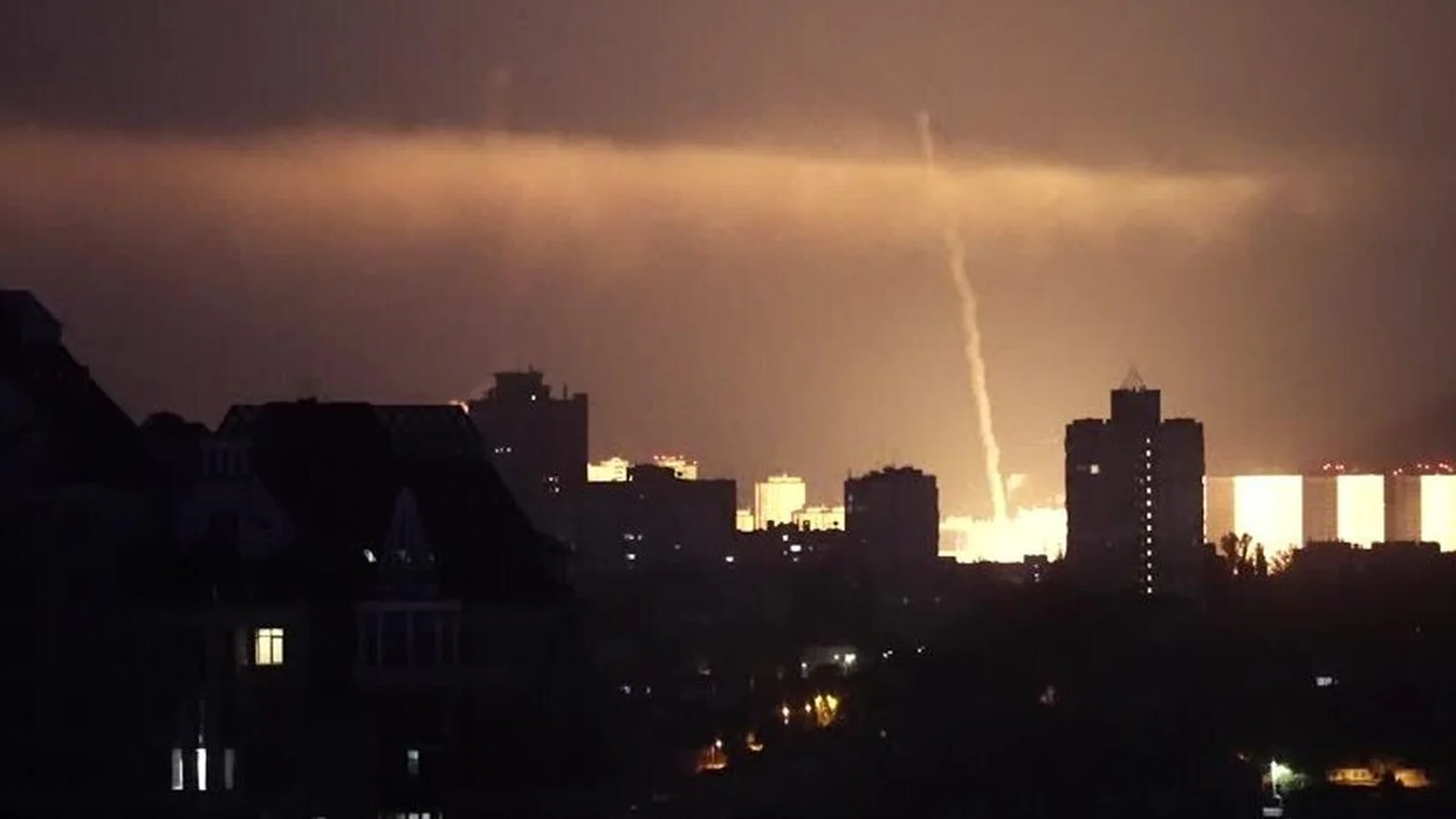
Kyiv woke today not to birdsong but to the metallic rattle of air-raid sirens and a sky that stuttered with explosions. For hours, the capital of Ukraine endured one of the most concentrated aerial onslaughts in recent memory—hundreds of drones and scores of missiles slicing through the night, turning apartment windows into lattices of shattered glass and sending families scrambling for the subterranean safety of metro stations.
“There was no warning, just that scream of the sirens and then the sky lit up like a concert of lightning,” said Olena, 58, who spent the night under the cold lights of a Kyiv metro stop with her granddaughter. “We wrapped ourselves in blankets, shared tea from a thermos. You try to make jokes for the child, but your hands are shaking.”
The scale, in numbers
According to the Ukrainian air force, the barrage included 675 attack drones and 56 missiles—an unprecedented volume aimed largely at the capital. Their defenses intercepted the vast majority: officials reported that air defenses shot down 652 drones and 41 missiles. Kyiv authorities estimated that 20 locations across the city were damaged—residential buildings, a school, a veterinary clinic and other civilian infrastructure among them.
- Attackers reportedly launched: 675 drones and 56 missiles.
- Air defenses knocked down: 652 drones and 41 missiles (about 94% of drones, 73% of missiles).
- Casualties at the scene of one collapsed apartment block: seven dead (three men, three women and a young girl) and some 45 wounded.
Numbers can feel numbing. But when you stand in the dust and concrete of a collapsed Soviet-era apartment—where the smell of burning insulation mixes with the sharper scent of cordite and fear—the figures take on faces and names.
Scenes from the Rubble
At dawn, rescue workers with soot-blackened faces dug through fractured slabs and twisted rebar. They passed bodies from trembling hands to stretchers, while neighbors stared, some huddled in slippers and nightgowns, others kneeling in prayer. A rescue volunteer, Petro, wiped his brow and said, “We train for this kind of night, but that never makes it easier. You pull out a child and you don’t stop thinking about their homework, their favourite cartoon. War steals the small, ordinary things first.”
The destroyed building—one of countless blocky apartment complexes that line many Kyiv neighborhoods—offered a brutal reminder of how urban warfare scrapes away the private lives of civilians. A schoolroom where children once practiced reading aloud now stands pocked with holes and water stains; a veterinary clinic that once comforted trembling pets is shuttered behind a layer of debris. “My cat, Klym, is missing,” a woman named Hanna whispered. “The vet had been open there for years. He used to know all the neighbors.”
Ballistic threats and the limits of defence
Officials admitted the most troubling vulnerabilities were not against small drones but ballistic missiles. “Drones are dangerous, but our systems are designed to detect and intercept them in large numbers,” said a senior air-defence commander in Kyiv. “Ballistic trajectories are a different challenge—higher speed, less time to react.”
The technical reality is stark: while Ukraine’s layered air defenses have improved dramatically since 2022, new tactics and the sheer scale of modern kamikaze drone swarms strain even the best-equipped networks. Analysts warn that as drone technology becomes cheaper and more ubiquitous, cities across the world could face similar threats unless international norms and defenses keep pace.
Voices from the Capital and Beyond
President Volodymyr Zelensky, speaking to the nation, framed the strike as a deliberate blow against civilian life and urged international partners not to look away. “They are targeting our homes, our schools, our hospitals,” he said. “Silence would be complicity.”
International leaders reacted with condemnation. France’s president called the strikes evidence of strategic desperation; the head of the EU said they mocked negotiations for peace. Several countries—including the UK, Estonia, Latvia, Finland, the Netherlands, Moldova and Slovakia—issued statements condemning the attacks.
“By striking civilians, Moscow seeks to break our will,” a European diplomat said. “But what it reveals is a strategic failure, not ruthlessness that brings victory.”
On the ground, grief and anger mingled. “They bombed the place where my neighbour made pierogi every Sunday,” said Andriy, a man with blood on his shirt who had been pulled from the rubble. “He’d knock on my door at dawn with them, laughing. What is left for us now?”
Diplomacy under strain
The strikes land at a fraught moment. A brief, fragile ceasefire negotiated with international involvement the week prior dissolved amid accusations of violations. Talks of a larger truce have been complicatingly tied to territorial conditions—chief among them Moscow’s demand that Kyiv withdraw from parts of the east—demands Kyiv has rightly rejected as tantamount to surrender.
“You can’t build peace on forced concessions,” said Dr. Marta Kovalchuk, a conflict-resolution scholar in Lviv. “Short ceasefires can soothe for a moment, but without a legitimate, mutually acceptable framework they are brittle. Worse, they let the more powerful party exploit pauses to regroup.”
What this means for the world
Beyond the immediate devastation, this attack underscores shifts in modern warfare: the rise of drone swarms, the targeting of civilian infrastructure, and the psychological toll of living under constant threat. Cities in many regions—far beyond Eastern Europe—are now studying this tragedy for lessons in civil defence, rapid medical response, and resilient infrastructure.
It also raises urgent questions for global diplomacy. How should the international community respond when civilian neighborhoods, schools and ambulances are at risk from waves of unmanned systems? How can humanitarian corridors be guaranteed when the tools of war are increasingly deniable and diffuse?
For the people of Kyiv, those questions are less academic. They want a roof that doesn’t explode, a school that stays open, a city where children can learn without waking to the thunder of missiles. For now, they bunker down, pass around hot tea in the shadowed entrails of metro platforms and try to sleep.
A city’s stubborn heartbeat
Even as sirens fade and cranes begin to clear the streets, life insists on continuing. Shopkeepers tape boarded windows; bakers reopened ovens repaired from the day before; an elderly man swept the doorway of his building and offered bread to arriving rescuers. Small acts of normality—sharing food, folding blankets, checking on the elderly—are acts of defiance in their own right.
So I ask you, reader: when you see images of collapsed buildings and jackbooted geopolitics, whose faces do you see? And what obligations do we all carry—states, citizens, institutions—when the instruments of war leap into civilian skies?
The night’s tally is grim: lives lost, neighborhoods altered, hopes for a quick cessation of hostilities dimmed. But the human response—resilience threaded with sorrow—is as real as any statistic. If anything, Kyiv’s people have taught the world how ordinary courage can endure amid extraordinary horror. How will the international community respond not just with words, but with concrete measures to protect civilians and de-escalate a conflict that has already reshaped Europe for a generation?