A missile attack aimed at Riyadh has pushed Yemen’s revived war into dangerous new territory, prompting the United States to warn that fighting between Saudi Arabia and Iran-backed Houthis could “escalate rapidly.”
US President Donald Trump abruptly ended a weekend at Camp David — the secluded presidential retreat in rural Maryland — and returned unexpectedly to the White House yesterday.
The White House did not explain the early return, which coincided with what officials described as a new threshold in the conflict between Saudi Arabia and the Houthis. The group controls a large part of Yemen and is battling government forces backed by a coalition led by Riyadh.
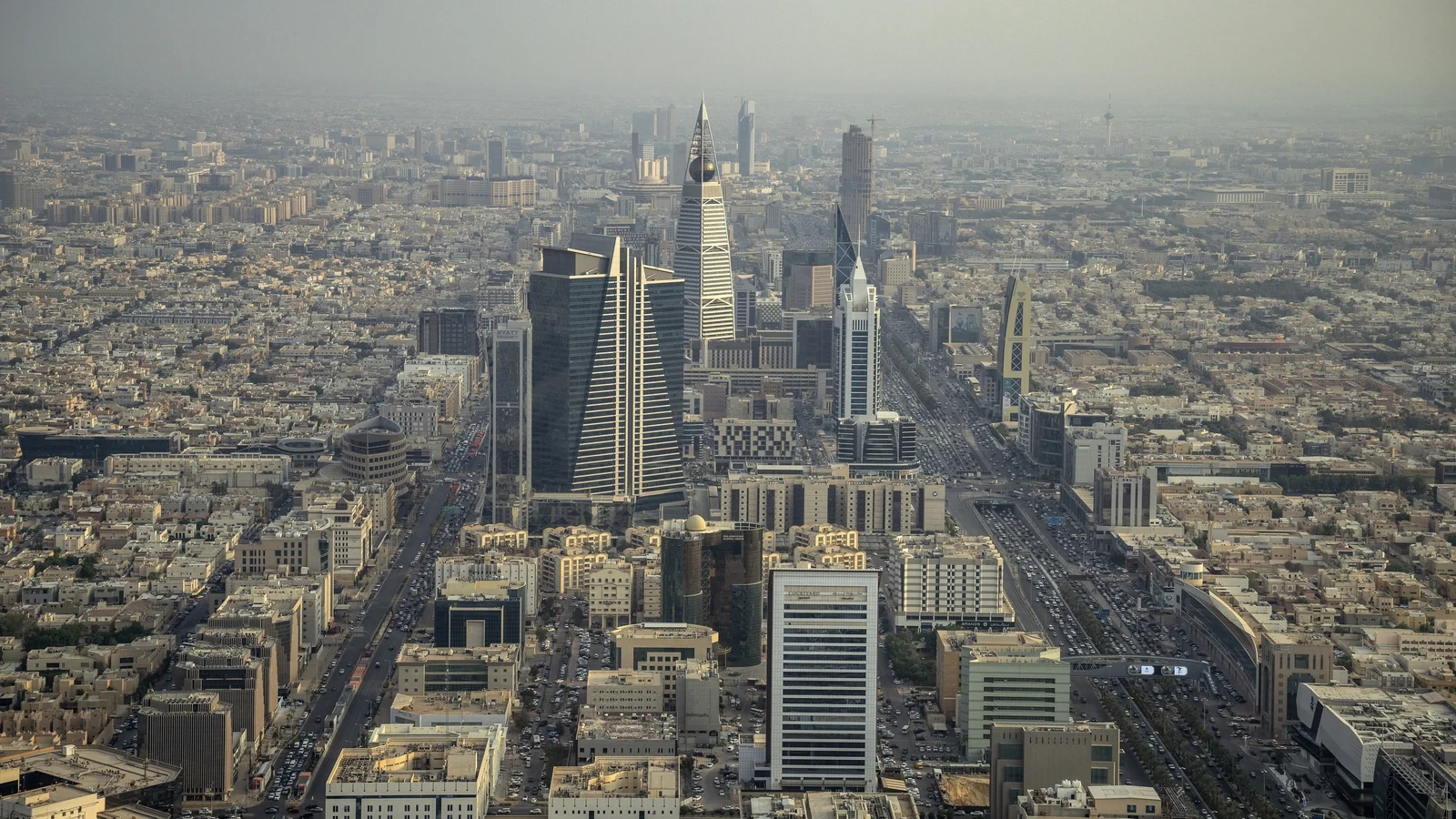
In the Saudi capital, loud blasts were heard twice yesterday. AFP journalists reported seeing a fuel tank bearing the logo of oil giant Aramco burning near the airport.
“This military conflict has the potential to escalate rapidly,” the US State Department said, urging American citizens outside the Middle East to “seriously reconsider travel to and through the region”.
The Houthis’ recent lightning offensive, which has seized swathes of Yemeni territory, has left hundreds dead and displaced more than 110,000 people, according to the United Nations.
The unrest — and the subsequent hostilities with Saudi Arabia — has already disrupted the kingdom’s exports as the world’s leading supplier of crude oil, as well as maritime traffic.
Late last night, the Riyadh-led coalition said on X that a ballistic missile launched by the Houthis toward the capital was “successfully intercepted and destroyed”.
Houthis tried to target ‘civilians and civilian infrastructure’ – Riyadh
The coalition said the pro-Iranian fighters attempted to strike “civilians and civilian infrastructure” in several western Saudi cities, including the Red Sea port of Yanbu — a key export hub for Saudi oil.
It added that the attacks were “thwarted by the Gulf monarchy’s air defences”.
Saudi Arabia has answered the Houthi advance with scores of airstrikes on areas under the group’s control, but has not been able to halt their momentum.
The Houthis said the launches were retaliation for recent Saudi attacks. In a statement on Telegram, Houthi military spokesman Yahya Saree said the group carried out “two successful military operations using a large number of ballistic and cruise missiles and drones”.
“The first targeted sensitive sites in the Saudi capital, Riyadh, and the second targeted Aramco facilities in Yanbu.”
Saudi authorities had earlier issued an overnight air raid alert.
Hours after the pre-dawn warning, residents said they heard what sounded like a series of explosions reverberating through parts of the capital.
It is the first time since Yemen’s civil war resumed that strikes have threatened Riyadh, adding to pressure on a global economy already shaken by seven months of war between the US and Iran.
“The area is under a hostile aerial threat,” read a message received by Riyadh residents just before 3am, advising them to stay indoors.
AFP journalists then heard two explosions, and the Saudi civil defence agency lifted the alert about half an hour later.
The incident follows Riyadh’s accusation that the Houthis targeted Mecca on Wednesday, condemning it as a “cowardly terrorist attack” on Islam’s holy city, which draws millions of pilgrims every year. The Houthis strongly rejected the claim, calling it a “worn-out lie”.
The group has reported daily retaliatory strikes by Riyadh since launching an offensive this month aimed at taking Yemen’s entire Red Sea coast — a move that would place the vital Bab al-Mandab strait under their control.
The US, according to US news platform Axios, refused a Saudi request last week to strike the Houthis.
On Thursday, Washington approved a $24.3bn sale of 48 F-35 fighter jets to Saudi Arabia to help the kingdom “deter current and future threats”, the US State Department said.
The war in Yemen erupted in 2014 when the Houthis seized the capital, Sanaa, along with other regions, prompting a Saudi-led military intervention in March 2015.
A fragile truce reached in 2022 collapsed in July after the Houthis challenged Riyadh’s control of Yemeni airspace by allowing an Iranian aircraft to land in Yemen.
The apparent attack came as the Houthis bolster defences in newly captured territory along Yemen’s Red Sea coastline, with group members saying they have been installing radar systems and digging tunnels.