When the Convoys Left: Cities Exhale, Washington Recalibrates
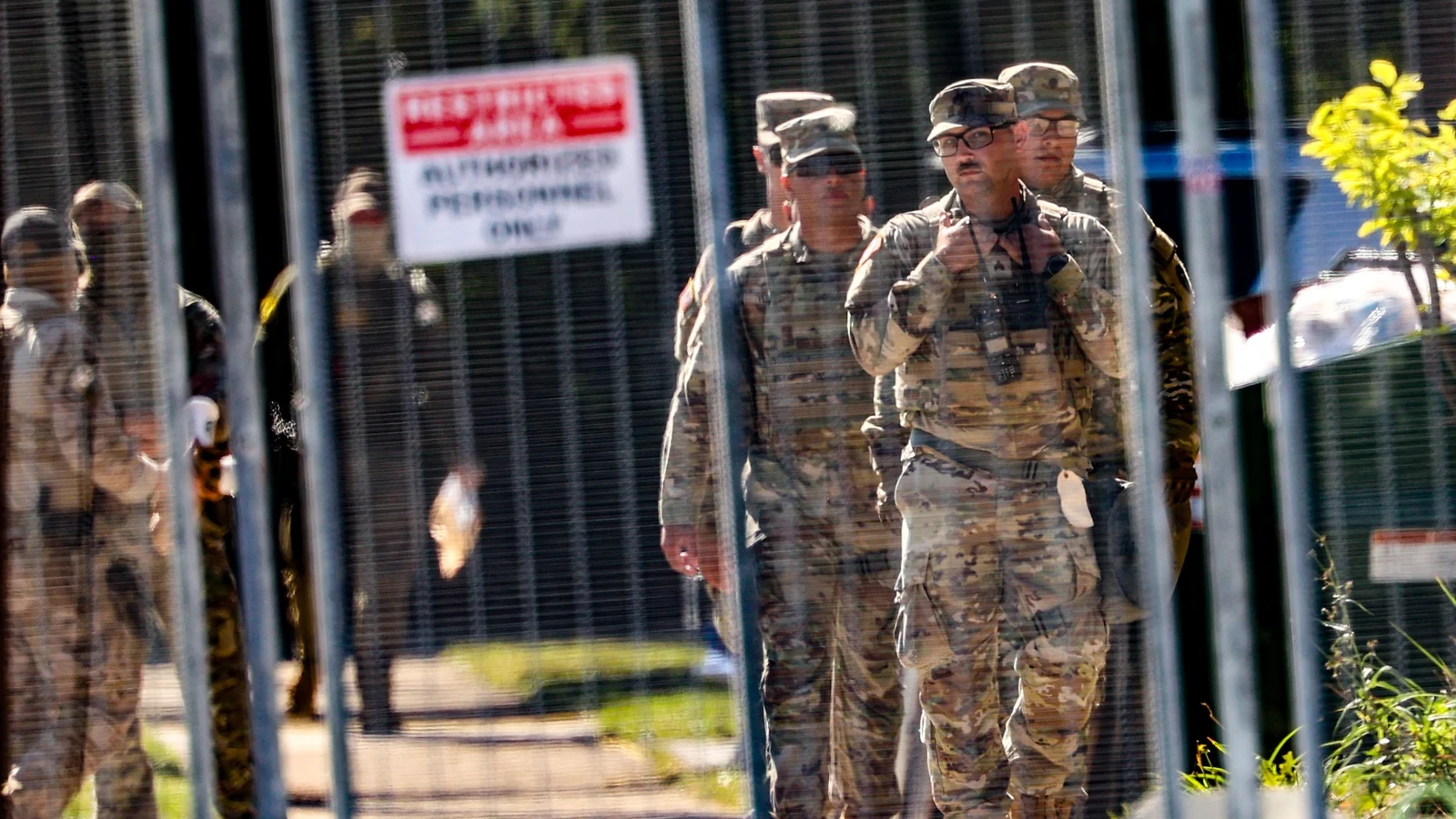
On an ordinary morning in late December, semi-quiet streets in three American cities snapped back into a quieter kind of normal. Armored Humvees and gray National Guard trucks — symbols that had dominated sidewalks and public squares for months — were being loaded, engines idling, then turned toward the highway. Residents leaned from stoops and diner windows, some with relief, some with skepticism. A few applauded. Others crossed the street to get a better look, as if to make sure it was really happening.
“It felt less like protection and more like a message,” said Maria Delgado, a small-business owner near Pilsen in Chicago, watching the last convoy pull away. “Now it’s leaving, and I have to ask: Who decides what keeps us safe? Our neighbors or a spectacle on the news?”
President Donald Trump announced the removal of National Guard forces from Chicago, Los Angeles and Portland, while warning — in blunt, unmistakable fashion — that federal troops could return “in a much different and stronger form” if crime spikes again. The pronouncement landed against a backdrop of courtroom rulings and political pushback that had steadily eroded the administration’s legal foothold for such deployments.
The unfolding legal drama
The past six months have been a study in federal authority tested against state and local control. The deployments began in June amid fierce public battles over immigration policy and protests in multiple cities. Washington, DC — where presidential authority over the capital is unique — saw a particularly muscular federal presence at one point. Other cities, including Memphis and Portland, experienced rotating contingents of military and federal officers.
- Supreme Court action: On 23 December, the U.S. Supreme Court blocked the president’s attempt to take command of National Guard forces in Illinois, signaling that such federal control likely applies only in “exceptional” circumstances.
- Appellate rulings: A federal appellate court ordered hundreds of California National Guard troops returned to Governor Gavin Newsom’s control, undermining the administration’s efforts to keep the forces under federal command.
- District court decisions: Judges overseeing lawsuits from cities found the federal government had not demonstrated that troops were necessary to protect federal property from protesters, and repeatedly questioned the legal basis offered for the deployments.
“At this preliminary stage,” one federal court wrote, “the government has failed to identify a source of authority that would allow the military to execute the laws in Illinois.” Those words have reverberated through statehouses and city halls, giving local leaders new leverage to push back.
Street-level realities versus headline theater
There’s a difference between what the evening news shows and what people living in these neighborhoods actually experienced. In Chicago, city officials posted data after the president’s announcement showing violent crime fell by 21.3% in 2025 compared with 2024 — the lowest violent crime totals in over a decade, they wrote on social media. For many residents, the statistics undercut the administration’s stated rationale for a heavy military footprint.
“I live two blocks from where they parked those trucks,” said Jamal Peters, a 42-year-old father and landscaper in the South Side. “Never saw one of those guys stop a robbery. What I saw were fewer kids playing outside because they felt watched.”
In Portland, a city that has wrestled with protest after protest, the visible withdrawal left behind murals re-sprayed by volunteers, and a conversation about dignity and authority. “The soldiers made some folks feel safer, others feel policed,” said Nora Chen, who runs a coffee cart near a mural of a raised fist. “Now people are asking: is public safety about boots on the ground or about investment in community services?”
What the leaders said — and what critics answered
The president framed the move as both a concession and a threat: troops were being removed but could come back if crime “begins to soar again.” Local Democratic leaders called the deployments unnecessary from the start and warned of federal overreach. Gavin Newsom’s office mocked the president’s statement as political posturing, saying, in a line that quickly circulated online, “Trump’s rambling here is the political version of ‘you can’t fire me, I quit.’”
“This isn’t just a debate about statistics. It’s about who governs public order,” said Dr. Miriam Alvarez, a constitutional law scholar at a West Coast university. “The courts have been clear: the president’s power to federalize state troops is not unlimited. These rulings are about preserving the balance between federal authority and local democracy.”
Experts, neighbors and the question of evidence
Legal challenges succeeded in part because judges demanded evidence that federal troops were the only remedy. Lawyers for the cities argued the administration exaggerated isolated incidents of violence to justify a show of force. The courts often agreed that the government had not presented proof that federal property was at imminent risk in the way the administration described.
“Law is not designed for theater,” said Thomas Reed, a retired federal judge now teaching at a law school in the Midwest. “If you’re going to suspend state control and put armed federal personnel on local streets, you need more than a few sensational incidents. You need a factual record demonstrating necessity.”
The fallout has been palpable. Military officials quietly began scaling back deployments as the litigation mounted, and in the end, legal defeats nudged the administration toward withdrawal even before the president’s public confirmation.
Beyond the headlines: what this episode reveals
There are broader currents beneath the convoy noise and the court opinions. First: a deepening national debate over federalism — the tug-of-war between Washington’s power and the authority of governors and mayors to protect their communities. Second: the politicization of public safety. The show of force, critics say, was as much about messaging to a political base as it was about preventing crime.
And finally: a civic question many cities are still wrestling with — what kinds of investment actually reduce violence? Is the answer more personnel with military training, or more social workers, youth programs, and economic opportunity for neighborhoods that have been starved of both?
“Invest in schools and mental health and you’ll see fewer 2 a.m. calls to 911,” said Rania Al-Hassan, director of a nonprofit that runs after-school programs in an L.A. neighborhood once patrolled by the Guard. “Military presence addresses symptoms. Community work addresses causes.”
What to watch next
The withdrawal does not end the story; it opens a new chapter. Expect continued legal skirmishes over the limits of presidential authority, renewed debate in state capitals about preparedness for unrest, and political leaders on both sides of the aisle sharpening arguments for the next crisis.
Will the troops remain gone until a demonstrable spike in violence? Will federal-state relations harden into laws clarifying when and how the president may take control of National Guard forces? And for ordinary citizens watching trucks roll away, there’s the quieter, harder question: how do we build safer, healthier neighborhoods without turning them into battlegrounds?
As the last convoy passed out of sight, Delgado wiped her hands on her apron and returned to sweeping the sidewalk. “We’ll see what happens,” she said. “For now, I’m going to focus on making my corner a little brighter. Because that’s something I can change.”
How would you want your city to be protected — by soldiers from afar or by neighbors who know your name? It’s a question worth asking at kitchen tables from Chicago to Portland and beyond.